Guangzhou to Dubai is 3,621 miles (5,827 km), a flight of about 7 hours 50 minutes.
The right side strings together the Pearl River Delta on departure, glimpses of the Yunnan-Myanmar highlands and Himalayan foothills during cruise, and the Hajar Mountains plus Dubai's skyline on arrival, giving it far more terrain variety than the largely open-water and flat-desert views on the left.
Flight Path
Yunnan-Myanmar border highlands, northern edge of the Bay of Bengal near Bangladesh, the Indian subcontinent's Deccan interior, and the open expanse of the Arabian Sea before the Omani coast
Great circle distance and headings ›.jpg?width=600)

.jpeg?width=600)


_and_the_Dubai_skyline_(25781049892).jpg?width=600)
.jpg?width=600)
Phase by phase
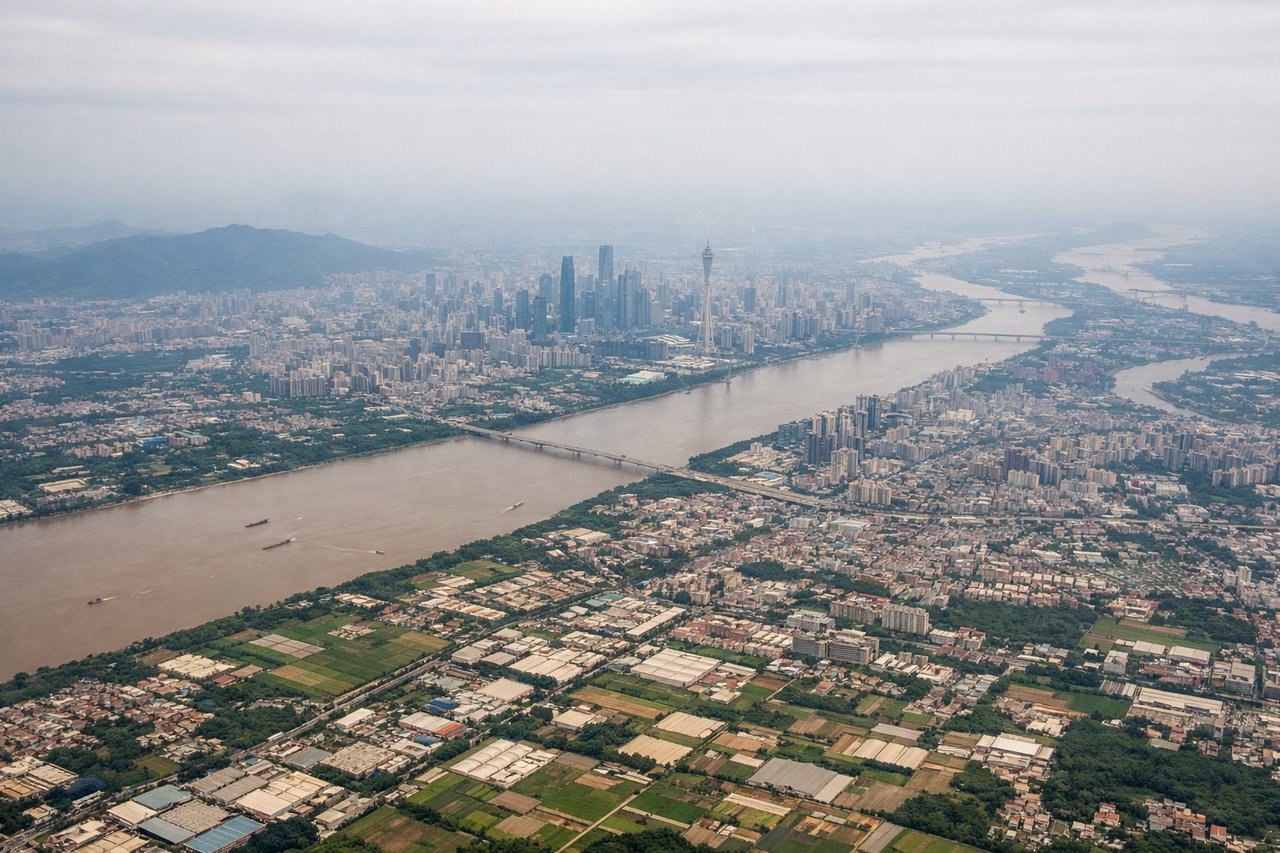
Takeoff from CAN
RIGHTDeparting Baiyun and turning onto the westbound track, the right side gives a good look back over the Pearl River Delta's sprawling urban grid and the river's braided channels before the aircraft climbs above the haze layer. The left side mostly shows flatter agricultural land west of Guangzhou with less definition.
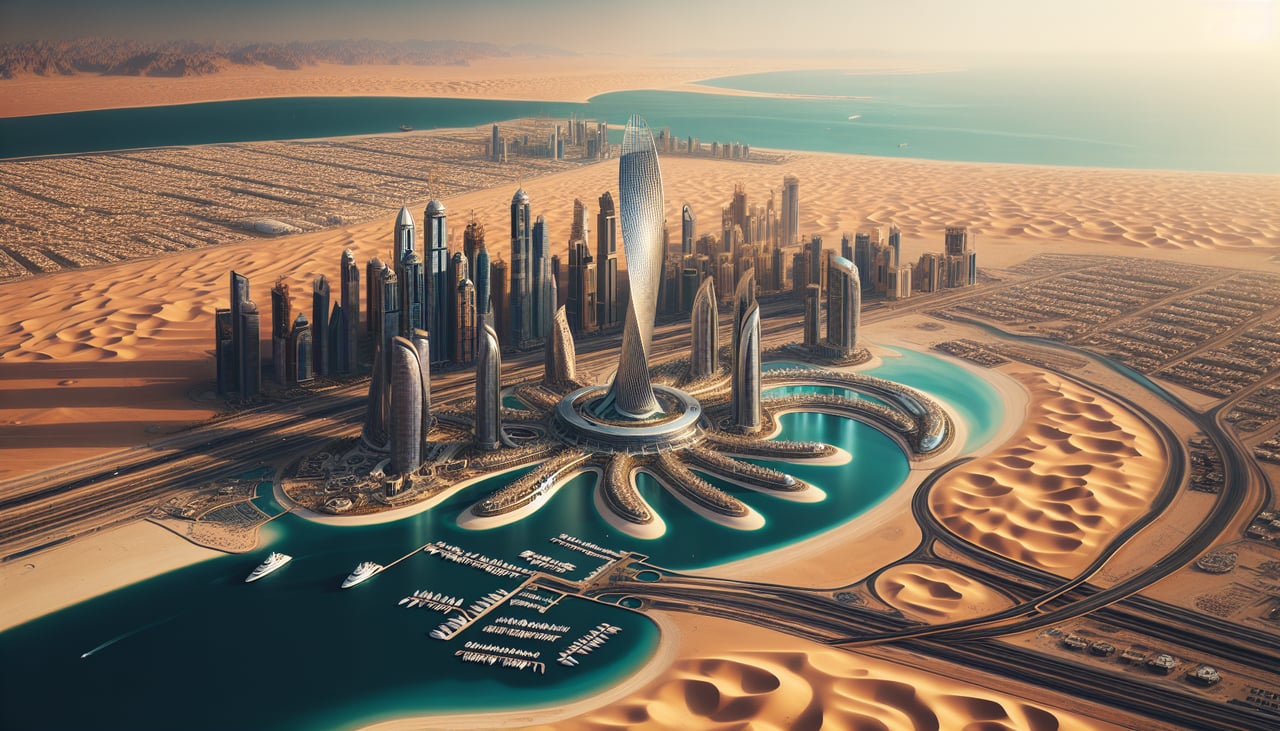
Landing at DXB
RIGHTOn approach into Dubai from the east, the right side typically catches the rugged brown ridgeline of the Hajar Mountains near Fujairah and the turquoise water of the Gulf of Oman before the turn inland. As the aircraft lines up for landing, Dubai's skyline—including the Burj Khalifa spire and the fronds of Palm Jumeirah—can be glimpsed off this side during the final descent.
Landmarks on this routeAll landmarks →
Will your flight be in sunlight?
Pick a date and time in the Sun Map to watch the sun move across your whole flight.
About This Route
Which side of the plane should I sit on flying from Guangzhou Baiyun International Airport (CAN) to Dubai International (DXB)?
Sit on the Right side of the plane for the best views on flights from Guangzhou to Dubai. The right side strings together the Pearl River Delta on departure, glimpses of the Yunnan-Myanmar highlands and Himalayan foothills during cruise, and the Hajar Mountains plus Dubai's skyline on arrival, giving it far more terrain variety than the largely open-water and flat-desert views on the left.
What can I see during takeoff from Guangzhou Baiyun International Airport in Guangzhou?
During takeoff from Guangzhou Baiyun International Airport (CAN), sit on the Right side for the best views. Departing Baiyun and turning onto the westbound track, the right side gives a good look back over the Pearl River Delta's sprawling urban grid and the river's braided channels before the aircraft climbs above the haze layer. The left side mostly shows flatter agricultural land west of Guangzhou with less definition. Notable sights include: Pearl River Delta, Guangzhou urban sprawl, Baiyun district waterways.
What can I see when landing at Dubai International in Dubai?
When landing at Dubai International (DXB), sit on the Right side for the best views. On approach into Dubai from the east, the right side typically catches the rugged brown ridgeline of the Hajar Mountains near Fujairah and the turquoise water of the Gulf of Oman before the turn inland. As the aircraft lines up for landing, Dubai's skyline—including the Burj Khalifa spire and the fronds of Palm Jumeirah—can be glimpsed off this side during the final descent. Notable sights include: Hajar Mountains, Gulf of Oman coastline, Burj Khalifa, Palm Jumeirah.
How long is the flight from Guangzhou to Dubai?
The flight from Guangzhou Baiyun International Airport (CAN) to Dubai International (DXB) takes about 7 hours 50 minutes. The shortest flight path between them is 3,621 miles (5,827 km); winds and air traffic control usually add a few percent.
What does the Guangzhou to Dubai flight path pass over?
Yunnan-Myanmar border highlands, northern edge of the Bay of Bengal near Bangladesh, the Indian subcontinent's Deccan interior, and the open expanse of the Arabian Sea before the Omani coast