Guangzhou to San Francisco is 6,885 miles (11,080 km), a flight of about 13 hours 5 minutes.
While the right side wins the departure with a clear view of Guangzhou, the left side's dramatic Golden Gate Bridge and San Francisco Bay approach, combined with occasional glimpses of the Alaskan and Aleutian coastline during the northern Pacific crossing, gives it the edge for the full flight.
Flight Path
North Pacific Ocean, Aleutian Island chain, Kamchatka Peninsula, Gulf of Alaska coastline
Great circle distance and headings ›.jpg?width=600)


Phase by phase
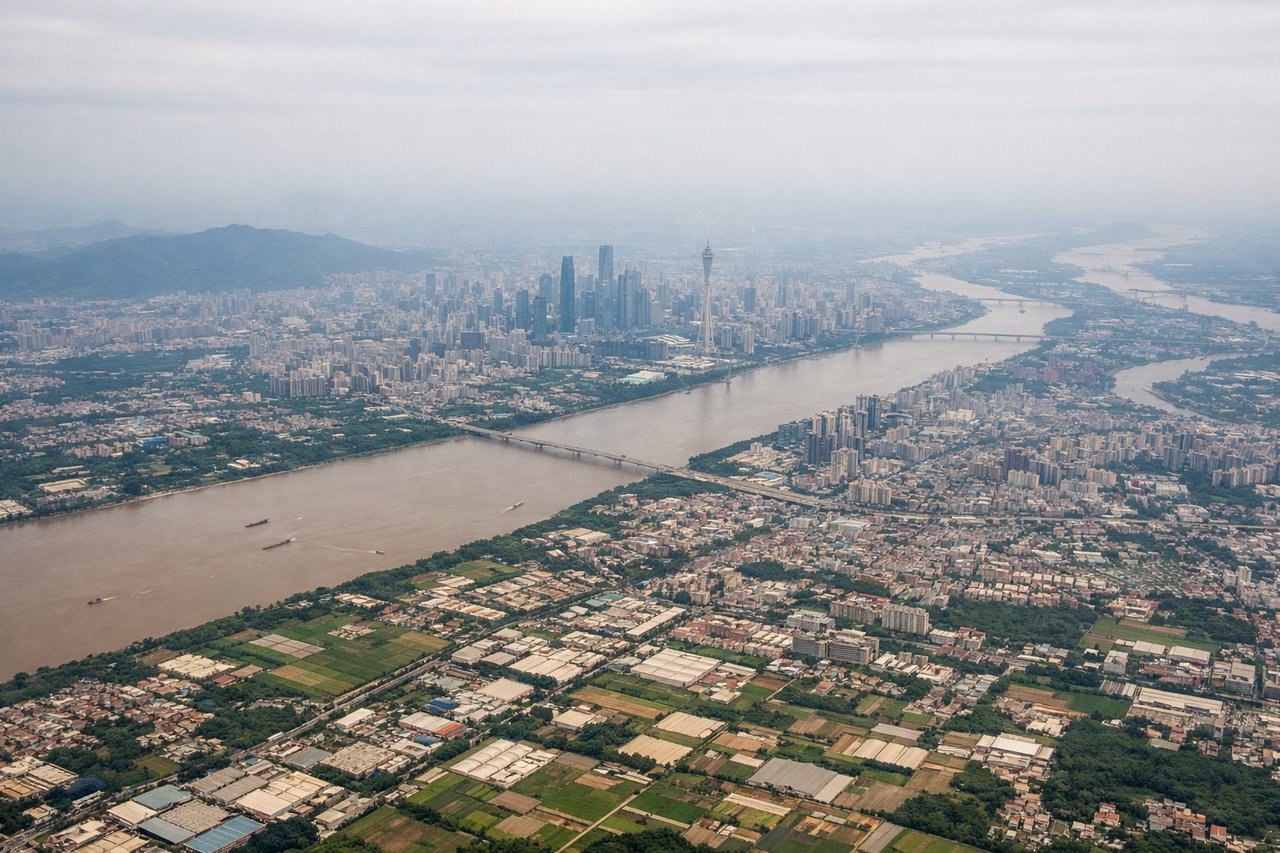
Takeoff from CAN
RIGHTDeparting CAN on a northbound runway, the aircraft typically banks right toward the northeast Pacific track, giving right-side passengers a tilted-down view of the Pearl River Delta, the Guangzhou skyline, and the Baiyun hills as the city falls away below.
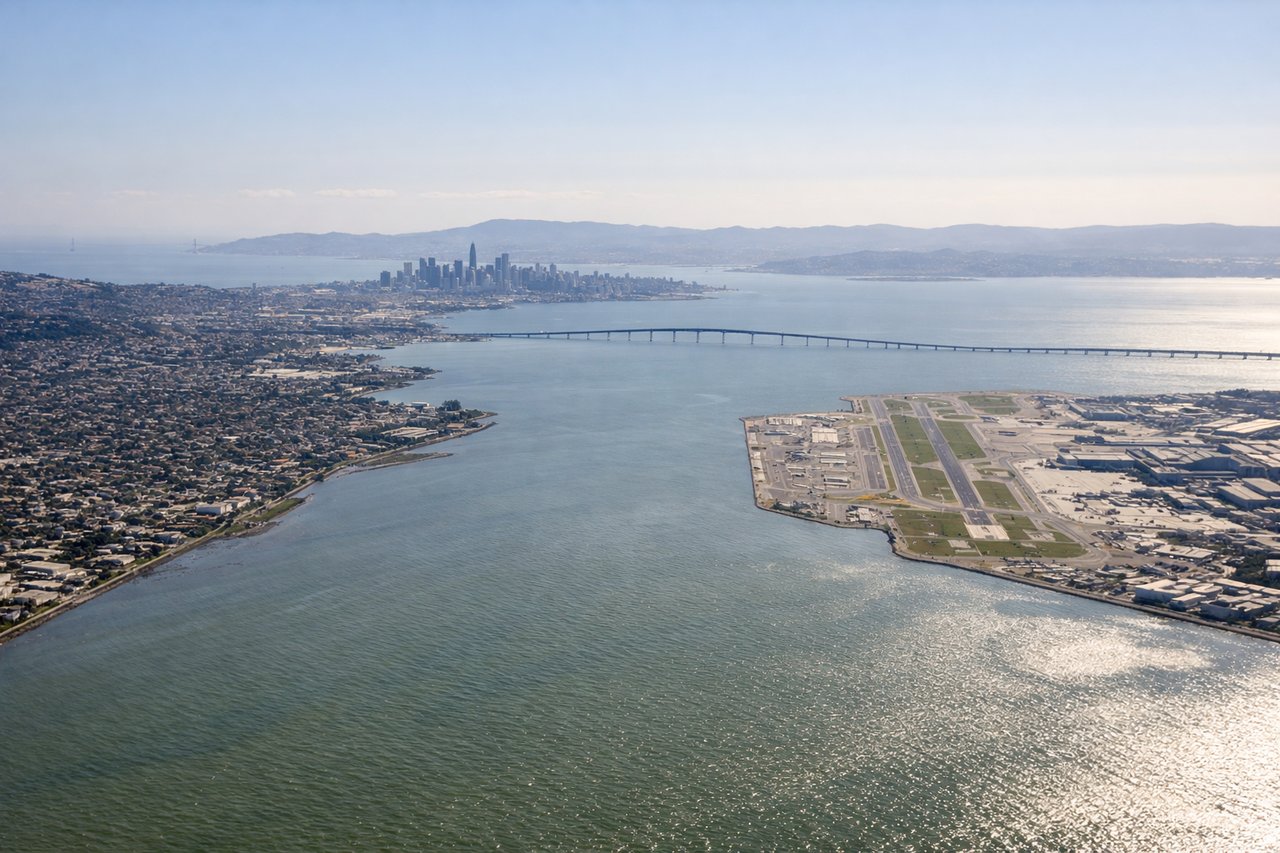
Landing at SFO
LEFTSFO arrivals from the north typically turn left to align with the bayside runways, putting the San Francisco skyline, the Golden Gate Bridge, and the bay itself on the left side of the aircraft during final descent.
Landmarks on this routeAll landmarks →
Will your flight be in sunlight?
Pick a date and time in the Sun Map to watch the sun move across your whole flight.
About This Route
Which side of the plane should I sit on flying from Guangzhou Baiyun International Airport (CAN) to San Francisco International (SFO)?
Sit on the Left side of the plane for the best views on flights from Guangzhou to San Francisco. While the right side wins the departure with a clear view of Guangzhou, the left side's dramatic Golden Gate Bridge and San Francisco Bay approach, combined with occasional glimpses of the Alaskan and Aleutian coastline during the northern Pacific crossing, gives it the edge for the full flight.
What can I see during takeoff from Guangzhou Baiyun International Airport in Guangzhou?
During takeoff from Guangzhou Baiyun International Airport (CAN), sit on the Right side for the best views. Departing CAN on a northbound runway, the aircraft typically banks right toward the northeast Pacific track, giving right-side passengers a tilted-down view of the Pearl River Delta, the Guangzhou skyline, and the Baiyun hills as the city falls away below. Notable sights include: Pearl River, Guangzhou city skyline, Baiyun Mountain foothills, Pearl River Delta farmland.
What can I see when landing at San Francisco International in San Francisco?
When landing at San Francisco International (SFO), sit on the Left side for the best views. SFO arrivals from the north typically turn left to align with the bayside runways, putting the San Francisco skyline, the Golden Gate Bridge, and the bay itself on the left side of the aircraft during final descent. Notable sights include: Golden Gate Bridge, San Francisco skyline, San Francisco Bay, Marin Headlands.
How long is the flight from Guangzhou to San Francisco?
The flight from Guangzhou Baiyun International Airport (CAN) to San Francisco International (SFO) takes about 13 hours 5 minutes. The shortest flight path between them is 6,885 miles (11,080 km); winds and air traffic control usually add a few percent.
What does the Guangzhou to San Francisco flight path pass over?
North Pacific Ocean, Aleutian Island chain, Kamchatka Peninsula, Gulf of Alaska coastline