San Francisco to Guangzhou is 6,885 miles (11,080 km), a flight of about 14 hours 35 minutes.
While the SFO departure offers a brief but striking city view on the left, the right side accumulates more scenic value overall: the cruise track skirts the volcanic Kamchatka Peninsula and Japanese coastline, and the final descent into Guangzhou reveals the Pearl River Delta and city skyline in detail.
Flight Path
North Pacific Ocean, Aleutian Islands and Kamchatka Peninsula, Sea of Japan, East China Sea coastline near Japan and Korea
Great circle distance and headings ›

.jpg?width=600)

Phase by phase
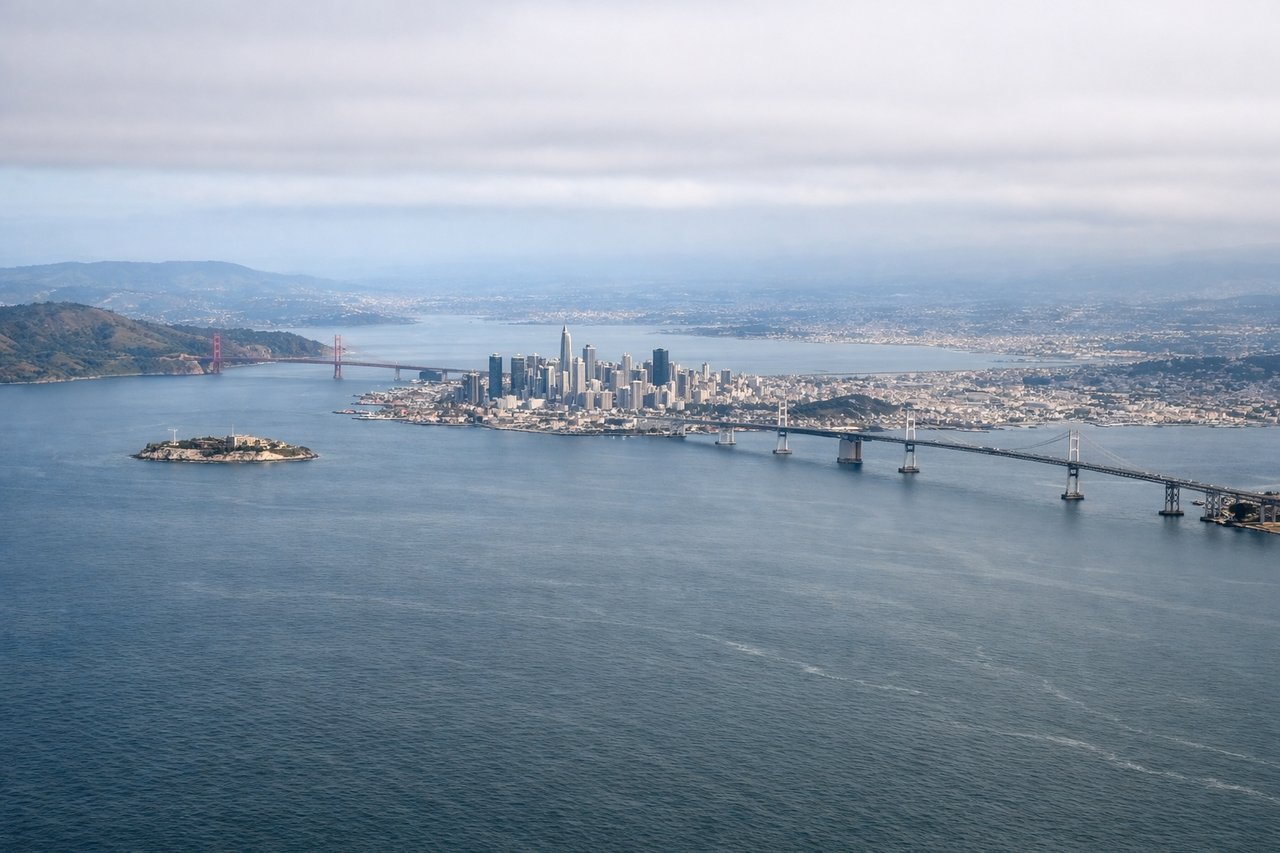
Takeoff from SFO
LEFTDeparting SFO on the eastern runways, the aircraft climbs out over San Francisco Bay before banking north toward the polar route to Asia. Passengers on the left get a sweeping view of the San Francisco skyline, the Golden Gate Bridge, and the Marin headlands as the turn unfolds.
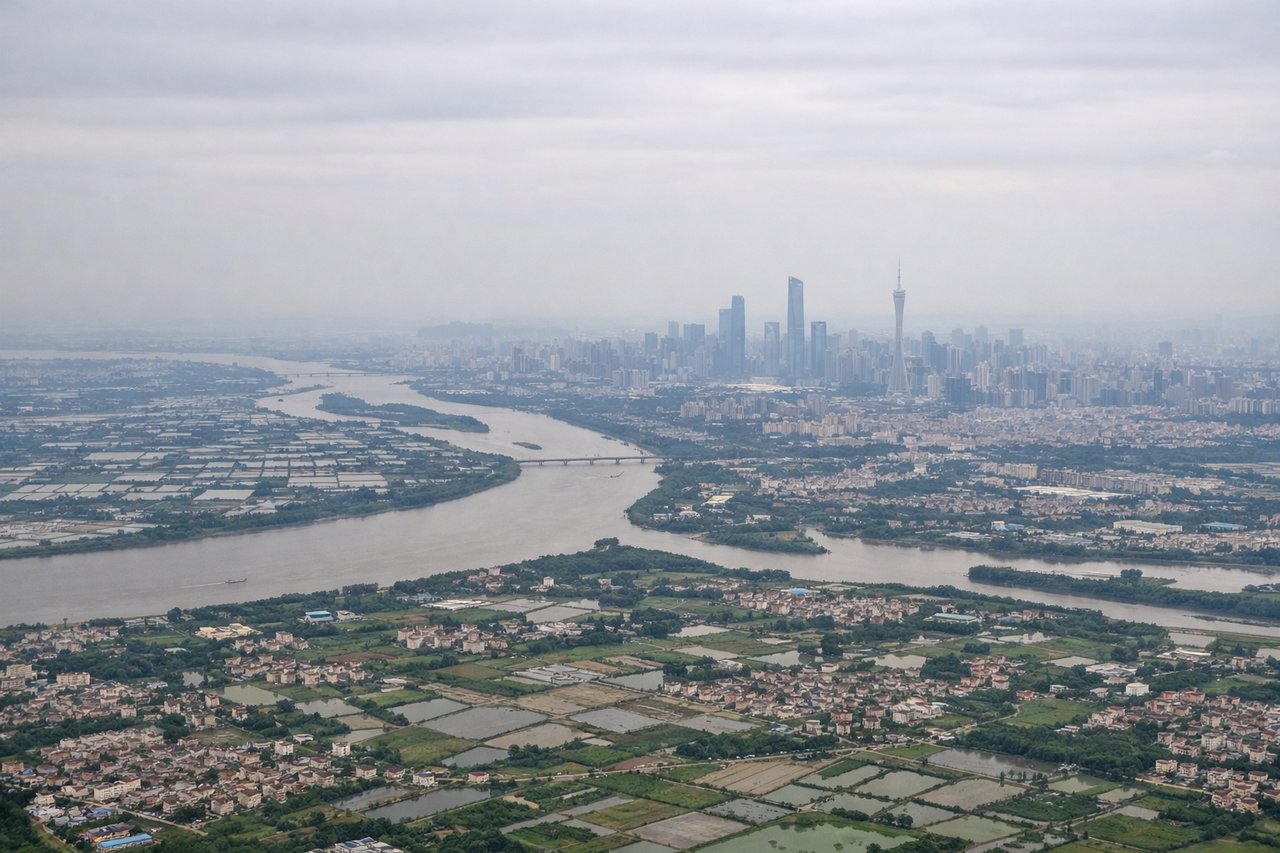
Landing at CAN
RIGHTOn approach into Baiyun, the descent path crosses the dense, water-laced sprawl of the Pearl River Delta before lining up with the north-south runways. Passengers on the right typically see the Guangzhou skyline, the Pearl River's braided channels, and the forested slopes of Baiyun Mountain just north of the airport.
Landmarks on this routeAll landmarks →
Will your flight be in sunlight?
Pick a date and time in the Sun Map to watch the sun move across your whole flight.
About This Route
Which side of the plane should I sit on flying from San Francisco International (SFO) to Guangzhou Baiyun International Airport (CAN)?
Sit on the Right side of the plane for the best views on flights from San Francisco to Guangzhou. While the SFO departure offers a brief but striking city view on the left, the right side accumulates more scenic value overall: the cruise track skirts the volcanic Kamchatka Peninsula and Japanese coastline, and the final descent into Guangzhou reveals the Pearl River Delta and city skyline in detail.
What can I see during takeoff from San Francisco International in San Francisco?
During takeoff from San Francisco International (SFO), sit on the Left side for the best views. Departing SFO on the eastern runways, the aircraft climbs out over San Francisco Bay before banking north toward the polar route to Asia. Passengers on the left get a sweeping view of the San Francisco skyline, the Golden Gate Bridge, and the Marin headlands as the turn unfolds. Notable sights include: San Francisco skyline, Golden Gate Bridge, San Francisco Bay, Marin Headlands.
What can I see when landing at Guangzhou Baiyun International Airport in Guangzhou?
When landing at Guangzhou Baiyun International Airport (CAN), sit on the Right side for the best views. On approach into Baiyun, the descent path crosses the dense, water-laced sprawl of the Pearl River Delta before lining up with the north-south runways. Passengers on the right typically see the Guangzhou skyline, the Pearl River's braided channels, and the forested slopes of Baiyun Mountain just north of the airport. Notable sights include: Pearl River Delta waterways, Guangzhou city skyline, Baiyun Mountain, Zhujiang River.
How long is the flight from San Francisco to Guangzhou?
The flight from San Francisco International (SFO) to Guangzhou Baiyun International Airport (CAN) takes about 14 hours 35 minutes. The shortest flight path between them is 6,885 miles (11,080 km); winds and air traffic control usually add a few percent.
What does the San Francisco to Guangzhou flight path pass over?
North Pacific Ocean, Aleutian Islands and Kamchatka Peninsula, Sea of Japan, East China Sea coastline near Japan and Korea