Calcutta to Abu Dhabi is 2,139 miles (3,443 km), a flight of about 4 hours.
Right-side seats capture the most visually distinctive features: the Hooghly River's dramatic meanders during departure and the Persian Gulf's striking turquoise waters during approach. The flight path crosses the Arabian Sea and Oman, offering limited midpoint views, so the terminal points dominate the experience.
Flight Path
The flight crosses the Arabian Sea with minimal landmarks visible at cruise altitude. The Oman coast (near Muscat) may be visible as a distant brown line on the horizon if flying at lower altitudes or during clear conditions, but the majority of the midpoint is open water. The transition from the humid Indo-Gangetic climate to the arid Arabian Peninsula is gradual and not visually marked by distinct features at altitude.
Great circle distance and headings ›Phase by phase
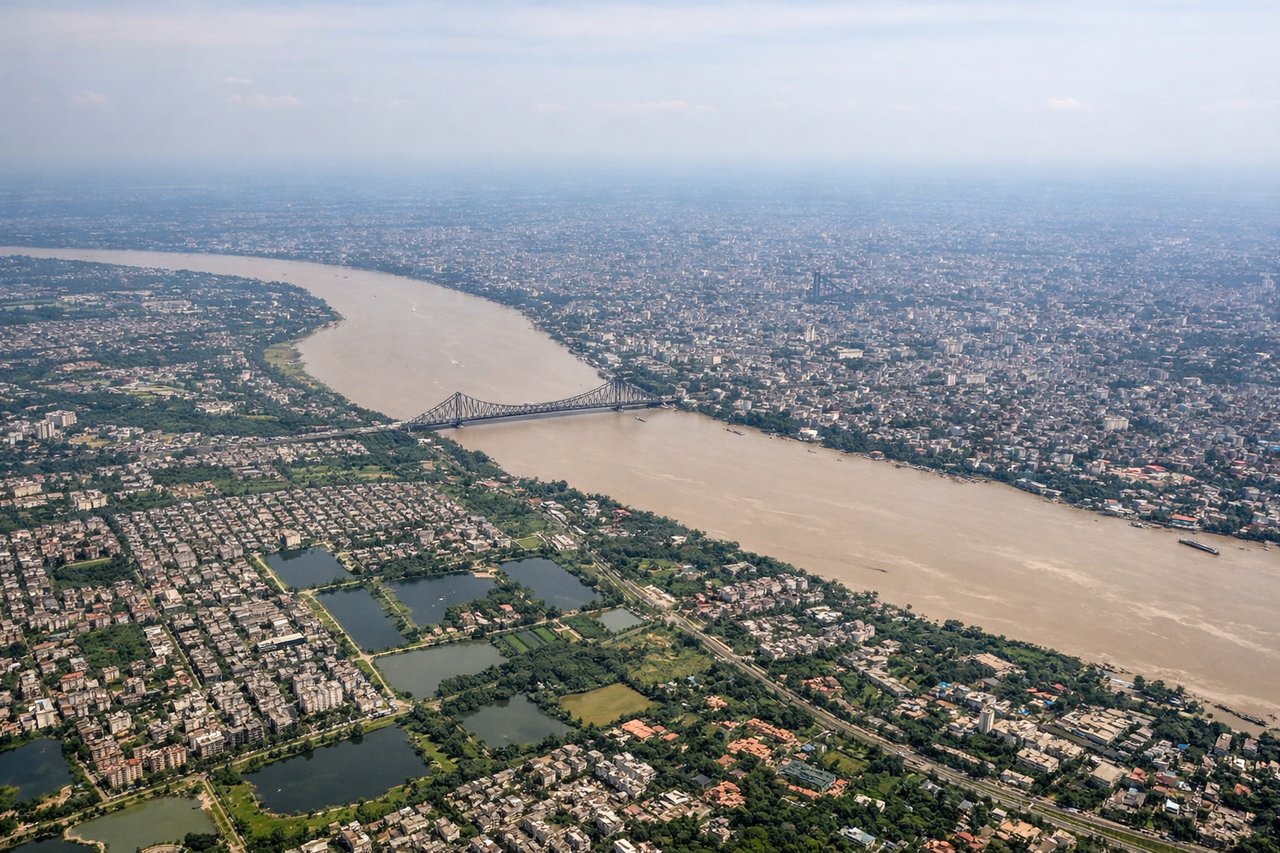
Takeoff from CCU
RIGHTCCU typically departs eastbound (Runway 01) or westbound (Runway 19). Right-side seats offer views of the Hooghly River's extensive meanders and the sprawling Kolkata metropolitan area, which are more visually distinctive than the flat agricultural plains to the left.
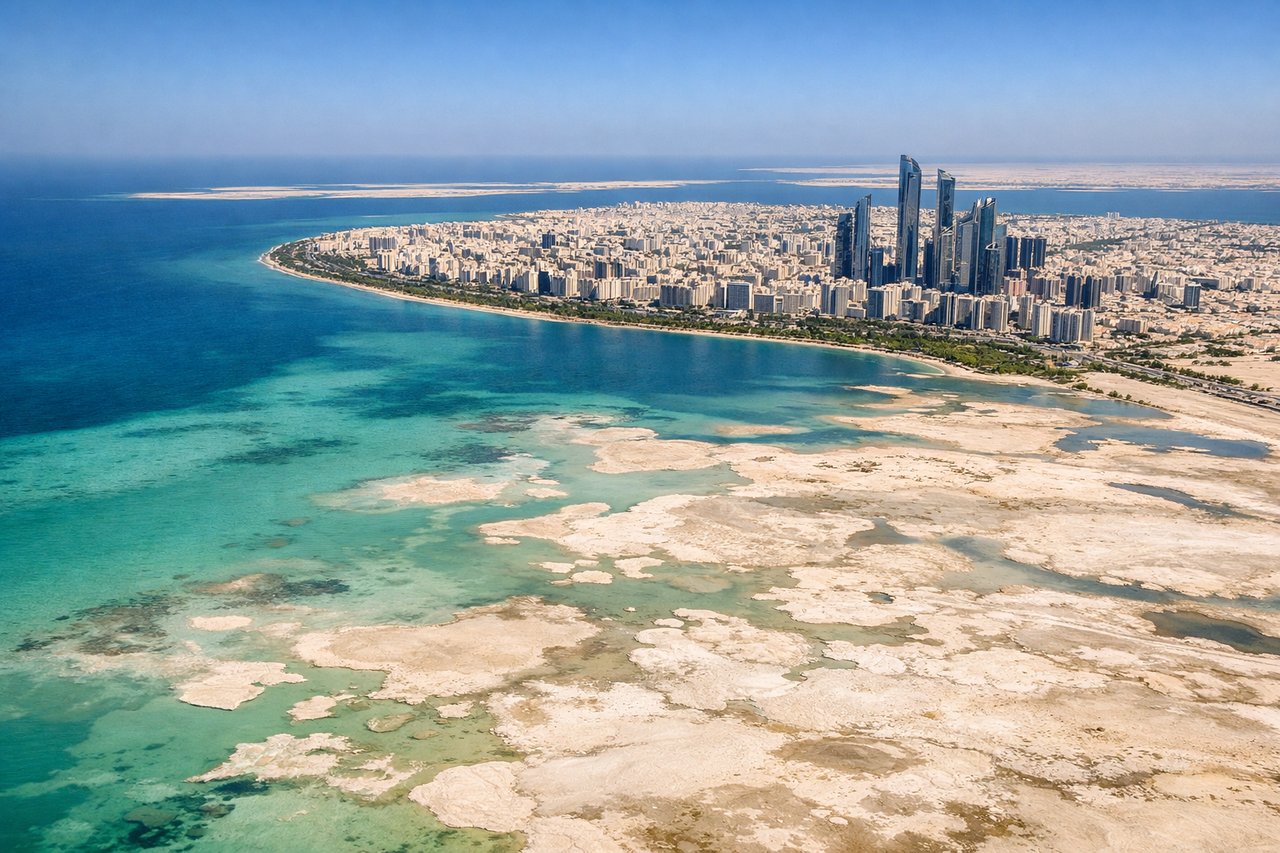
Landing at AUH
LEFTAUH typically lands from the northwest (Runway 31L/31R) or southeast (Runway 13L/13R). Left-side seats during approach from the northwest offer clear views of the Persian Gulf's shallow turquoise waters, the Mushrif plateau inland, and Abu Dhabi's coastal development—more striking than the desert interior to the right.
Will your flight be in sunlight?
Pick a date and time in the Sun Map to watch the sun move across your whole flight.
About This Route
Which side of the plane should I sit on flying from Netaji Subhash Chandra Bose International (CCU) to Abu Dhabi International (AUH)?
Sit on the Right side of the plane for the best views on flights from Calcutta to Abu Dhabi. Right-side seats capture the most visually distinctive features: the Hooghly River's dramatic meanders during departure and the Persian Gulf's striking turquoise waters during approach. The flight path crosses the Arabian Sea and Oman, offering limited midpoint views, so the terminal points dominate the experience.
What can I see during takeoff from Netaji Subhash Chandra Bose International in Calcutta?
During takeoff from Netaji Subhash Chandra Bose International (CCU), sit on the Right side for the best views. CCU typically departs eastbound (Runway 01) or westbound (Runway 19). Right-side seats offer views of the Hooghly River's extensive meanders and the sprawling Kolkata metropolitan area, which are more visually distinctive than the flat agricultural plains to the left. Notable sights include: Hooghly River with its characteristic bends, Kolkata's urban sprawl extending south and east, Howrah Bridge area, flat Ganges Delta plains.
What can I see when landing at Abu Dhabi International in Abu Dhabi?
When landing at Abu Dhabi International (AUH), sit on the Left side for the best views. AUH typically lands from the northwest (Runway 31L/31R) or southeast (Runway 13L/13R). Left-side seats during approach from the northwest offer clear views of the Persian Gulf's shallow turquoise waters, the Mushrif plateau inland, and Abu Dhabi's coastal development—more striking than the desert interior to the right. Notable sights include: Persian Gulf with shallow turquoise waters, Abu Dhabi's coastal urban development, Mushrif plateau and inland desert, shallow coastal sabkha flats.
How long is the flight from Calcutta to Abu Dhabi?
The flight from Netaji Subhash Chandra Bose International (CCU) to Abu Dhabi International (AUH) takes about 4 hours. The shortest flight path between them is 2,139 miles (3,443 km); winds and air traffic control usually add a few percent.
What does the Calcutta to Abu Dhabi flight path pass over?
The flight crosses the Arabian Sea with minimal landmarks visible at cruise altitude. The Oman coast (near Muscat) may be visible as a distant brown line on the horizon if flying at lower altitudes or during clear conditions, but the majority of the midpoint is open water. The transition from the humid Indo-Gangetic climate to the arid Arabian Peninsula is gradual and not visually marked by distinct features at altitude.