The right side offers a stronger start with Kolkata's river and cityscape during takeoff and a strong finish with Doha's coastline and skyline on approach, while the left side spends most of the flight over flat desert with little urban or coastal payoff.
Flight Path
Thar Desert dunes, the salt flats of the Rann of Kutch, and the arid coastline of Sindh before the long stretch over the Arabian Sea and Persian Gulf
Great circle distance and headings ›_and_the_Dubai_skyline_(25781049892).jpg?width=600)

Phase by phase
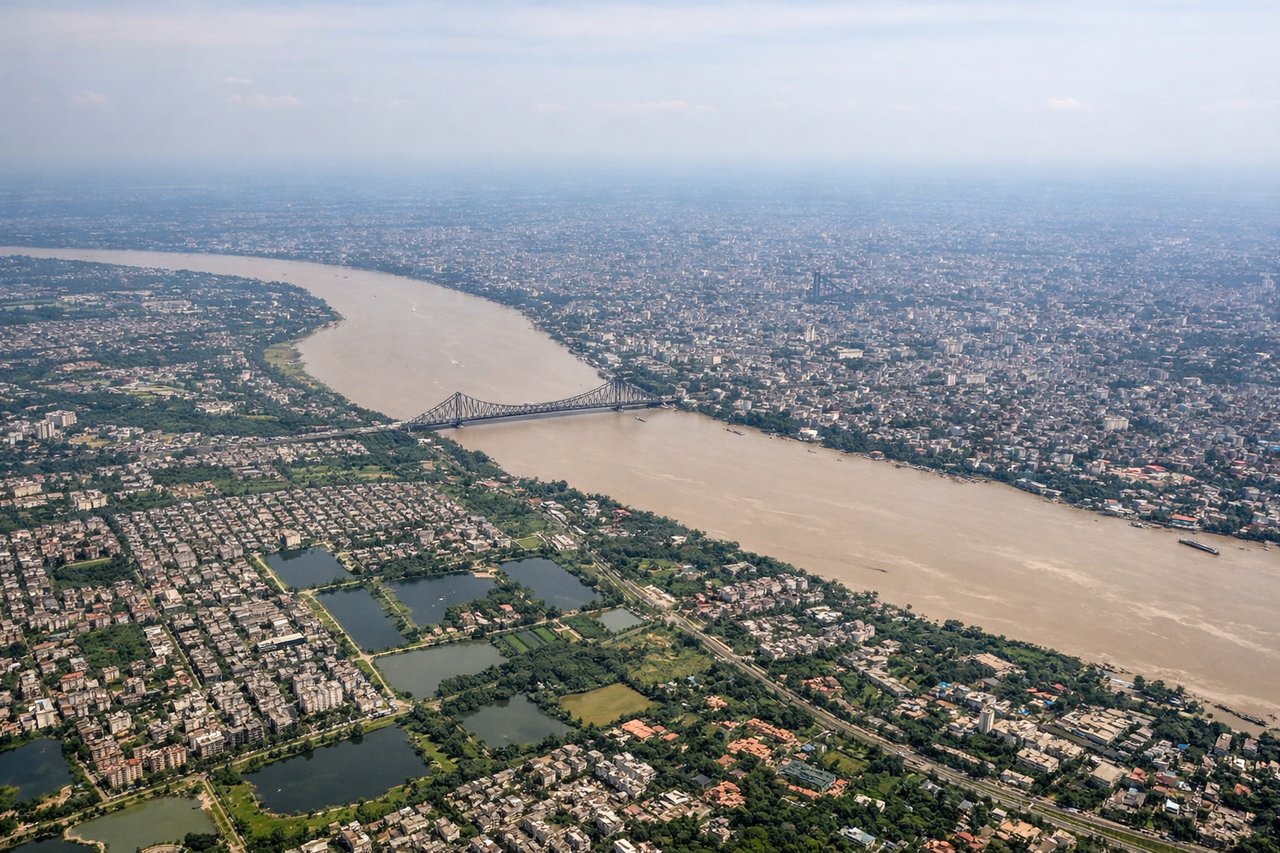
Takeoff from CCU
RIGHTDeparting CCU on runway 19 southbound, the aircraft banks right (west) toward Doha, putting the Hooghly River and Kolkata's dense urban grid directly under the right-side windows during the turn. Left-side passengers mostly see empty sky during the bank.
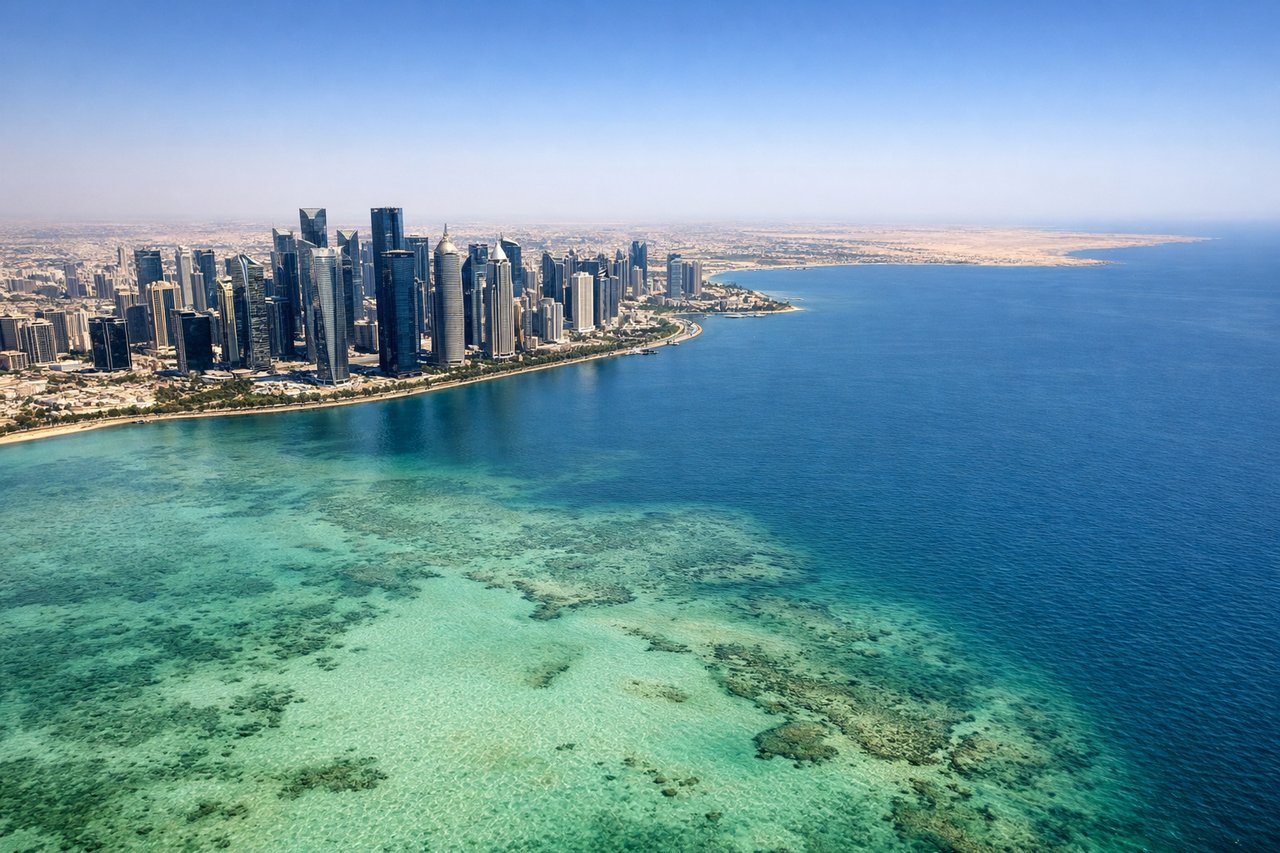
Landing at DOH
RIGHTArriving from the east over the Persian Gulf, the aircraft typically lines up for runway 34, approaching from the southeast with Doha's West Bay skyline and the turquoise waters near The Pearl-Qatar visible off the right side before touchdown.
Landmarks on this routeAll landmarks →
Will your flight be in sunlight?
See exactly which side of the plane gets sun and shade at your departure time.
About This Route
Which side of the plane should I sit on flying from Netaji Subhash Chandra Bose International (CCU) to Hamad International Airport (DOH)?
Sit on the Right side of the plane for the best views on flights from Calcutta to Doha. The right side offers a stronger start with Kolkata's river and cityscape during takeoff and a strong finish with Doha's coastline and skyline on approach, while the left side spends most of the flight over flat desert with little urban or coastal payoff.
What can I see during takeoff from Netaji Subhash Chandra Bose International in Calcutta?
During takeoff from Netaji Subhash Chandra Bose International (CCU), sit on the Right side for the best views. Departing CCU on runway 19 southbound, the aircraft banks right (west) toward Doha, putting the Hooghly River and Kolkata's dense urban grid directly under the right-side windows during the turn. Left-side passengers mostly see empty sky during the bank. Notable sights include: Hooghly River, Kolkata city grid, Howrah Bridge area, edge of the Ganges delta.
What can I see when landing at Hamad International Airport in Doha?
When landing at Hamad International Airport (DOH), sit on the Right side for the best views. Arriving from the east over the Persian Gulf, the aircraft typically lines up for runway 34, approaching from the southeast with Doha's West Bay skyline and the turquoise waters near The Pearl-Qatar visible off the right side before touchdown. Notable sights include: Doha West Bay skyline, Persian Gulf turquoise shallows, The Pearl-Qatar artificial island, Qatari coastline.
How long is the flight from Calcutta to Doha?
The flight from Netaji Subhash Chandra Bose International (CCU) to Hamad International Airport (DOH) takes 4h 50m.
What does the Calcutta to Doha flight path pass over?
Thar Desert dunes, the salt flats of the Rann of Kutch, and the arid coastline of Sindh before the long stretch over the Arabian Sea and Persian Gulf