While takeoff offers a brief volcanic highlight on the left, the right side delivers a stronger overall experience with the Hajar Mountains and Dubai's coastal skyline during the descent, plus glimpses of the southern Indian coastline during cruise, giving it more varied and dramatic scenery across the full flight.
Flight Path
Bay of Bengal, southern Indian coastline near Chennai, and the Arabian Sea
Great circle distance and headings ›
_and_the_Dubai_skyline_(25781049892).jpg?width=600)
.jpg?width=600)
Phase by phase
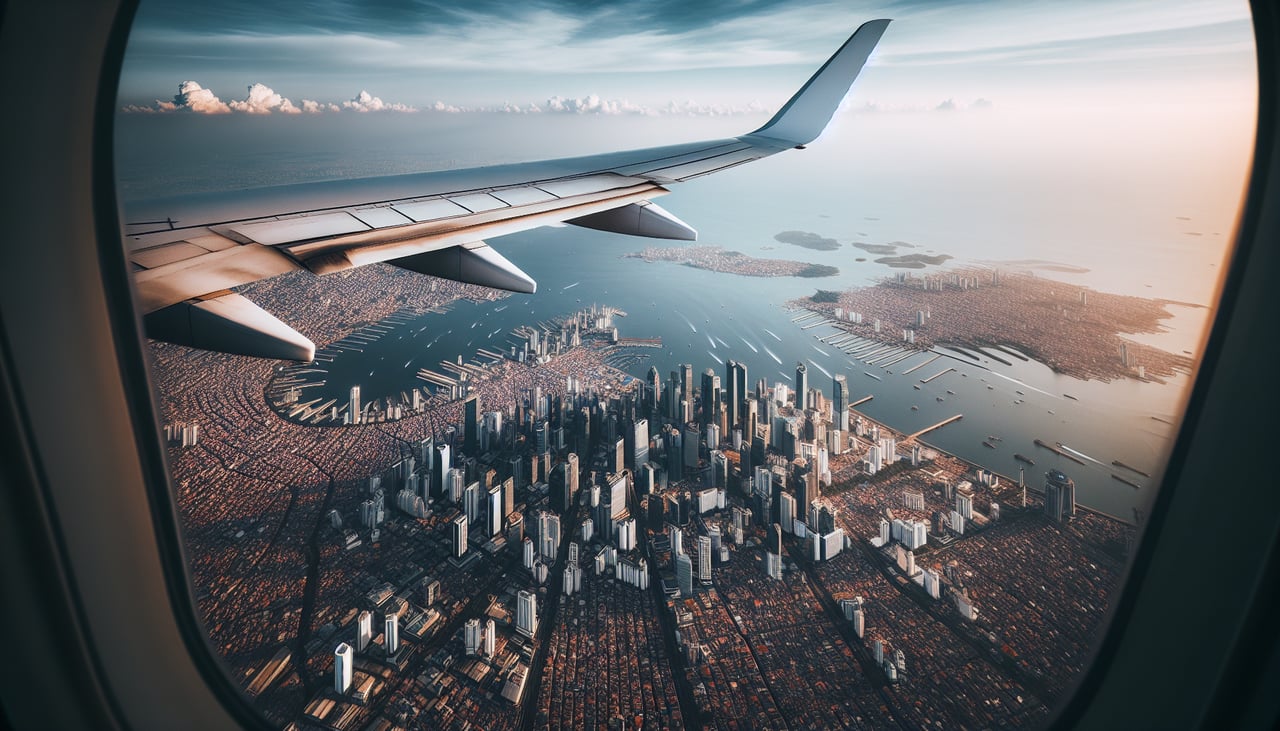
Takeoff from CGK
LEFTDeparting CGK on a northwesterly heading, the left side faces southwest toward the Sunda Strait and Sumatra's Barisan volcanic range, giving passengers a brief but dramatic view of jagged peaks and jungle terrain as the aircraft climbs out over the Java Sea. The right side mostly shows flat coastal plain and open water.

Landing at DXB
RIGHTOn approach into DXB from the southeast, the right side faces north toward Oman's Hajar Mountains and then the Gulf coastline near Dubai, offering a striking contrast between rugged desert peaks and the turquoise water fringing Palm Jumeirah. The left side mostly shows featureless desert interior.
Landmarks on this routeAll landmarks →
Will your flight be in sunlight?
See exactly which side of the plane gets sun and shade at your departure time.
About This Route
Which side of the plane should I sit on flying from Soekarno Hatta International (CGK) to Dubai International (DXB)?
Sit on the Right side of the plane for the best views on flights from Jakarta to Dubai. While takeoff offers a brief volcanic highlight on the left, the right side delivers a stronger overall experience with the Hajar Mountains and Dubai's coastal skyline during the descent, plus glimpses of the southern Indian coastline during cruise, giving it more varied and dramatic scenery across the full flight.
What can I see during takeoff from Soekarno Hatta International in Jakarta?
During takeoff from Soekarno Hatta International (CGK), sit on the Left side for the best views. Departing CGK on a northwesterly heading, the left side faces southwest toward the Sunda Strait and Sumatra's Barisan volcanic range, giving passengers a brief but dramatic view of jagged peaks and jungle terrain as the aircraft climbs out over the Java Sea. The right side mostly shows flat coastal plain and open water. Notable sights include: Barisan Mountains, Sunda Strait, Java Sea coastline, Jakarta's coastal sprawl.
What can I see when landing at Dubai International in Dubai?
When landing at Dubai International (DXB), sit on the Right side for the best views. On approach into DXB from the southeast, the right side faces north toward Oman's Hajar Mountains and then the Gulf coastline near Dubai, offering a striking contrast between rugged desert peaks and the turquoise water fringing Palm Jumeirah. The left side mostly shows featureless desert interior. Notable sights include: Hajar Mountains, Gulf of Oman coastline, Palm Jumeirah, Dubai Marina skyline.
How long is the flight from Jakarta to Dubai?
The flight from Soekarno Hatta International (CGK) to Dubai International (DXB) takes 8h 10m.
What does the Jakarta to Dubai flight path pass over?
Bay of Bengal, southern Indian coastline near Chennai, and the Arabian Sea