The left side wins on the strength of the Krakatoa volcano view right after departure and a mid-flight pass near Sri Lanka and the Palk Strait, both distinctive landmarks in an otherwise ocean-heavy route. The right side has its own moments — a distant glimpse of Sumatra's Kerinci volcano, Oman's Hajar Mountains, and the Doha skyline on arrival — but the left side's combination of a dramatic takeoff landmark and a recognizable island midway through the flight edges it out.
Flight Path
The great-circle path passes close to the Palk Strait between southern India (near Nagapattinam) and northern Sri Lanka before continuing across the open Arabian Sea toward the Omani coast near Ras al Hadd.
Great circle distance and headings ›

Phase by phase

Takeoff from CGK
LEFTWithin the first 20 minutes after leaving CGK, the flight track passes close to the Sunda Strait, putting the volcanic island of Anak Krakatau (Krakatoa) just off the left side of the aircraft. It's a rare chance to see an active volcano rising out of the sea shortly after takeoff, with the Java and southern Sumatra coastlines framing the strait.
Landing at DOH
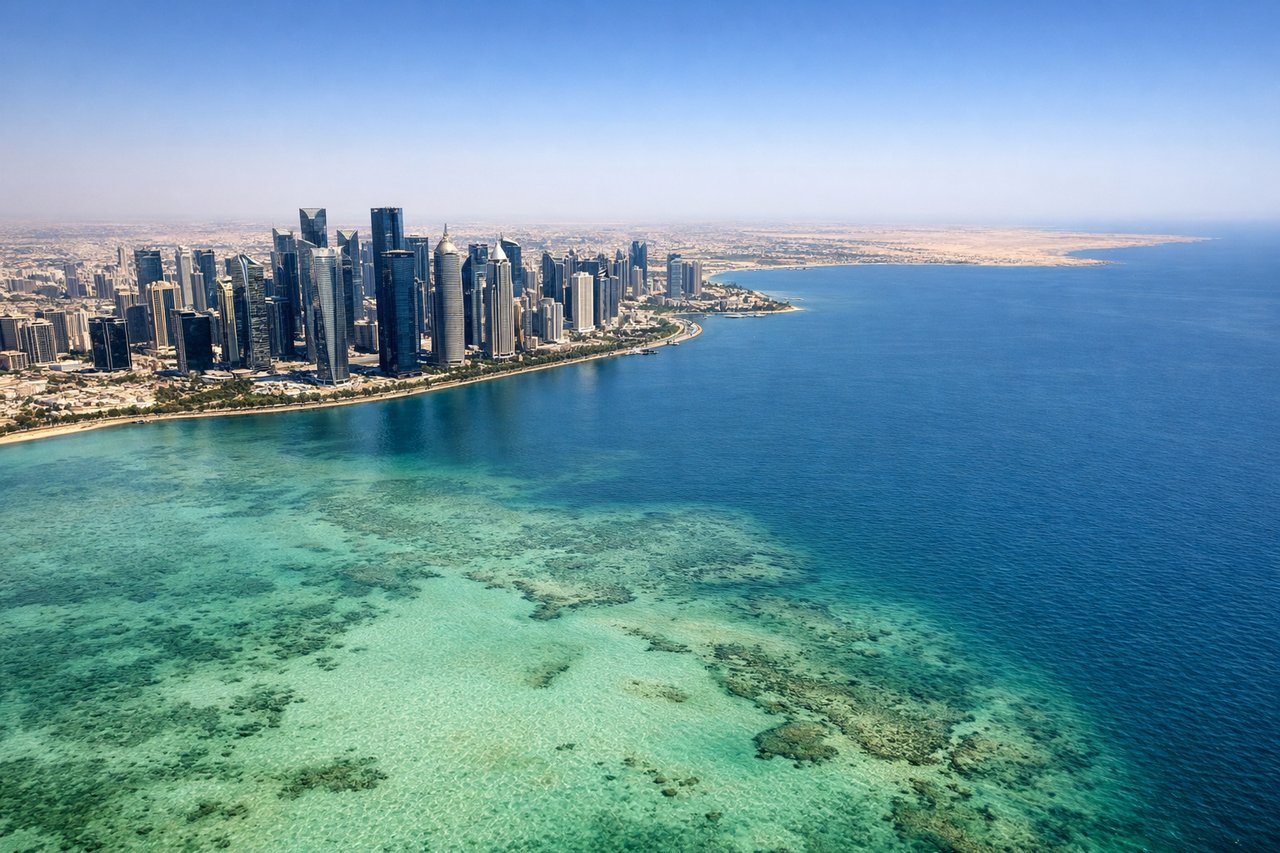
RIGHTArrivals into Doha from the southeast typically track up the Persian Gulf before turning onto final for runway 34, which puts Doha's West Bay skyline and the artificial Pearl-Qatar island on the right side of the cabin against the turquoise Gulf water. The left side, by contrast, mostly faces open Gulf water and flat desert with no major landmarks.
Landmarks on this routeAll landmarks →
Will your flight be in sunlight?
See exactly which side of the plane gets sun and shade at your departure time.
About This Route
Which side of the plane should I sit on flying from Soekarno Hatta International (CGK) to Hamad International Airport (DOH)?
Sit on the Left side of the plane for the best views on flights from Jakarta to Doha. The left side wins on the strength of the Krakatoa volcano view right after departure and a mid-flight pass near Sri Lanka and the Palk Strait, both distinctive landmarks in an otherwise ocean-heavy route. The right side has its own moments — a distant glimpse of Sumatra's Kerinci volcano, Oman's Hajar Mountains, and the Doha skyline on arrival — but the left side's combination of a dramatic takeoff landmark and a recognizable island midway through the flight edges it out.
What can I see during takeoff from Soekarno Hatta International in Jakarta?
During takeoff from Soekarno Hatta International (CGK), sit on the Left side for the best views. Within the first 20 minutes after leaving CGK, the flight track passes close to the Sunda Strait, putting the volcanic island of Anak Krakatau (Krakatoa) just off the left side of the aircraft. It's a rare chance to see an active volcano rising out of the sea shortly after takeoff, with the Java and southern Sumatra coastlines framing the strait. Notable sights include: Anak Krakatau volcano, Sunda Strait, southern Sumatra coastline, Java's coastal plain near Jakarta.
What can I see when landing at Hamad International Airport in Doha?
When landing at Hamad International Airport (DOH), sit on the Right side for the best views. Arrivals into Doha from the southeast typically track up the Persian Gulf before turning onto final for runway 34, which puts Doha's West Bay skyline and the artificial Pearl-Qatar island on the right side of the cabin against the turquoise Gulf water. The left side, by contrast, mostly faces open Gulf water and flat desert with no major landmarks. Notable sights include: Doha West Bay skyscraper skyline, The Pearl-Qatar island, Persian Gulf coastline, Hamad International's waterfront apron.
How long is the flight from Jakarta to Doha?
The flight from Soekarno Hatta International (CGK) to Hamad International Airport (DOH) takes 8h 30m.
What does the Jakarta to Doha flight path pass over?
The great-circle path passes close to the Palk Strait between southern India (near Nagapattinam) and northern Sri Lanka before continuing across the open Arabian Sea toward the Omani coast near Ras al Hadd.