Chengdu to Amsterdam is 4,936 miles (7,944 km), a flight of about 11 hours 30 minutes.
Right-side seats capture the dramatic Sichuan Basin topography during departure and maintain better views across Central Asia's mountain ranges (Tian Shan, Pamir) during the long westbound cruise. Left-side landing views are excellent but the takeoff scenery from the right is more visually striking.
Flight Path
The flight path crosses the Tibetan Plateau's northern edge (visible around 2-3 hours out), the Tian Shan mountain range (central Asia, 6-7 hours into flight), the Pamir Mountains and Hindu Kush (8-9 hours), the Caspian Sea (9-10 hours), and the Caucasus Mountains before reaching European airspace. The Taklamakan Desert and Gobi Desert are visible on the northern route variant. Over Kazakhstan and Turkmenistan, vast steppe landscapes dominate. The Aral Sea region shows dramatic environmental change. Crossing into Russia, the Ural Mountains mark the Europe-Asia boundary around 10 hours into flight.
Great circle distance and headings ›


Phase by phase
Takeoff from CTU
RIGHTRight-side seats offer views of the Longquan Mountains immediately east of Chengdu as the aircraft climbs. The terrain rises sharply in that direction, creating dramatic elevation changes visible within the first 10-15 minutes of flight.
Landing at AMS
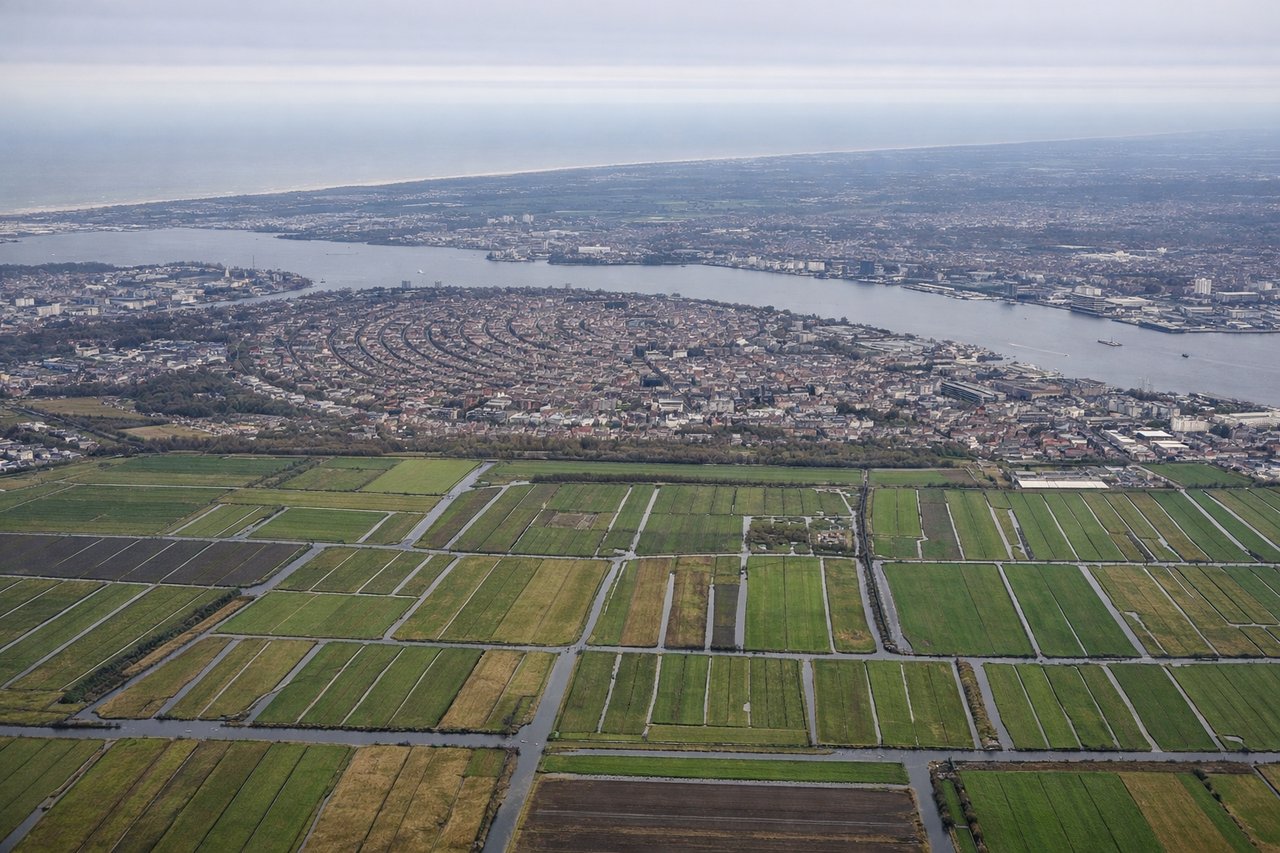
LEFTLeft-side seats provide views of the Rhine River delta and North Sea coastline during descent into Amsterdam. The flat Dutch landscape, polder fields, and waterways are distinctive and visible from 10,000 feet down to final approach.
Landmarks on this routeAll landmarks →
Will your flight be in sunlight?
Pick a date and time in the Sun Map to watch the sun move across your whole flight.
About This Route
Which side of the plane should I sit on flying from Shuangliu (CTU) to Schiphol (AMS)?
Sit on the Right side of the plane for the best views on flights from Chengdu to Amsterdam. Right-side seats capture the dramatic Sichuan Basin topography during departure and maintain better views across Central Asia's mountain ranges (Tian Shan, Pamir) during the long westbound cruise. Left-side landing views are excellent but the takeoff scenery from the right is more visually striking.
What can I see during takeoff from Shuangliu in Chengdu?
During takeoff from Shuangliu (CTU), sit on the Right side for the best views. Right-side seats offer views of the Longquan Mountains immediately east of Chengdu as the aircraft climbs. The terrain rises sharply in that direction, creating dramatic elevation changes visible within the first 10-15 minutes of flight. Notable sights include: Longquan Mountains (eastern range), Chengdu urban sprawl (receding westward), Min River valley (threading through foothills), Qingcheng Mountain (distant peak northeast).
What can I see when landing at Schiphol in Amsterdam?
When landing at Schiphol (AMS), sit on the Left side for the best views. Left-side seats provide views of the Rhine River delta and North Sea coastline during descent into Amsterdam. The flat Dutch landscape, polder fields, and waterways are distinctive and visible from 10,000 feet down to final approach. Notable sights include: Rhine River delta (branching waterways), North Sea coastline, Amsterdam city center (urban cluster), Markermeer lake (large inland water body).
How long is the flight from Chengdu to Amsterdam?
The flight from Shuangliu (CTU) to Schiphol (AMS) takes about 11 hours 30 minutes. The shortest flight path between them is 4,936 miles (7,944 km); winds and air traffic control usually add a few percent.
What does the Chengdu to Amsterdam flight path pass over?
The flight path crosses the Tibetan Plateau's northern edge (visible around 2-3 hours out), the Tian Shan mountain range (central Asia, 6-7 hours into flight), the Pamir Mountains and Hindu Kush (8-9 hours), the Caspian Sea (9-10 hours), and the Caucasus Mountains before reaching European airspace. The Taklamakan Desert and Gobi Desert are visible on the northern route variant. Over Kazakhstan and Turkmenistan, vast steppe landscapes dominate. The Aral Sea region shows dramatic environmental change. Crossing into Russia, the Ural Mountains mark the Europe-Asia boundary around 10 hours into flight.