Left side wins both the departure over the Caribbean lagoon system and the arrival over central Paris. During the transatlantic cruise at 35,000 feet, the left side also faces south toward the Azores archipelago if routing passes near them, and offers views of the Iberian Peninsula coastline on descent into Europe.
Flight Path
The route tracks northeast over the Gulf of Mexico, crosses the Florida Straits or Cuban airspace, then heads out over the Atlantic. Mid-ocean the Azores islands (Terceira, Faial, Pico with its volcanic cone) may be visible on the left side if routing passes within 50-100 miles. Approaching Europe the route crosses the Iberian Peninsula or Bay of Biscay, then the Loire Valley and northern French farmland before descending into the Paris basin.
Great circle distance and headings ›
.jpg?width=600)
Phase by phase
Takeoff from CUN
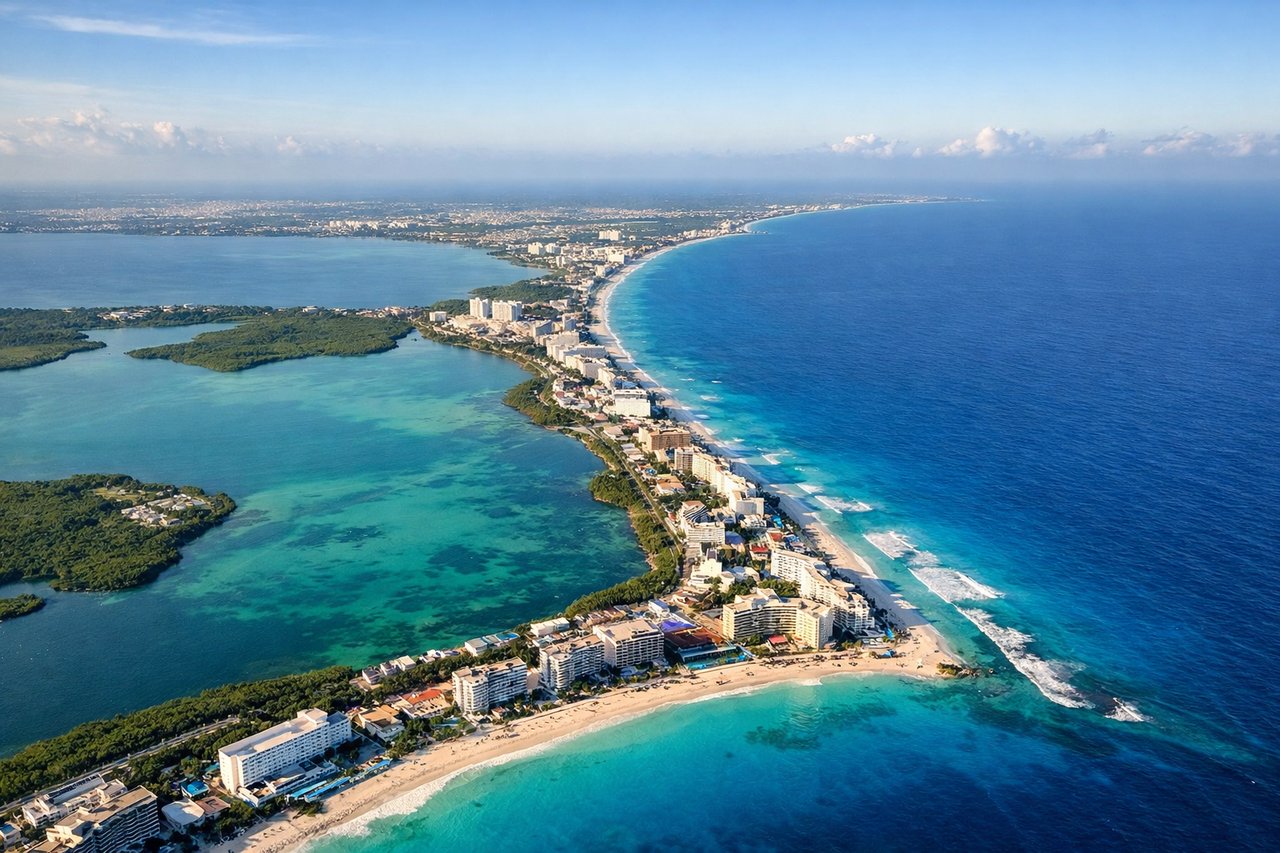
LEFTCancun's primary departure runway 12/30 means northeastbound departures swing left over the Caribbean and the Hotel Zone. The left side gives you the turquoise lagoon system, the narrow barrier strip of Cancun's hotel zone, and open Caribbean water as you climb out.
Landing at CDG
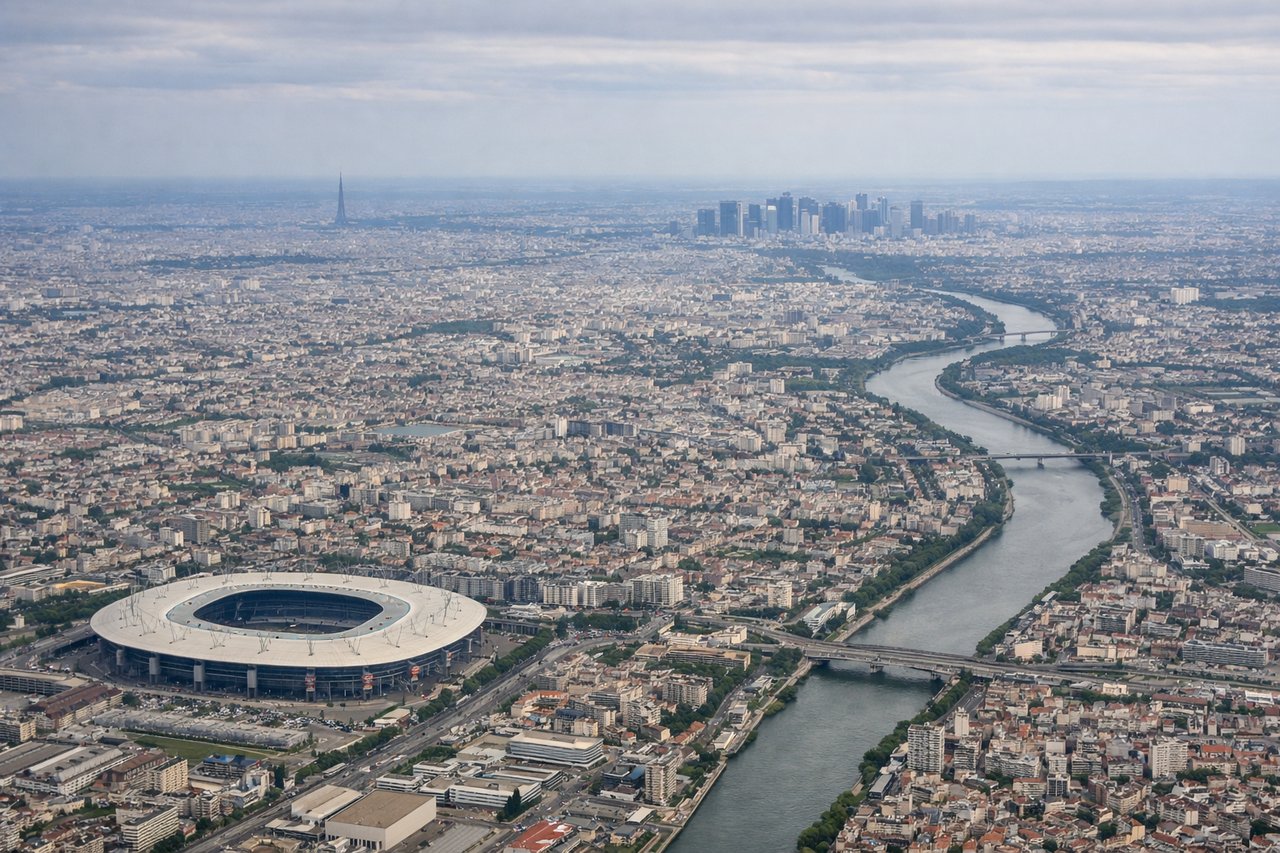
LEFTCDG's primary arrival runways from the west (27L/27R) bring aircraft in from the east over the Paris basin. The left side on approach from the east gives views over central Paris including the Seine river bends, the Eiffel Tower area, and the dense urban fabric of the city before the aircraft tracks northwest toward the airport.
Landmarks on this routeAll landmarks →
Will your flight be in sunlight?
See exactly which side of the plane gets sun and shade at your departure time.
About This Route
Which side of the plane should I sit on flying from Cancun International (CUN) to Charles De Gaulle (CDG)?
Sit on the Left side of the plane for the best views on flights from Cancun to Paris. Left side wins both the departure over the Caribbean lagoon system and the arrival over central Paris. During the transatlantic cruise at 35,000 feet, the left side also faces south toward the Azores archipelago if routing passes near them, and offers views of the Iberian Peninsula coastline on descent into Europe.
What can I see during takeoff from Cancun International in Cancun?
During takeoff from Cancun International (CUN), sit on the Left side for the best views. Cancun's primary departure runway 12/30 means northeastbound departures swing left over the Caribbean and the Hotel Zone. The left side gives you the turquoise lagoon system, the narrow barrier strip of Cancun's hotel zone, and open Caribbean water as you climb out. Notable sights include: Nichupte Lagoon (the large inland lagoon behind the hotel strip), Cancun Hotel Zone barrier island, Isla Mujeres visible to the northeast, Caribbean reef color gradients in shallow water.
What can I see when landing at Charles De Gaulle in Paris?
When landing at Charles De Gaulle (CDG), sit on the Left side for the best views. CDG's primary arrival runways from the west (27L/27R) bring aircraft in from the east over the Paris basin. The left side on approach from the east gives views over central Paris including the Seine river bends, the Eiffel Tower area, and the dense urban fabric of the city before the aircraft tracks northwest toward the airport. Notable sights include: Seine River bends through central Paris, Eiffel Tower district (visible as a landmark in the urban grid), Bois de Boulogne forest on the western edge of Paris, dense Haussmann urban grid of central arrondissements.
How long is the flight from Cancun to Paris?
The flight from Cancun International (CUN) to Charles De Gaulle (CDG) takes Approximately 10 to 11 hours.
What does the Cancun to Paris flight path pass over?
The route tracks northeast over the Gulf of Mexico, crosses the Florida Straits or Cuban airspace, then heads out over the Atlantic. Mid-ocean the Azores islands (Terceira, Faial, Pico with its volcanic cone) may be visible on the left side if routing passes within 50-100 miles. Approaching Europe the route crosses the Iberian Peninsula or Bay of Biscay, then the Loire Valley and northern French farmland before descending into the Paris basin.