Left side wins at both ends of the flight. Takeoff delivers the Cancun lagoon and Caribbean color show, and landing delivers the Toronto skyline and Lake Ontario approach. The mid-flight portion over the Gulf of Mexico and US interior is largely featureless at cruise altitude, so the endpoint views are what matter most.
Flown CUN to YYZ? Did we get it right?
Flight Path
Cancun to Toronto is 1,618 miles (2,605 km), a flight of about 4 hours.
After departing Cancun the route crosses the Gulf of Mexico — largely open water with no landmarks. The US Gulf Coast near Louisiana or Mississippi may be visible briefly. The flight then tracks northeast over the US interior through Tennessee, Kentucky, Ohio, and into southern Ontario. The Great Lakes region begins to appear in the final hour, with Lake Erie visible to the left and Lake Ontario ahead on descent into Toronto.
Great circle distance and headings ›

Phase by phase
Takeoff from CUN
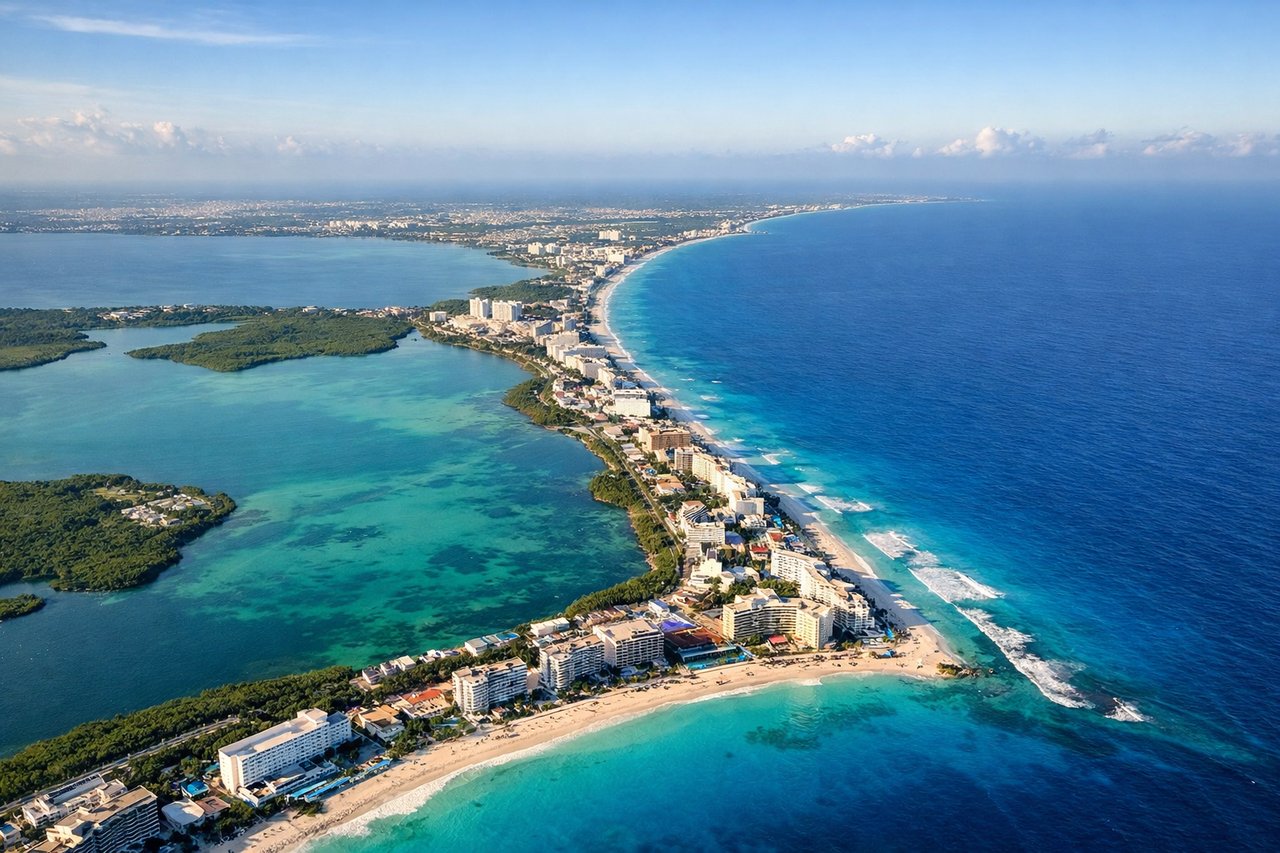
LEFTCancun's primary departure runway 12/30 means northbound departures typically use runway 12, heading southeast before turning north. A left-side seat gives you the lagoon system of Nichupté and the Hotel Zone strip as you bank north, with the Caribbean turquoise water visible on the left. The color contrast between the lagoon and open sea is genuinely striking from low altitude.

Landing at YYZ
LEFTPearson's most common arrival from the south uses runway 23 or 24L/24R, meaning the aircraft approaches from the northeast over Lake Ontario and the Toronto waterfront. A left-side seat on approach gives you the Toronto downtown skyline, the CN Tower, and the Lake Ontario shoreline directly in view as you descend. Right side faces suburban sprawl to the north.
Will your flight be in sunlight?
Pick a date and time in the Sun Map to watch the sun move across your whole flight.
About This Route
Which side of the plane should I sit on flying from Cancun International (CUN) to Lester B Pearson International (YYZ)?
Sit on the Left side of the plane for the best views on flights from Cancun to Toronto. Left side wins at both ends of the flight. Takeoff delivers the Cancun lagoon and Caribbean color show, and landing delivers the Toronto skyline and Lake Ontario approach. The mid-flight portion over the Gulf of Mexico and US interior is largely featureless at cruise altitude, so the endpoint views are what matter most.
What can I see during takeoff from Cancun International in Cancun?
During takeoff from Cancun International (CUN), sit on the Left side for the best views. Cancun's primary departure runway 12/30 means northbound departures typically use runway 12, heading southeast before turning north. A left-side seat gives you the lagoon system of Nichupté and the Hotel Zone strip as you bank north, with the Caribbean turquoise water visible on the left. The color contrast between the lagoon and open sea is genuinely striking from low altitude. Notable sights include: Laguna Nichupté (the large lagoon west of the Hotel Zone), Cancun Hotel Zone barrier strip, Isla Mujeres visible to the northeast, Caribbean reef color gradients in shallow water.
What can I see when landing at Lester B Pearson International in Toronto?
When landing at Lester B Pearson International (YYZ), sit on the Left side for the best views. Pearson's most common arrival from the south uses runway 23 or 24L/24R, meaning the aircraft approaches from the northeast over Lake Ontario and the Toronto waterfront. A left-side seat on approach gives you the Toronto downtown skyline, the CN Tower, and the Lake Ontario shoreline directly in view as you descend. Right side faces suburban sprawl to the north. Notable sights include: CN Tower and Toronto downtown skyline, Lake Ontario shoreline and Toronto Islands, Humber Bay, Highway 401 corridor visible as a dense traffic artery.
How long is the flight from Cancun to Toronto?
The flight from Cancun International (CUN) to Lester B Pearson International (YYZ) takes about 4 hours. The shortest flight path between them is 1,618 miles (2,605 km); winds and air traffic control usually add a few percent.
What does the Cancun to Toronto flight path pass over?
After departing Cancun the route crosses the Gulf of Mexico — largely open water with no landmarks. The US Gulf Coast near Louisiana or Mississippi may be visible briefly. The flight then tracks northeast over the US interior through Tennessee, Kentucky, Ohio, and into southern Ontario. The Great Lakes region begins to appear in the final hour, with Lake Erie visible to the left and Lake Ontario ahead on descent into Toronto.