Delhi to Muscat is 1,215 miles (1,955 km), a flight of about 2 hours 15 minutes.
While takeoff slightly favors right, the landing view of the Hajar Mountains and Muscat's dramatic coastal setting is far more visually rewarding. Left seats capture the approach descent with the mountains as a stunning backdrop.
Flight Path
The flight crosses the Thar Desert (visible as tan, featureless terrain with sparse settlements), then transitions over the Arabian Sea. The coastline of Gujarat and the Gulf of Kutch may be visible on the left during the initial climb. The flight path then crosses open water for roughly 90 minutes, with occasional views of small islands and the Strait of Hormuz region to the north. As the aircraft approaches Oman, the Hajar Mountains become visible on the horizon, signaling descent into MCT.
Great circle distance and headings ›

Phase by phase
Takeoff from DEL
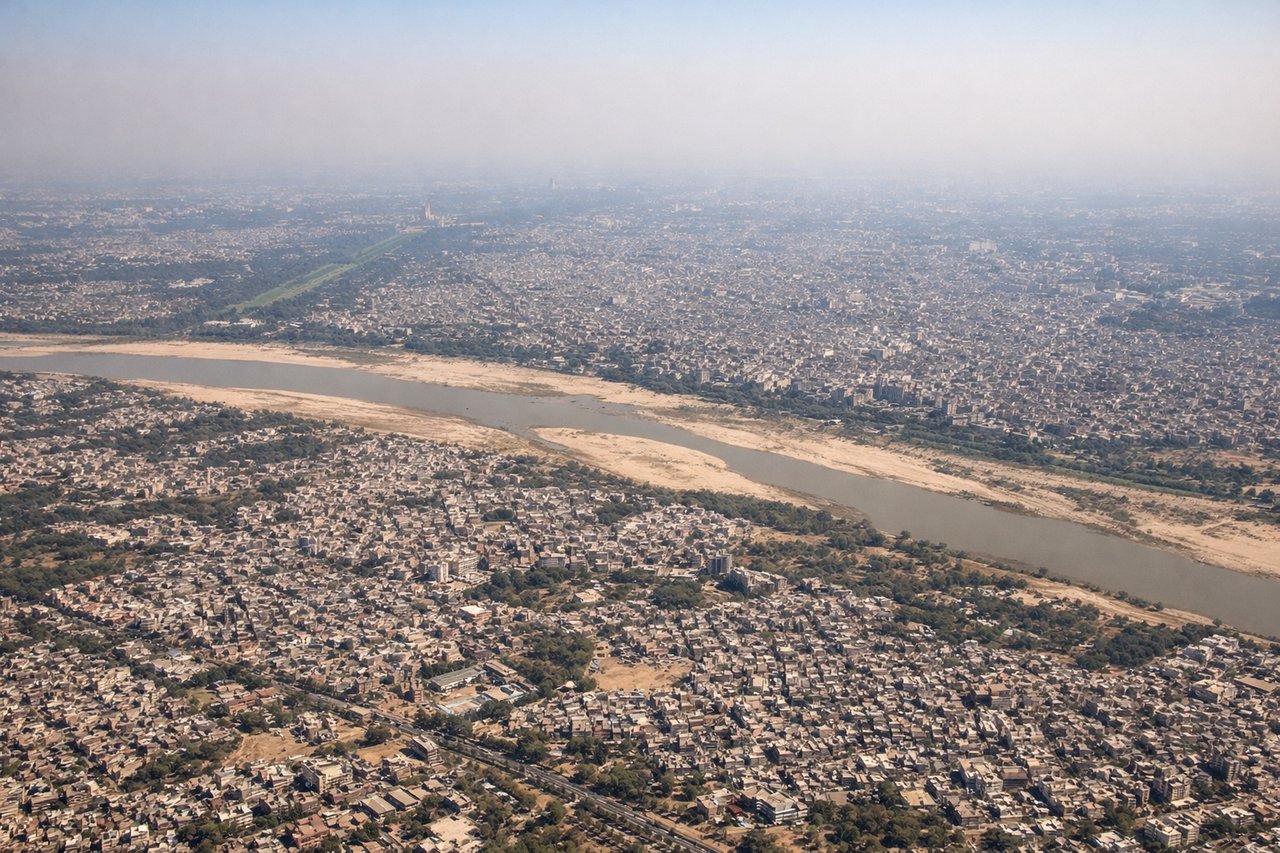
RIGHTDEL typically departs eastbound (runways 09L/09R) or westbound (27L/27R). Right-side seats on eastbound departures offer views of the Yamuna River floodplain and the urban sprawl of East Delhi. Westbound departures favor left seats, but eastbound is more common for traffic flow, making right the better bet.
Landing at MCT
LEFTMCT's primary runway is 09/27. Approach from the northwest (typical for traffic from India) means descent on a southeasterly vector. Left-side seats capture the Hajar Mountains rising dramatically as the aircraft descends toward the coastal plain, plus views of Muscat's harbor and the city's waterfront development.
Landmarks on this routeAll landmarks →
Will your flight be in sunlight?
Pick a date and time in the Sun Map to watch the sun move across your whole flight.
About This Route
Which side of the plane should I sit on flying from Indira Gandhi International (DEL) to Seeb International (MCT)?
Sit on the Left side of the plane for the best views on flights from Delhi to Muscat. While takeoff slightly favors right, the landing view of the Hajar Mountains and Muscat's dramatic coastal setting is far more visually rewarding. Left seats capture the approach descent with the mountains as a stunning backdrop.
What can I see during takeoff from Indira Gandhi International in Delhi?
During takeoff from Indira Gandhi International (DEL), sit on the Right side for the best views. DEL typically departs eastbound (runways 09L/09R) or westbound (27L/27R). Right-side seats on eastbound departures offer views of the Yamuna River floodplain and the urban sprawl of East Delhi. Westbound departures favor left seats, but eastbound is more common for traffic flow, making right the better bet. Notable sights include: Yamuna River (visible as a brown ribbon threading through the city), Delhi Ridge (low forested hills to the south), Indraprastha Power Station cooling towers (distinctive white structures), sprawling residential colonies of East Delhi.
What can I see when landing at Seeb International in Muscat?
When landing at Seeb International (MCT), sit on the Left side for the best views. MCT's primary runway is 09/27. Approach from the northwest (typical for traffic from India) means descent on a southeasterly vector. Left-side seats capture the Hajar Mountains rising dramatically as the aircraft descends toward the coastal plain, plus views of Muscat's harbor and the city's waterfront development. Notable sights include: Hajar Mountains (rugged, bare limestone ridges running parallel to the coast), Muscat Harbor and waterfront (with visible port infrastructure and dhow anchorages), the flat coastal plain and salt flats, Muscat city sprawl along the coast.
How long is the flight from Delhi to Muscat?
The flight from Indira Gandhi International (DEL) to Seeb International (MCT) takes about 2 hours 15 minutes. The shortest flight path between them is 1,215 miles (1,955 km); winds and air traffic control usually add a few percent.
What does the Delhi to Muscat flight path pass over?
The flight crosses the Thar Desert (visible as tan, featureless terrain with sparse settlements), then transitions over the Arabian Sea. The coastline of Gujarat and the Gulf of Kutch may be visible on the left during the initial climb. The flight path then crosses open water for roughly 90 minutes, with occasional views of small islands and the Strait of Hormuz region to the north. As the aircraft approaches Oman, the Hajar Mountains become visible on the horizon, signaling descent into MCT.