Left side wins at both ends of the flight. The Rocky Mountain Front Range view on departure is the single most spectacular feature of this route, and the Des Moines approach also favors the left for the city and river views. The cruise portion over Iowa is flat farmland on both sides with little to differentiate.
Flown DEN to DSM? Did we get it right?
Flight Path
Denver to Des Moines is 588 miles (947 km), a flight of about 1 hour 55 minutes.
The flight crosses the Nebraska Sandhills — a vast, lightly populated region of grass-stabilized sand dunes visible as gently rolling pale terrain — followed by the broad Platte River valley near Grand Island, Nebraska, then transitions into the flat, intensively farmed Iowa landscape of corn and soybean fields divided by straight county roads, with occasional small towns and river drainages including the Nishnabotna River near the Iowa border.
Great circle distance and headings ›Phase by phase
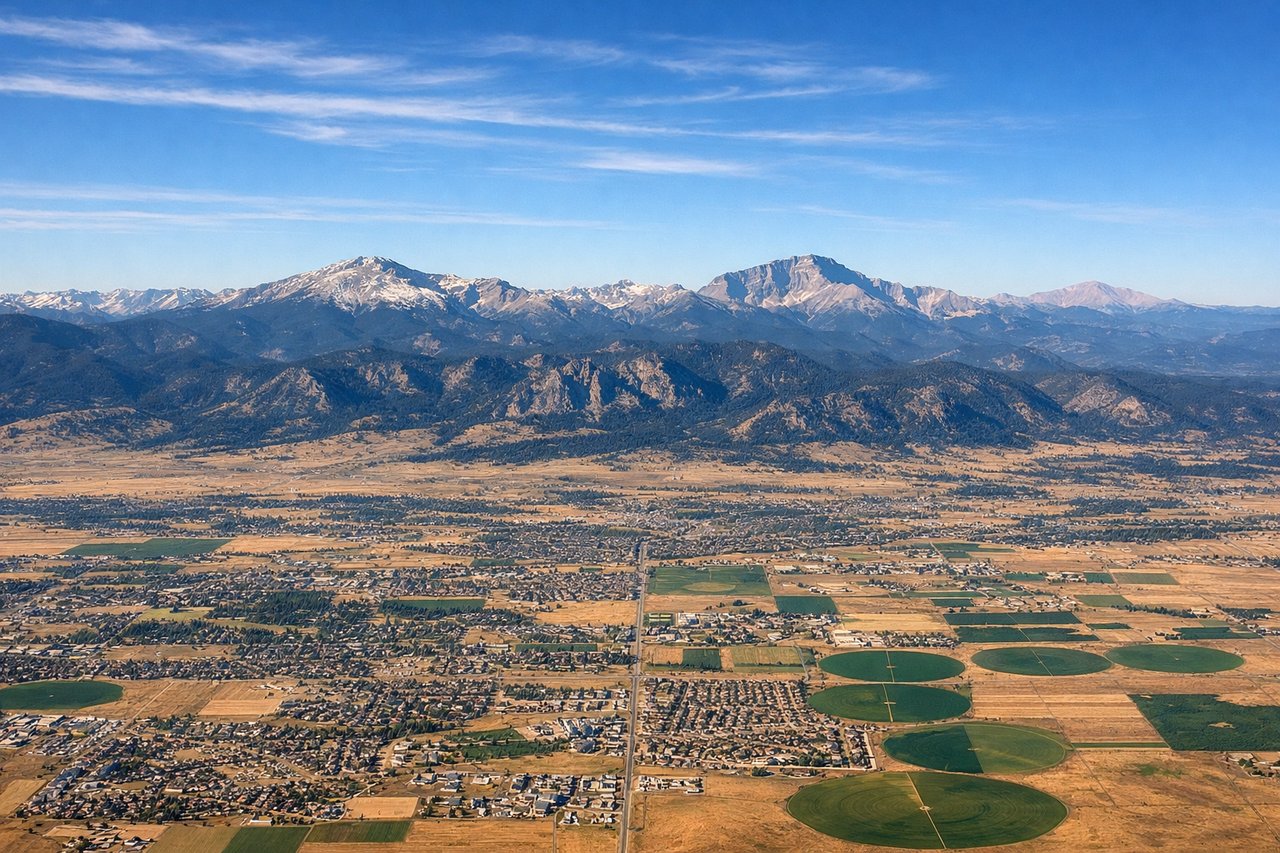
Takeoff from DEN
LEFTDEN typically departs eastward on runways 16/34 or 8/26. When departing east and banking northeast toward DSM, the left side faces northwest and west, giving a clear view of the Front Range of the Rocky Mountains including Longs Peak and the Denver metro sprawl below. The right side faces southeast toward flat plains with little of interest.
Landing at DSM
LEFTDSM typically lands on runway 31 (approaching from the southeast) or runway 13. On approach from the southeast heading northwest, the left side faces south and southwest toward the Des Moines River valley and the downtown Des Moines skyline, which sits just southwest of the airport. The right side faces northeast over featureless Iowa farmland.
Will your flight be in sunlight?
Pick a date and time in the Sun Map to watch the sun move across your whole flight.
About This Route
Which side of the plane should I sit on flying from Denver International (DEN) to Des Moines International (DSM)?
Sit on the Left side of the plane for the best views on flights from Denver to Des Moines. Left side wins at both ends of the flight. The Rocky Mountain Front Range view on departure is the single most spectacular feature of this route, and the Des Moines approach also favors the left for the city and river views. The cruise portion over Iowa is flat farmland on both sides with little to differentiate.
What can I see during takeoff from Denver International in Denver?
During takeoff from Denver International (DEN), sit on the Left side for the best views. DEN typically departs eastward on runways 16/34 or 8/26. When departing east and banking northeast toward DSM, the left side faces northwest and west, giving a clear view of the Front Range of the Rocky Mountains including Longs Peak and the Denver metro sprawl below. The right side faces southeast toward flat plains with little of interest. Notable sights include: Front Range of the Rocky Mountains (Longs Peak, Mount Evans visible to the west), Denver city grid and downtown skyline, Cherry Creek Reservoir southeast of downtown, Denver International Airport's distinctive white tensile roof structure below.
What can I see when landing at Des Moines International in Des Moines?
When landing at Des Moines International (DSM), sit on the Left side for the best views. DSM typically lands on runway 31 (approaching from the southeast) or runway 13. On approach from the southeast heading northwest, the left side faces south and southwest toward the Des Moines River valley and the downtown Des Moines skyline, which sits just southwest of the airport. The right side faces northeast over featureless Iowa farmland. Notable sights include: Des Moines downtown skyline (visible to the southwest on approach), Des Moines River winding through the city, Iowa State Capitol building with its gold dome, patchwork Iowa agricultural fields on final approach.
How long is the flight from Denver to Des Moines?
The flight from Denver International (DEN) to Des Moines International (DSM) takes about 1 hour 55 minutes. The shortest flight path between them is 588 miles (947 km); winds and air traffic control usually add a few percent.
What does the Denver to Des Moines flight path pass over?
The flight crosses the Nebraska Sandhills — a vast, lightly populated region of grass-stabilized sand dunes visible as gently rolling pale terrain — followed by the broad Platte River valley near Grand Island, Nebraska, then transitions into the flat, intensively farmed Iowa landscape of corn and soybean fields divided by straight county roads, with occasional small towns and river drainages including the Nishnabotna River near the Iowa border.