Denver to Anchorage is 2,396 miles (3,856 km), a flight of about 5 hours 15 minutes.
Left side delivers the Rocky Mountain Front Range on departure and the Chugach Mountains plus Anchorage bowl on arrival. Through the middle of the flight over Canada, both sides are broadly similar boreal forest and mountain terrain, but the left side edges it at both endpoints.
Flight Path
The route tracks northwest over Wyoming and Montana, crossing the Canadian Rockies near the Alberta-BC border, then over the Coast Mountains of British Columbia and the St. Elias Range in Yukon and southeast Alaska. Passengers will see the vast boreal forest of interior British Columbia and Yukon, braided glacial rivers, and the heavily glaciated peaks of the St. Elias Mountains including some of the largest non-polar glaciers in the world such as the Kaskawulsh and Lowell glaciers, visible as broad white tongues filling mountain valleys.
Great circle distance and headings ›.jpg?width=600)
.jpg?width=600)


Phase by phase
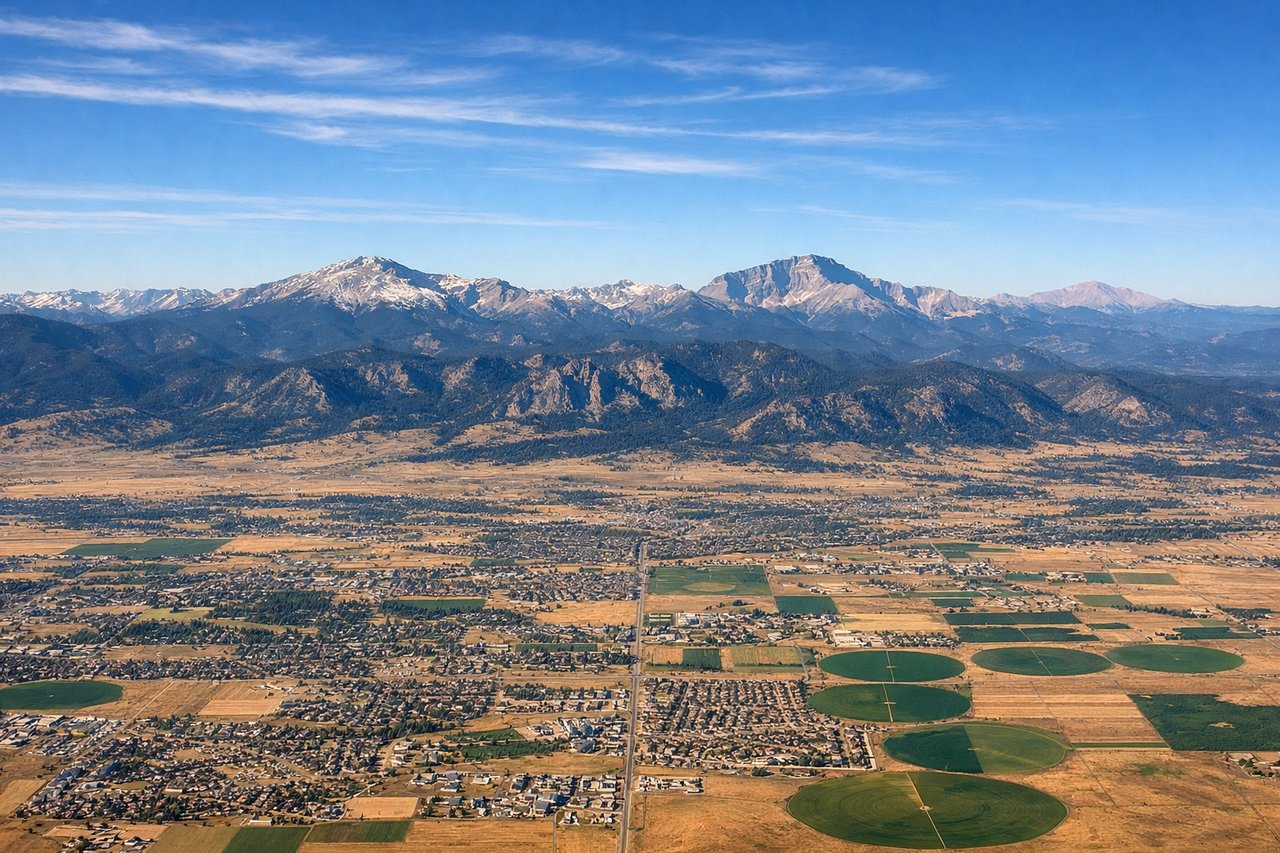
Takeoff from DEN
LEFTDEN typically departs westbound on runway 16R/34L or uses east-west runways. On a northwest-bound departure toward Alaska, the left (south) side gives you the Front Range of the Rockies including Pikes Peak and the Denver metro sprawl below. The right side faces northeast toward the plains with little of interest.
Landing at EDF
LEFTElmendorf AFB approaches typically come from the south or east over Cook Inlet. On approach from the south, the left side faces east toward the Chugach Mountains and the city of Anchorage, while the right side looks west over Cook Inlet. The Chugach range and the compact Anchorage bowl are the more dramatic view.
Landmarks on this routeAll landmarks →
Will your flight be in sunlight?
Pick a date and time in the Sun Map to watch the sun move across your whole flight.
About This Route
Which side of the plane should I sit on flying from Denver International (DEN) to Elmendorf Afb (EDF)?
Sit on the Left side of the plane for the best views on flights from Denver to Anchorage. Left side delivers the Rocky Mountain Front Range on departure and the Chugach Mountains plus Anchorage bowl on arrival. Through the middle of the flight over Canada, both sides are broadly similar boreal forest and mountain terrain, but the left side edges it at both endpoints.
What can I see during takeoff from Denver International in Denver?
During takeoff from Denver International (DEN), sit on the Left side for the best views. DEN typically departs westbound on runway 16R/34L or uses east-west runways. On a northwest-bound departure toward Alaska, the left (south) side gives you the Front Range of the Rockies including Pikes Peak and the Denver metro sprawl below. The right side faces northeast toward the plains with little of interest. Notable sights include: Front Range of the Rocky Mountains, Pikes Peak (~100 miles south), Denver metro grid, Rocky Mountain foothills.
What can I see when landing at Elmendorf Afb in Anchorage?
When landing at Elmendorf Afb (EDF), sit on the Left side for the best views. Elmendorf AFB approaches typically come from the south or east over Cook Inlet. On approach from the south, the left side faces east toward the Chugach Mountains and the city of Anchorage, while the right side looks west over Cook Inlet. The Chugach range and the compact Anchorage bowl are the more dramatic view. Notable sights include: Chugach Mountains, Anchorage city bowl, Cook Inlet (visible to the west), Knik Arm.
How long is the flight from Denver to Anchorage?
The flight from Denver International (DEN) to Elmendorf Afb (EDF) takes about 5 hours 15 minutes. The shortest flight path between them is 2,396 miles (3,856 km); winds and air traffic control usually add a few percent.
What does the Denver to Anchorage flight path pass over?
The route tracks northwest over Wyoming and Montana, crossing the Canadian Rockies near the Alberta-BC border, then over the Coast Mountains of British Columbia and the St. Elias Range in Yukon and southeast Alaska. Passengers will see the vast boreal forest of interior British Columbia and Yukon, braided glacial rivers, and the heavily glaciated peaks of the St. Elias Mountains including some of the largest non-polar glaciers in the world such as the Kaskawulsh and Lowell glaciers, visible as broad white tongues filling mountain valleys.