The left side tracks the Rockies at departure, the Canadian Rockies and Yukon highlands at cruise, and the Alaska Range with a possible Denali view on arrival, while the right side over the plains and boreal lowlands offers comparatively flat, repetitive terrain.
Flown DEN to FAI? Did we get it right?
Flight Path
Denver to Fairbanks is 2,425 miles (3,903 km), a flight of about 4 hours 55 minutes.
Canadian Rockies near the Alberta-British Columbia border, the Yukon Plateau, and the northern foothills of the Wrangell-St. Elias and Alaska Range as the route approaches interior Alaska
Great circle distance and headings ›


Phase by phase
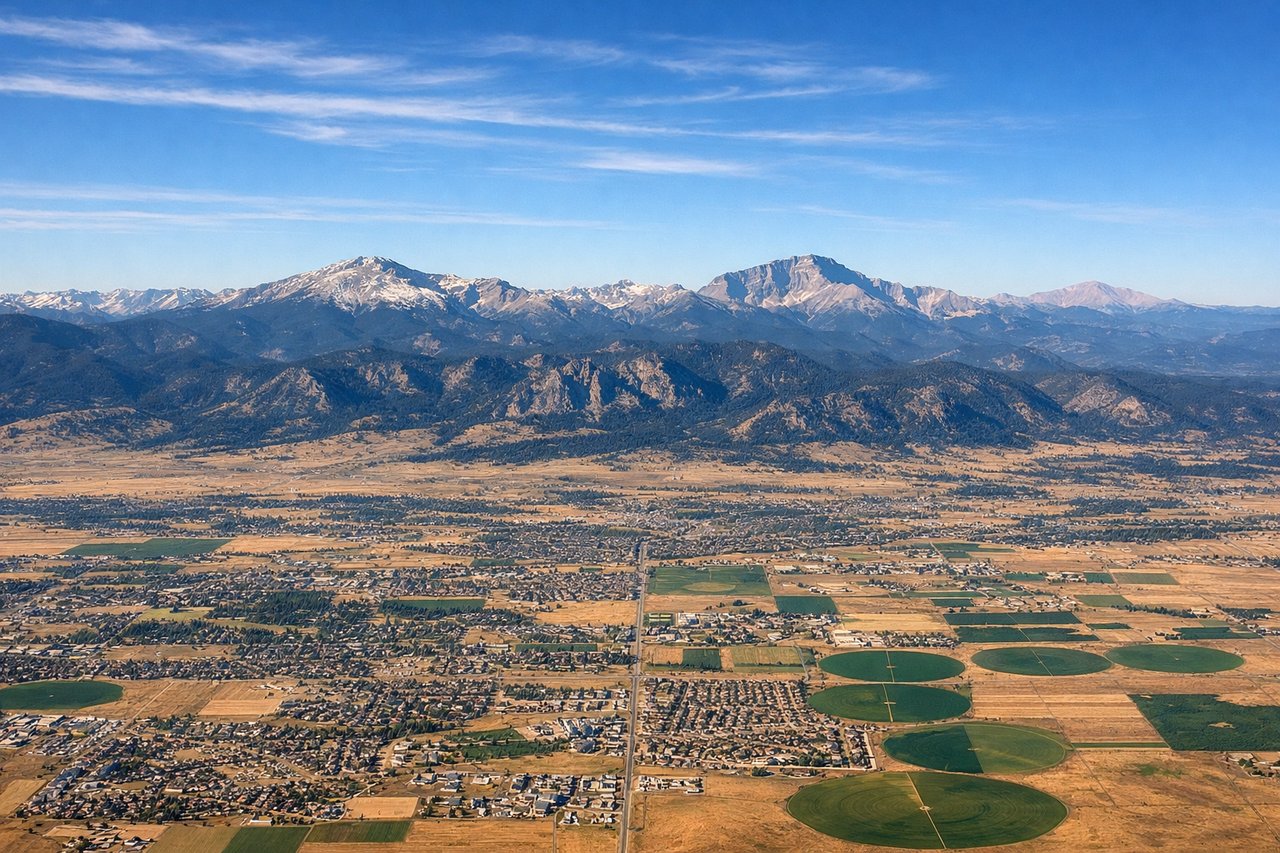
Takeoff from DEN
LEFTDeparting DEN northbound, the Front Range rises immediately to the west, giving left-side passengers a dramatic view of the Rockies' foothills and peaks like Longs Peak as the plane climbs out over the Denver suburbs.
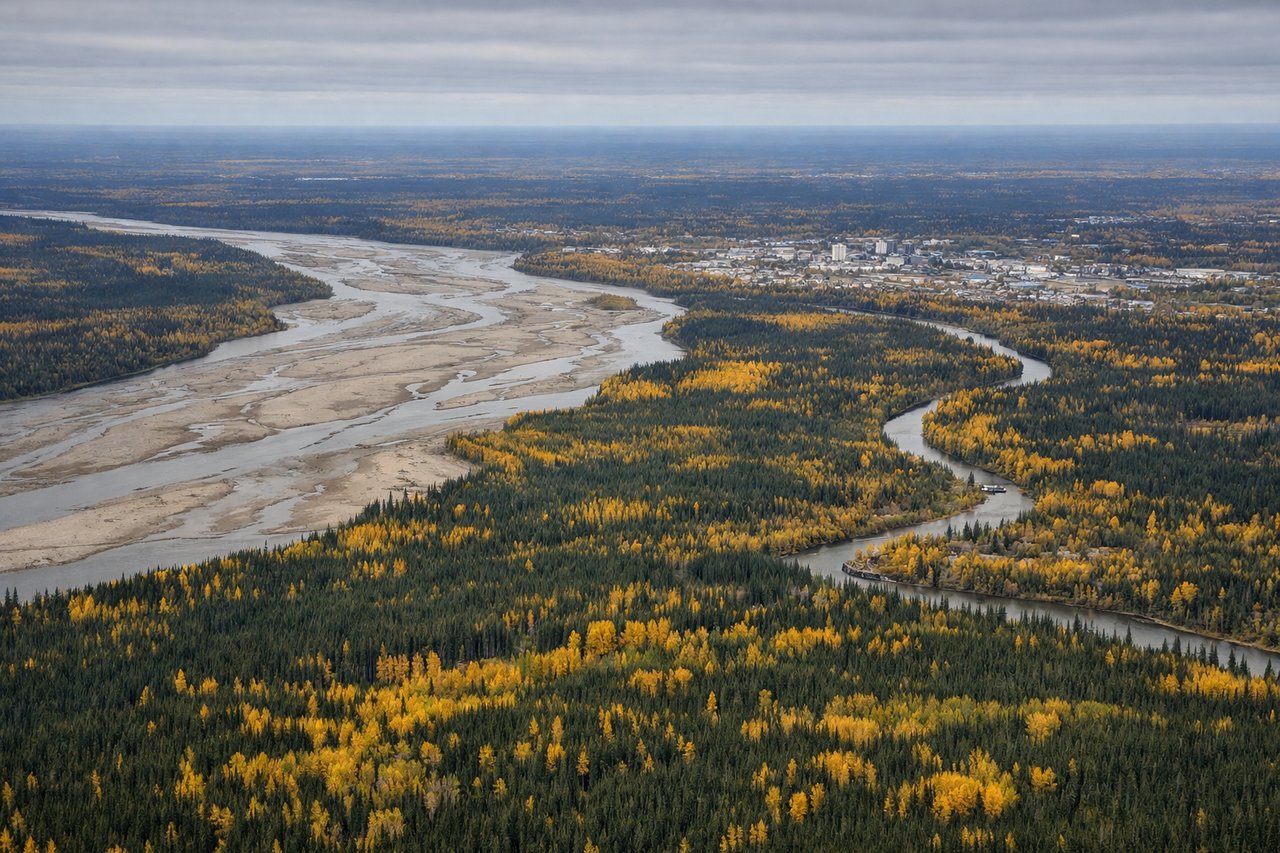
Landing at FAI
LEFTOn approach into Fairbanks from the south, the west side offers sweeping views of the Alaska Range, including Denali on a clear day, before the plane descends over the Tanana River valley into the city.
Will your flight be in sunlight?
Pick a date and time in the Sun Map to watch the sun move across your whole flight.
About This Route
Which side of the plane should I sit on flying from Denver International (DEN) to Fairbanks International (FAI)?
Sit on the Left side of the plane for the best views on flights from Denver to Fairbanks. The left side tracks the Rockies at departure, the Canadian Rockies and Yukon highlands at cruise, and the Alaska Range with a possible Denali view on arrival, while the right side over the plains and boreal lowlands offers comparatively flat, repetitive terrain.
What can I see during takeoff from Denver International in Denver?
During takeoff from Denver International (DEN), sit on the Left side for the best views. Departing DEN northbound, the Front Range rises immediately to the west, giving left-side passengers a dramatic view of the Rockies' foothills and peaks like Longs Peak as the plane climbs out over the Denver suburbs. Notable sights include: Front Range foothills, Longs Peak, Rocky Mountain National Park high country, Denver metro sprawl.
What can I see when landing at Fairbanks International in Fairbanks?
When landing at Fairbanks International (FAI), sit on the Left side for the best views. On approach into Fairbanks from the south, the west side offers sweeping views of the Alaska Range, including Denali on a clear day, before the plane descends over the Tanana River valley into the city. Notable sights include: Alaska Range, Denali (if visible), Tanana River, boreal forest surrounding Fairbanks.
How long is the flight from Denver to Fairbanks?
The flight from Denver International (DEN) to Fairbanks International (FAI) takes about 4 hours 55 minutes. The shortest flight path between them is 2,425 miles (3,903 km); winds and air traffic control usually add a few percent.
What does the Denver to Fairbanks flight path pass over?
Canadian Rockies near the Alberta-British Columbia border, the Yukon Plateau, and the northern foothills of the Wrangell-St. Elias and Alaska Range as the route approaches interior Alaska