The left side has the better departure over Dublin Bay and the Wicklow Mountains, a better landing view of the Dallas skyline, and a better cruise view (St. Lawrence north shore, Georgian Bay and Lake Huron, the Mississippi near St. Louis). Both sides are mostly open Atlantic for over 5 hours, which caps the scores low.
Flown DUB to DFW? Did we get it right?
Flight Path
Dublin to Dallas-Fort Worth is 4,461 miles (7,180 km), a flight of about 9 hours 30 minutes.
After leaving Ireland the route crosses the North Atlantic for about 5 hours toward the southern Labrador coast. It then runs over Quebec's Côte-Nord, with the St. Lawrence estuary to the south, and over Georgian Bay and the Great Lakes region of Ontario and Michigan. From there it passes near St. Louis and the Mississippi and Missouri river confluence, crosses the Ozarks of Arkansas and Missouri, and reaches the plains of Oklahoma and North Texas.
Great circle distance and headings ›

Phase by phase
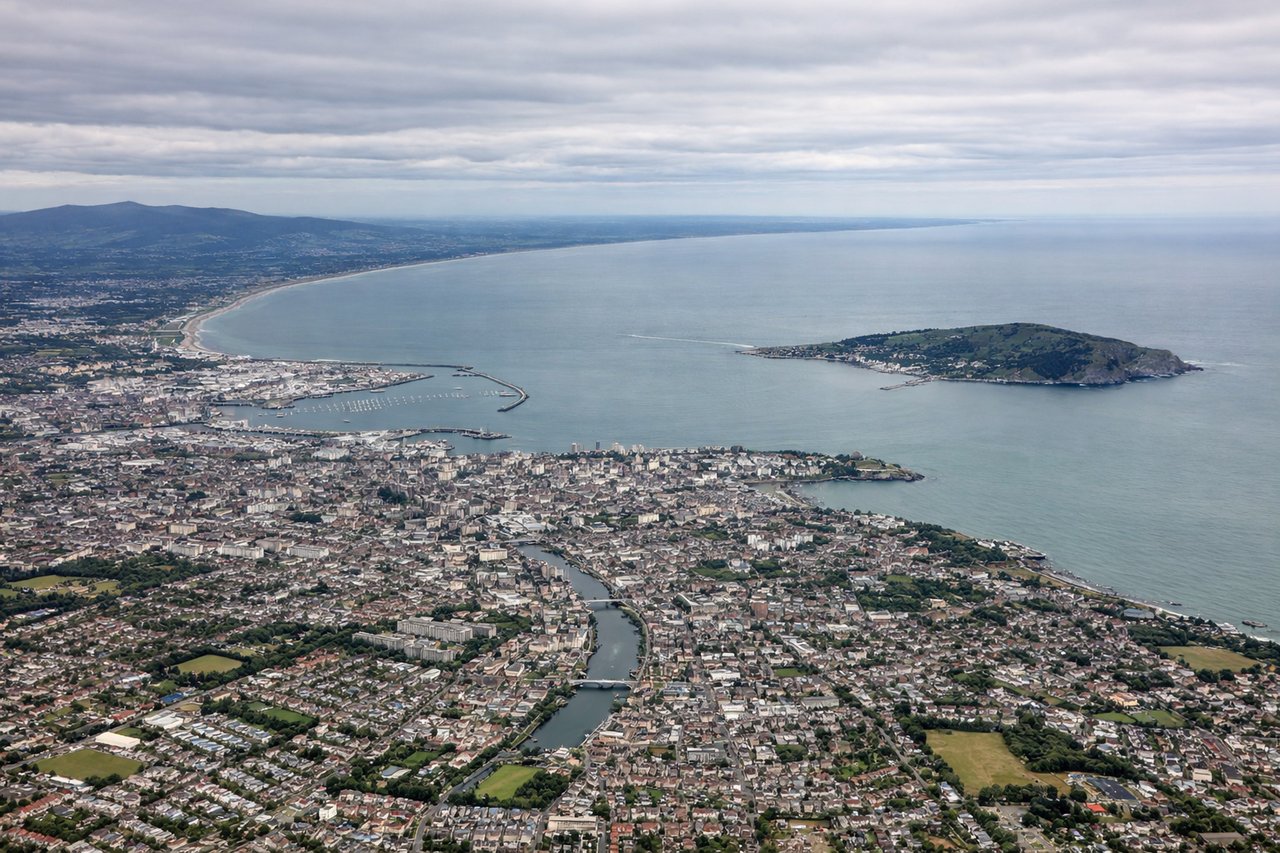
Takeoff from DUB
LEFTDublin's westerly flow means most departures use runway 28R or 28L, so the left side faces south as you climb out. That gives you the city centre, Dublin Bay and the Dublin and Wicklow Mountains, while the right side sees mostly flat farmland in County Meath. If the wind swings and you depart east on runway 10, the views change, but the left side is still the better bet for most departures.

Landing at DFW
LEFTDFW most often lands to the south on the 17-series runways. The left side then faces east toward the Dallas skyline, Las Colinas and the suburban grid, while the right side sees Fort Worth's smaller skyline further away. If the airport is in north flow, the Dallas view moves to the right side.
Will your flight be in sunlight?
Pick a date and time in the Sun Map to watch the sun move across your whole flight.
About This Route
Which side of the plane should I sit on flying from Dublin (DUB) to Dallas Fort Worth International (DFW)?
Sit on the Left side of the plane for the best views on flights from Dublin to Dallas-Fort Worth. The left side has the better departure over Dublin Bay and the Wicklow Mountains, a better landing view of the Dallas skyline, and a better cruise view (St. Lawrence north shore, Georgian Bay and Lake Huron, the Mississippi near St. Louis). Both sides are mostly open Atlantic for over 5 hours, which caps the scores low.
What can I see during takeoff from Dublin in Dublin?
During takeoff from Dublin (DUB), sit on the Left side for the best views. Dublin's westerly flow means most departures use runway 28R or 28L, so the left side faces south as you climb out. That gives you the city centre, Dublin Bay and the Dublin and Wicklow Mountains, while the right side sees mostly flat farmland in County Meath. If the wind swings and you depart east on runway 10, the views change, but the left side is still the better bet for most departures. Notable sights include: Dublin city centre and the River Liffey, Dublin Bay and the Poolbeg chimneys, Phoenix Park, Dublin and Wicklow Mountains.
What can I see when landing at Dallas Fort Worth International in Dallas-Fort Worth?
When landing at Dallas Fort Worth International (DFW), sit on the Left side for the best views. DFW most often lands to the south on the 17-series runways. The left side then faces east toward the Dallas skyline, Las Colinas and the suburban grid, while the right side sees Fort Worth's smaller skyline further away. If the airport is in north flow, the Dallas view moves to the right side. Notable sights include: Downtown Dallas skyline (Reunion Tower, Bank of America Plaza), Las Colinas and Irving, Grapevine Lake, DFW terminals and runway complex.
How long is the flight from Dublin to Dallas-Fort Worth?
The flight from Dublin (DUB) to Dallas Fort Worth International (DFW) takes about 9 hours 30 minutes. The shortest flight path between them is 4,461 miles (7,180 km); winds and air traffic control usually add a few percent.
What does the Dublin to Dallas-Fort Worth flight path pass over?
After leaving Ireland the route crosses the North Atlantic for about 5 hours toward the southern Labrador coast. It then runs over Quebec's Côte-Nord, with the St. Lawrence estuary to the south, and over Georgian Bay and the Great Lakes region of Ontario and Michigan. From there it passes near St. Louis and the Mississippi and Missouri river confluence, crosses the Ozarks of Arkansas and Missouri, and reaches the plains of Oklahoma and North Texas.