The left side offers a longer and more varied scenic sequence — dramatic Irish coastal and mountain terrain right after takeoff — while the right side's highlight is a brief but iconic Manhattan skyline glimpse only in the final minutes of the flight, with both sides otherwise facing hours of open Atlantic.
Flight Path
The great-circle route crosses the North Atlantic, passing near Newfoundland (Avalon Peninsula/Gander area) and Nova Scotia's Cape Breton before continuing over the Gulf of Maine and Cape Cod on the descent toward Long Island and JFK.
Great circle distance and headings ›.jpg?width=600)
.jpg?width=600)
Phase by phase
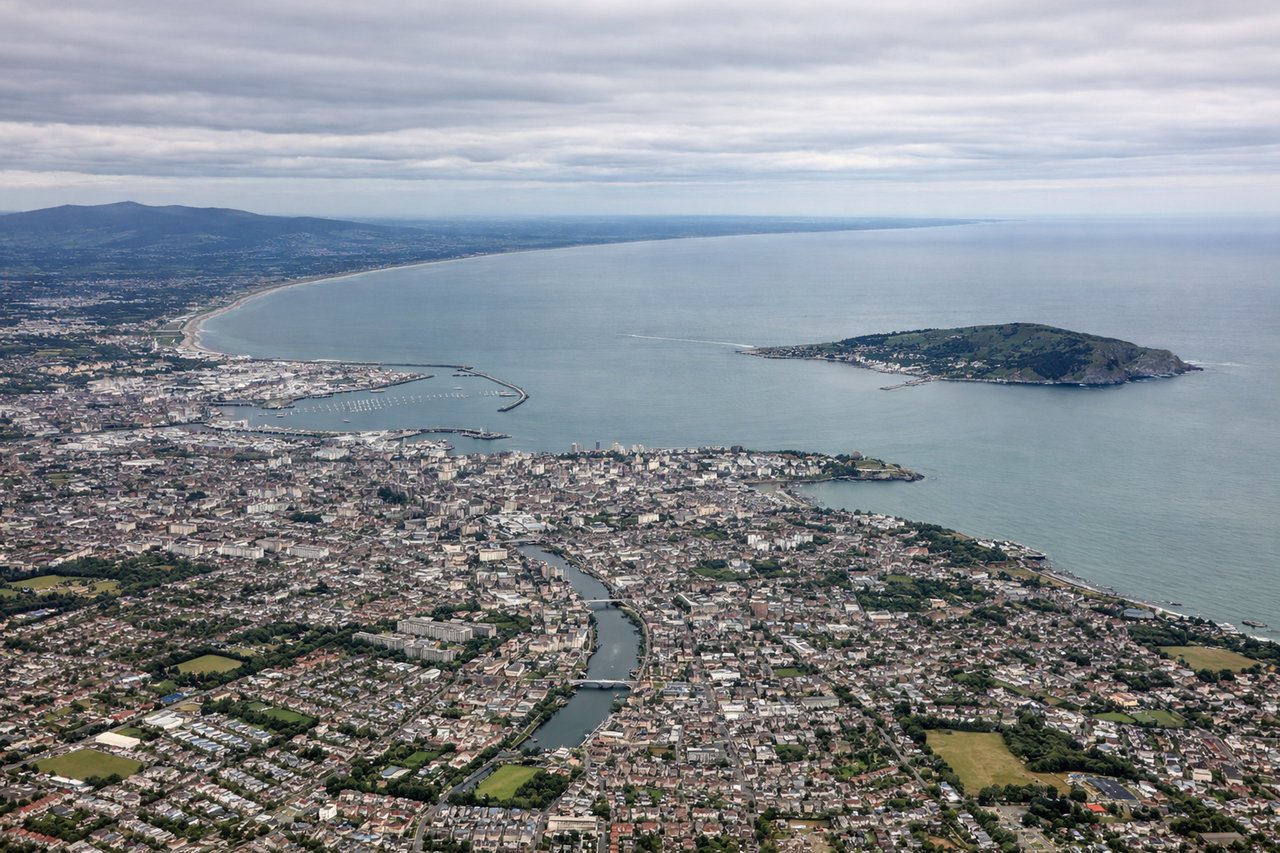
Takeoff from DUB
LEFTDeparting Dublin on runway 28, transatlantic flights typically bank south shortly after takeoff to route across southern Ireland toward the ocean. This puts the Wicklow Mountains and Dublin Bay on the left immediately after liftoff, followed by the rugged Kerry coastline as the aircraft climbs out over the country.
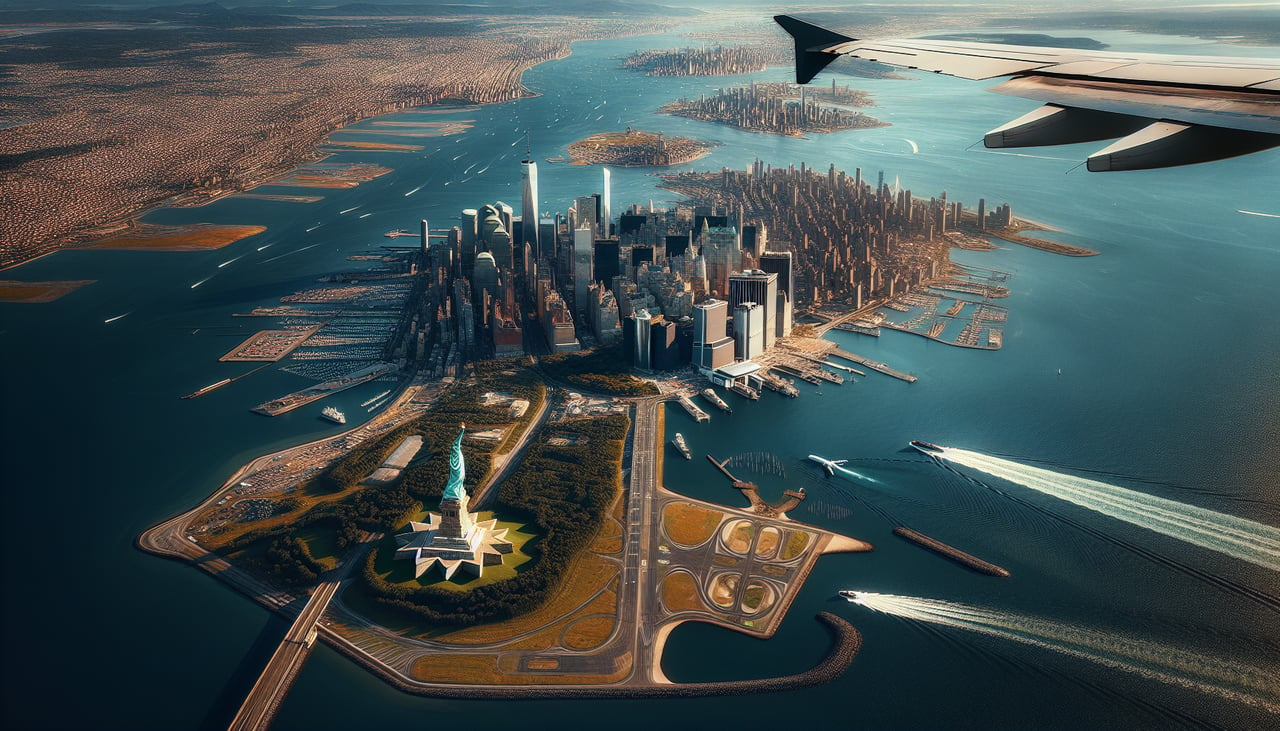
Landing at JFK
RIGHTJFK arrivals from the northeast commonly land on runway 22L/22R, which means the final approach track swings south over Jamaica Bay before turning onto final. This positions the Manhattan skyline off to the right side of the aircraft during the descent, along with the barrier beaches of the Rockaways.
Landmarks on this routeAll landmarks →
Will your flight be in sunlight?
See exactly which side of the plane gets sun and shade at your departure time.
About This Route
Which side of the plane should I sit on flying from Dublin (DUB) to John F Kennedy International (JFK)?
Sit on the Left side of the plane for the best views on flights from Dublin to New York. The left side offers a longer and more varied scenic sequence — dramatic Irish coastal and mountain terrain right after takeoff — while the right side's highlight is a brief but iconic Manhattan skyline glimpse only in the final minutes of the flight, with both sides otherwise facing hours of open Atlantic.
What can I see during takeoff from Dublin in Dublin?
During takeoff from Dublin (DUB), sit on the Left side for the best views. Departing Dublin on runway 28, transatlantic flights typically bank south shortly after takeoff to route across southern Ireland toward the ocean. This puts the Wicklow Mountains and Dublin Bay on the left immediately after liftoff, followed by the rugged Kerry coastline as the aircraft climbs out over the country. Notable sights include: Wicklow Mountains, Dublin Bay and Dun Laoghaire harbor, Ring of Kerry/Dingle Peninsula coastline, Skellig Islands.
What can I see when landing at John F Kennedy International in New York?
When landing at John F Kennedy International (JFK), sit on the Right side for the best views. JFK arrivals from the northeast commonly land on runway 22L/22R, which means the final approach track swings south over Jamaica Bay before turning onto final. This positions the Manhattan skyline off to the right side of the aircraft during the descent, along with the barrier beaches of the Rockaways. Notable sights include: Manhattan skyline, Jamaica Bay wetlands, Rockaway Peninsula barrier islands, Verrazzano-Narrows Bridge in the distance.
How long is the flight from Dublin to New York?
The flight from Dublin (DUB) to John F Kennedy International (JFK) takes 8h 15m.
What does the Dublin to New York flight path pass over?
The great-circle route crosses the North Atlantic, passing near Newfoundland (Avalon Peninsula/Gander area) and Nova Scotia's Cape Breton before continuing over the Gulf of Maine and Cape Cod on the descent toward Long Island and JFK.