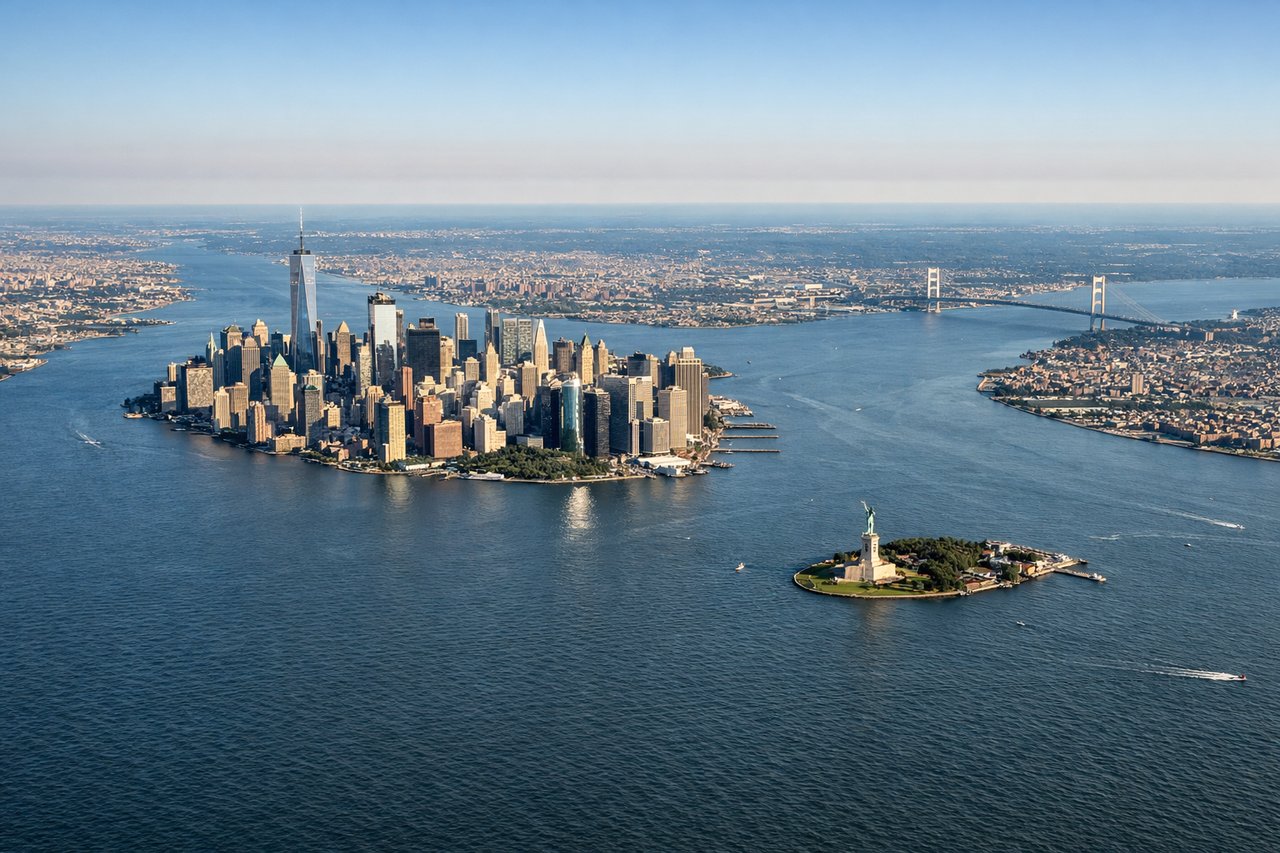
The left side delivers the most dramatic single moment of the flight — the full Manhattan skyline and Statue of Liberty view during departure from EWR, which is hard to beat. The right side has a slight edge on landing, but the Piedmont terrain is relatively flat and unremarkable compared to the New York Harbor panorama.
Flown EWR to RDU? Did we get it right?
Flight Path
Newark to Raleigh-Durham is 416 miles (669 km), a flight of about 1 hour 30 minutes.
The flight tracks roughly southwest over New Jersey, crossing the Delaware River near Trenton, then over Philadelphia's suburbs and the Chesapeake Bay watershed in northern Delaware and Maryland. Over Virginia, the route passes over the rolling Piedmont before crossing into North Carolina. The Appalachian ridges are well to the west and not visible. The James River and Roanoke River valleys may be faintly visible as dark wooded corridors in the Piedmont below. No significant mountain ranges cross the direct flight path.
Great circle distance and headings ›

Phase by phase
Takeoff from EWR
LEFTEWR's primary departure runways (4L/4R heading northeast, or 22L/22R heading southwest) mean left-side passengers get views over Newark Bay and the Manhattan skyline during the initial climb. On a southwest departure, the left side looks back toward Lower Manhattan, the Hudson River, and the Statue of Liberty on Liberty Island.
Landing at RDU
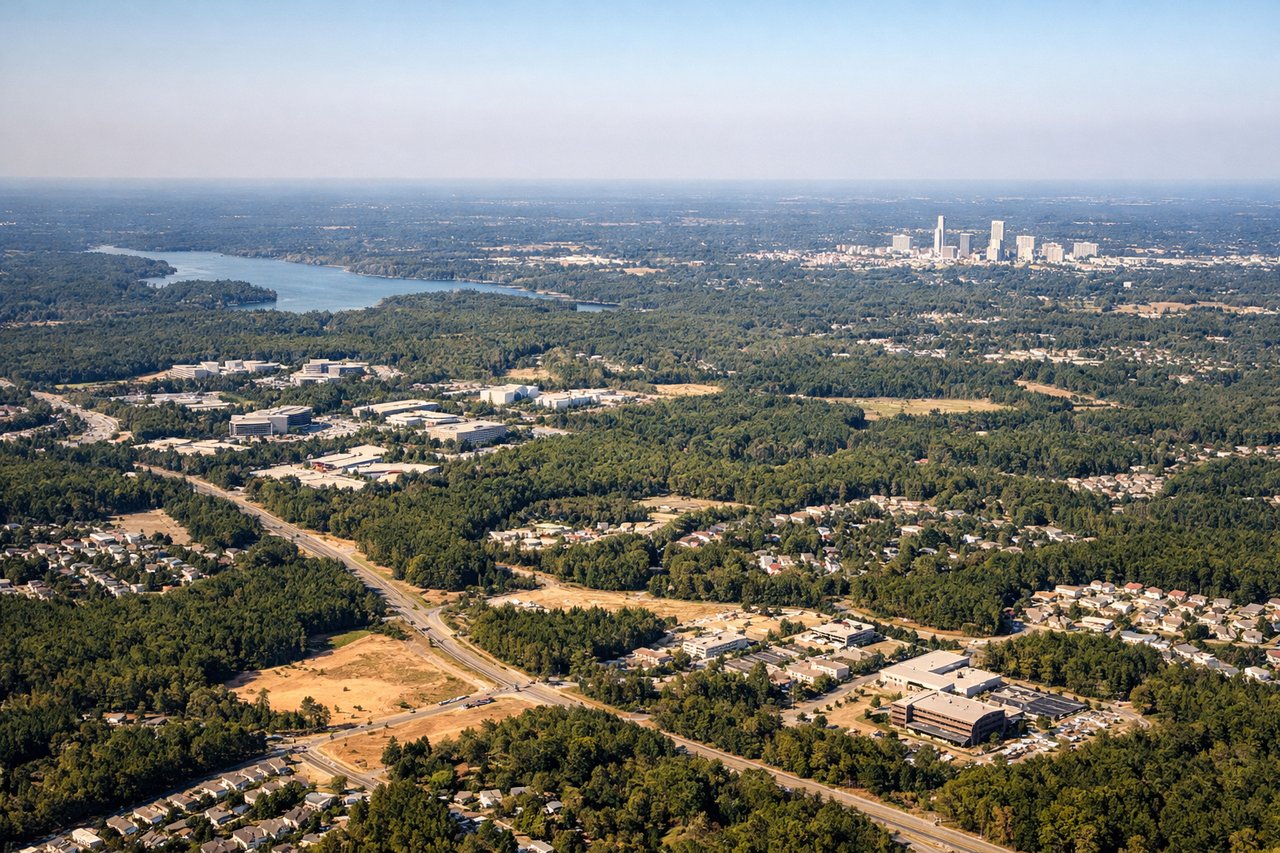
RIGHTRDU's primary arrival runways (23L/23R heading southwest, or 5L/5R heading northeast) typically bring aircraft in from the northeast. On approach from the northeast heading southwest, the right side faces northwest and looks over the Research Triangle Park campus, the Eno River corridor, and the broader Piedmont landscape around Durham and Chapel Hill.
Will your flight be in sunlight?
Pick a date and time in the Sun Map to watch the sun move across your whole flight.
About This Route
Which side of the plane should I sit on flying from Newark Liberty International (EWR) to Raleigh Durham International (RDU)?
Sit on the Left side of the plane for the best views on flights from Newark to Raleigh-Durham. The left side delivers the most dramatic single moment of the flight — the full Manhattan skyline and Statue of Liberty view during departure from EWR, which is hard to beat. The right side has a slight edge on landing, but the Piedmont terrain is relatively flat and unremarkable compared to the New York Harbor panorama.
What can I see during takeoff from Newark Liberty International in Newark?
During takeoff from Newark Liberty International (EWR), sit on the Left side for the best views. EWR's primary departure runways (4L/4R heading northeast, or 22L/22R heading southwest) mean left-side passengers get views over Newark Bay and the Manhattan skyline during the initial climb. On a southwest departure, the left side looks back toward Lower Manhattan, the Hudson River, and the Statue of Liberty on Liberty Island. Notable sights include: Manhattan skyline, Hudson River, Statue of Liberty on Liberty Island, Newark Bay.
What can I see when landing at Raleigh Durham International in Raleigh-Durham?
When landing at Raleigh Durham International (RDU), sit on the Right side for the best views. RDU's primary arrival runways (23L/23R heading southwest, or 5L/5R heading northeast) typically bring aircraft in from the northeast. On approach from the northeast heading southwest, the right side faces northwest and looks over the Research Triangle Park campus, the Eno River corridor, and the broader Piedmont landscape around Durham and Chapel Hill. Notable sights include: Research Triangle Park campus, Falls Lake reservoir, Raleigh city center, Eno River corridor.
How long is the flight from Newark to Raleigh-Durham?
The flight from Newark Liberty International (EWR) to Raleigh Durham International (RDU) takes about 1 hour 30 minutes. The shortest flight path between them is 416 miles (669 km); winds and air traffic control usually add a few percent.
What does the Newark to Raleigh-Durham flight path pass over?
The flight tracks roughly southwest over New Jersey, crossing the Delaware River near Trenton, then over Philadelphia's suburbs and the Chesapeake Bay watershed in northern Delaware and Maryland. Over Virginia, the route passes over the rolling Piedmont before crossing into North Carolina. The Appalachian ridges are well to the west and not visible. The James River and Roanoke River valleys may be faintly visible as dark wooded corridors in the Piedmont below. No significant mountain ranges cross the direct flight path.