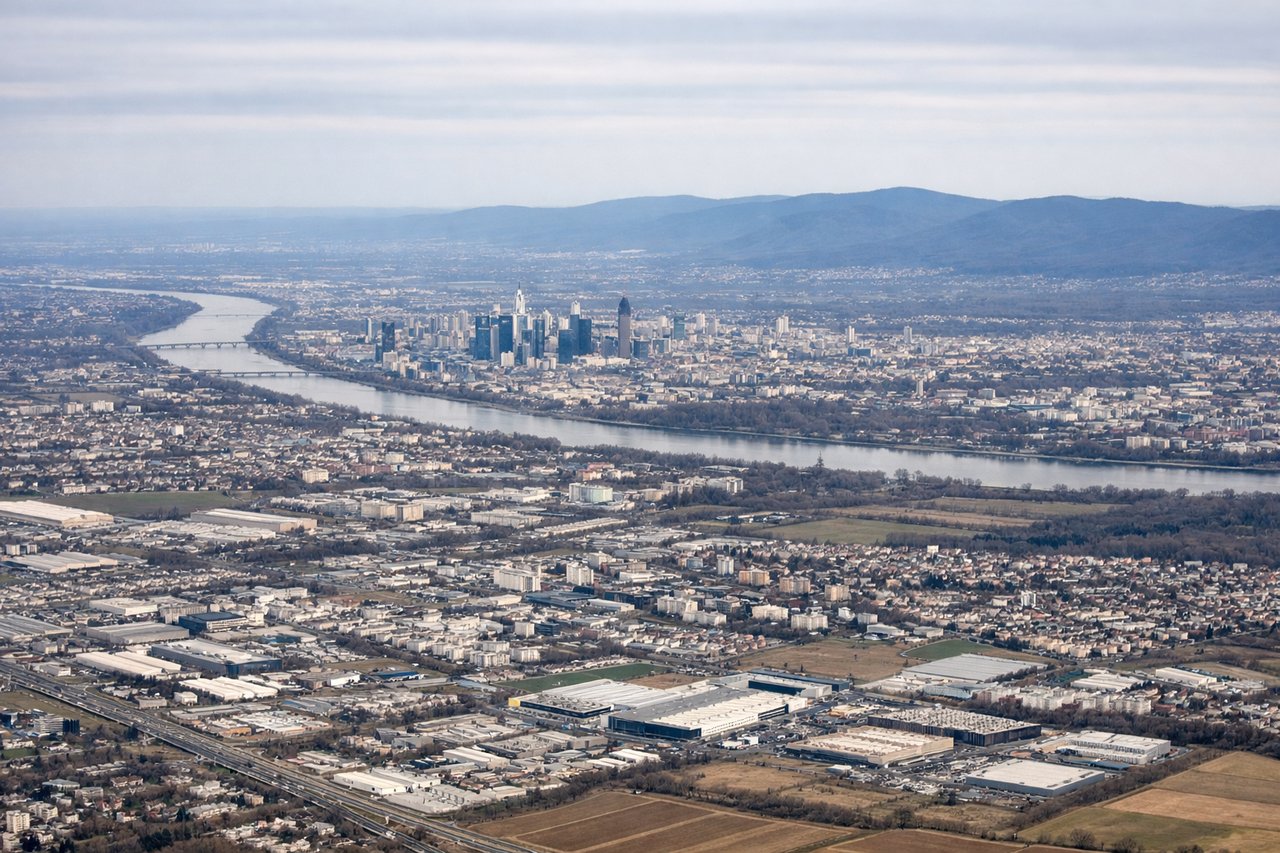
The left side captures the Frankfurt skyline and Main River on departure, and during the cruise over the Baltic Sea region and Sweden, the left side faces generally west giving views over the Gulf of Bothnia coastline as you track northeast. The right side wins at landing but the departure view is more dramatic overall.
Flight Path
The route tracks northeast over central Germany, then across the Baltic Sea between Sweden and Finland, crossing the Gulf of Finland or southern Finland depending on routing. Notable features include the Stockholm archipelago visible to the left in the distance, the Gulf of Bothnia's frozen or open water expanse, and the transition from Swedish coastal lowlands to Finnish lake district and then the increasingly flat, forested Lapland terrain north of Oulu.
Great circle distance and headings ›Phase by phase
Takeoff from FRA
LEFTFrankfurt typically departs northeast on runway 07L/07R heading, putting the left side facing north toward the Main River valley and Frankfurt city center. You get a clear view of the Rhine-Main confluence and the Frankfurt skyline receding behind you.
Landing at RVN
RIGHTRovaniemi airport typically uses runway 03/21, with approaches from the south on runway 03 heading north. On a right-side seat during final approach heading north, you look east toward the Ounasjoki and Kemijoki river confluence right at Rovaniemi town, which is the defining geographic feature of the city.
Will your flight be in sunlight?
See exactly which side of the plane gets sun and shade at your departure time.
About This Route
Which side of the plane should I sit on flying from Frankfurt Main (FRA) to Rovaniemi (RVN)?
Sit on the Left side of the plane for the best views on flights from Frankfurt to Rovaniemi. The left side captures the Frankfurt skyline and Main River on departure, and during the cruise over the Baltic Sea region and Sweden, the left side faces generally west giving views over the Gulf of Bothnia coastline as you track northeast. The right side wins at landing but the departure view is more dramatic overall.
What can I see during takeoff from Frankfurt Main in Frankfurt?
During takeoff from Frankfurt Main (FRA), sit on the Left side for the best views. Frankfurt typically departs northeast on runway 07L/07R heading, putting the left side facing north toward the Main River valley and Frankfurt city center. You get a clear view of the Rhine-Main confluence and the Frankfurt skyline receding behind you. Notable sights include: Frankfurt Skyline (Bankenviertel towers), Main River bend, Rhine-Main confluence near Mainz, Taunus hills to the northwest.
What can I see when landing at Rovaniemi in Rovaniemi?
When landing at Rovaniemi (RVN), sit on the Right side for the best views. Rovaniemi airport typically uses runway 03/21, with approaches from the south on runway 03 heading north. On a right-side seat during final approach heading north, you look east toward the Ounasjoki and Kemijoki river confluence right at Rovaniemi town, which is the defining geographic feature of the city. Notable sights include: Kemijoki River, Ounasjoki River confluence at Rovaniemi, Arctic Circle marker area south of town, boreal taiga forest stretching to the horizon.
How long is the flight from Frankfurt to Rovaniemi?
The flight from Frankfurt Main (FRA) to Rovaniemi (RVN) takes Approximately 3 hours.
What does the Frankfurt to Rovaniemi flight path pass over?
The route tracks northeast over central Germany, then across the Baltic Sea between Sweden and Finland, crossing the Gulf of Finland or southern Finland depending on routing. Notable features include the Stockholm archipelago visible to the left in the distance, the Gulf of Bothnia's frozen or open water expanse, and the transition from Swedish coastal lowlands to Finnish lake district and then the increasingly flat, forested Lapland terrain north of Oulu.