The left side wins both takeoff and landing: departing FRA it captures the Rhine valley and Taunus hills, while arriving LAX it delivers the San Gabriel Mountains, downtown LA skyline, and Pacific coastline — a much stronger overall visual sequence than the flatter, inland-facing right side.
Flight Path
The route crosses the North Sea or southern England, then Greenland's southern ice sheet and coastal fjords, the Canadian Arctic/Hudson Bay region, and the Canadian Rockies before descending into the western United States over the Great Basin desert.
Great circle distance and headings ›

.jpg?width=600)
.jpg?width=600)


.jpg?width=600)
Phase by phase
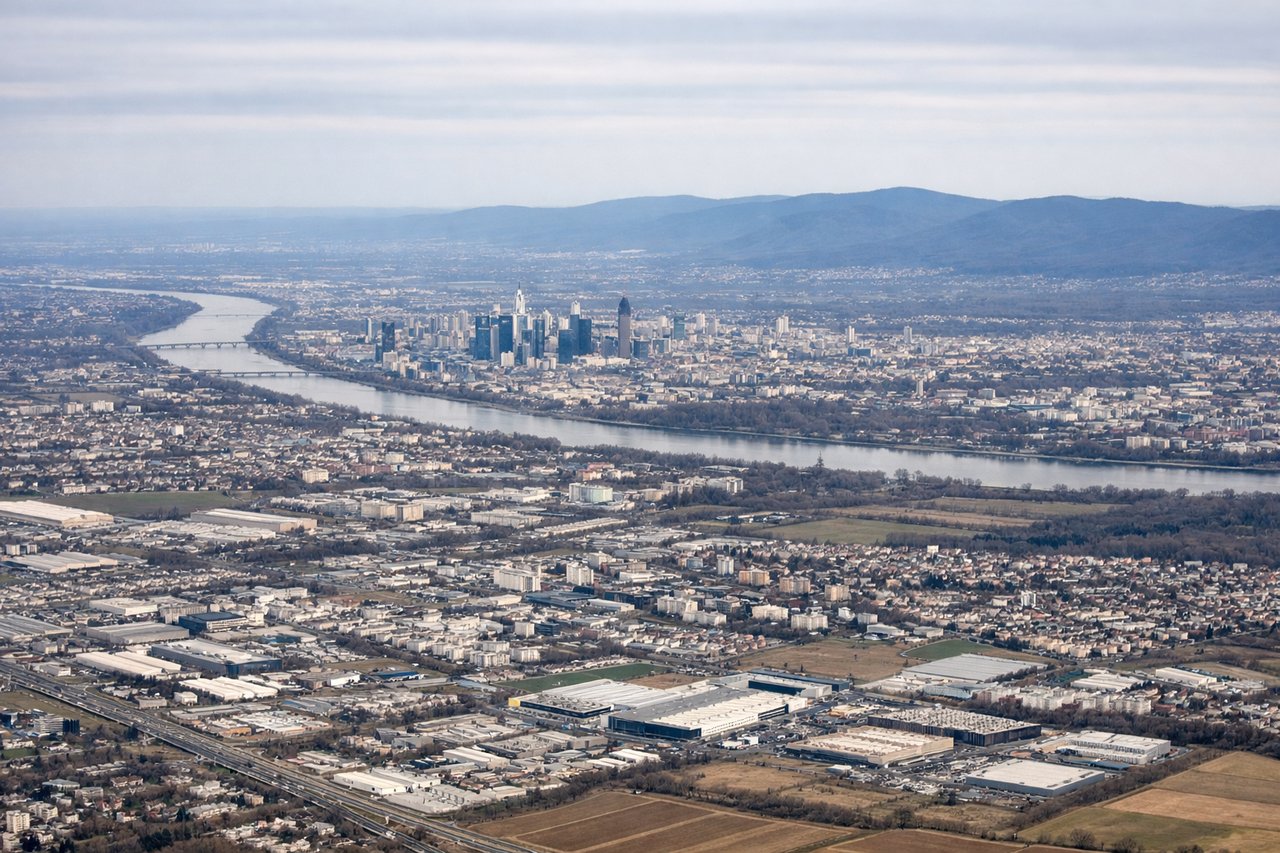
Takeoff from FRA
LEFTDeparting FRA to the west/northwest, the left side offers views over the Rhine-Main region, the Taunus hills, and often the Rhine River valley as the flight climbs out before turning north toward the North Sea/UK. The right side mostly shows flat Hessian countryside.
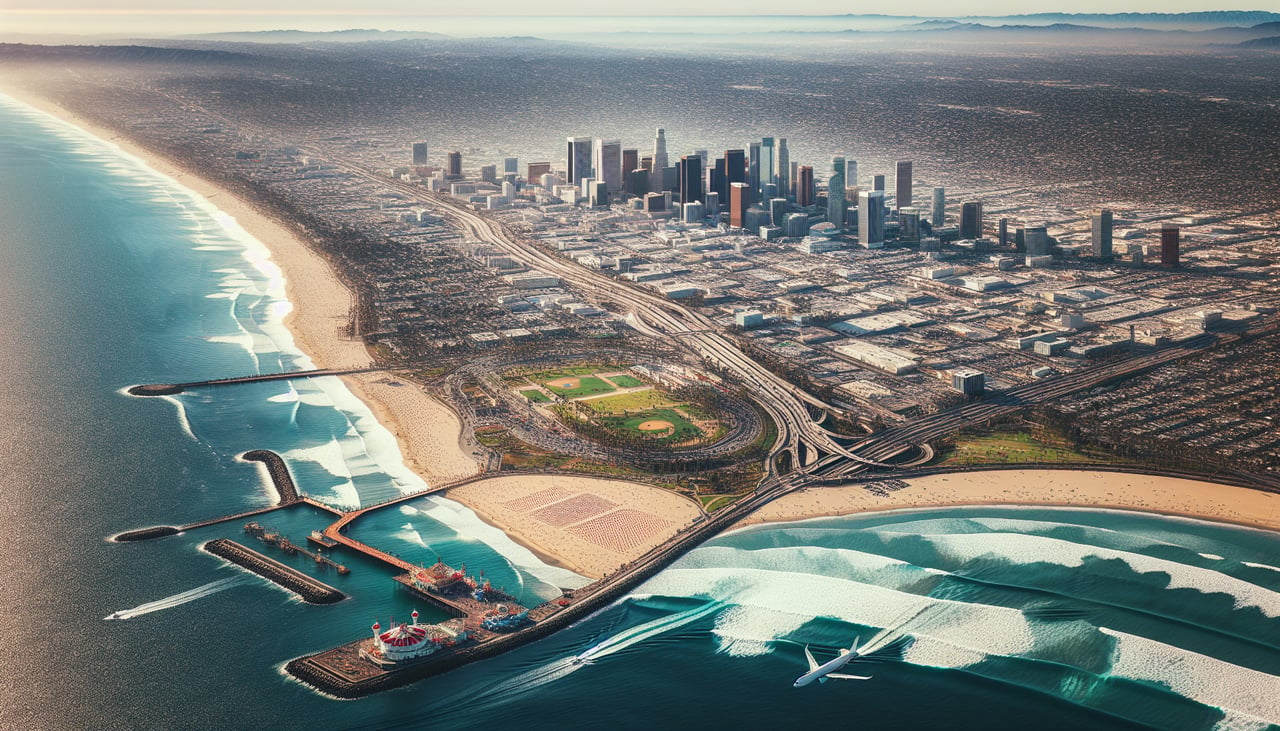
Landing at LAX
LEFTOn approach to LAX from the east, the left side reveals the San Gabriel Mountains, downtown Los Angeles skyline, and eventually the Pacific coastline and Santa Monica Bay as the plane turns for final approach. The right side mostly shows suburban sprawl inland.
Landmarks on this routeAll landmarks →
Will your flight be in sunlight?
See exactly which side of the plane gets sun and shade at your departure time.
About This Route
Which side of the plane should I sit on flying from Frankfurt Main (FRA) to Los Angeles International (LAX)?
Sit on the Left side of the plane for the best views on flights from Frankfurt to Los Angeles. The left side wins both takeoff and landing: departing FRA it captures the Rhine valley and Taunus hills, while arriving LAX it delivers the San Gabriel Mountains, downtown LA skyline, and Pacific coastline — a much stronger overall visual sequence than the flatter, inland-facing right side.
What can I see during takeoff from Frankfurt Main in Frankfurt?
During takeoff from Frankfurt Main (FRA), sit on the Left side for the best views. Departing FRA to the west/northwest, the left side offers views over the Rhine-Main region, the Taunus hills, and often the Rhine River valley as the flight climbs out before turning north toward the North Sea/UK. The right side mostly shows flat Hessian countryside. Notable sights include: Rhine River, Taunus hills, Frankfurt skyline (Commerzbank Tower, Messeturm), Wiesbaden.
What can I see when landing at Los Angeles International in Los Angeles?
When landing at Los Angeles International (LAX), sit on the Left side for the best views. On approach to LAX from the east, the left side reveals the San Gabriel Mountains, downtown Los Angeles skyline, and eventually the Pacific coastline and Santa Monica Bay as the plane turns for final approach. The right side mostly shows suburban sprawl inland. Notable sights include: San Gabriel Mountains, Downtown Los Angeles skyline, Santa Monica Bay, Pacific coastline.
How long is the flight from Frankfurt to Los Angeles?
The flight from Frankfurt Main (FRA) to Los Angeles International (LAX) takes 10h 55m.
What does the Frankfurt to Los Angeles flight path pass over?
The route crosses the North Sea or southern England, then Greenland's southern ice sheet and coastal fjords, the Canadian Arctic/Hudson Bay region, and the Canadian Rockies before descending into the western United States over the Great Basin desert.