Right-side seats win overall due to the superior takeoff experience over the Han River estuary and Yellow Sea, which is more visually distinctive than the landing approach. The takeoff view is more dramatic and geographically varied than the landing's gradual transition over plains.
Flown GMP to PEK? Did we get it right?
Flight Path
Seoul to Beijing is 575 miles (926 km), a flight of about 2 hours 15 minutes.
The flight crosses the Yellow Sea at roughly 37°N latitude. Midway, you'll pass over open water with no major landmarks visible. The North Korean coastline remains too far south to see clearly. As you approach the Chinese coast near Tianjin (around 39°N, 117.5°E), the Bohai Sea's southern shore becomes visible, followed by the transition to the North China Plain's agricultural landscape before the final descent into Beijing.
Great circle distance and headings ›Phase by phase
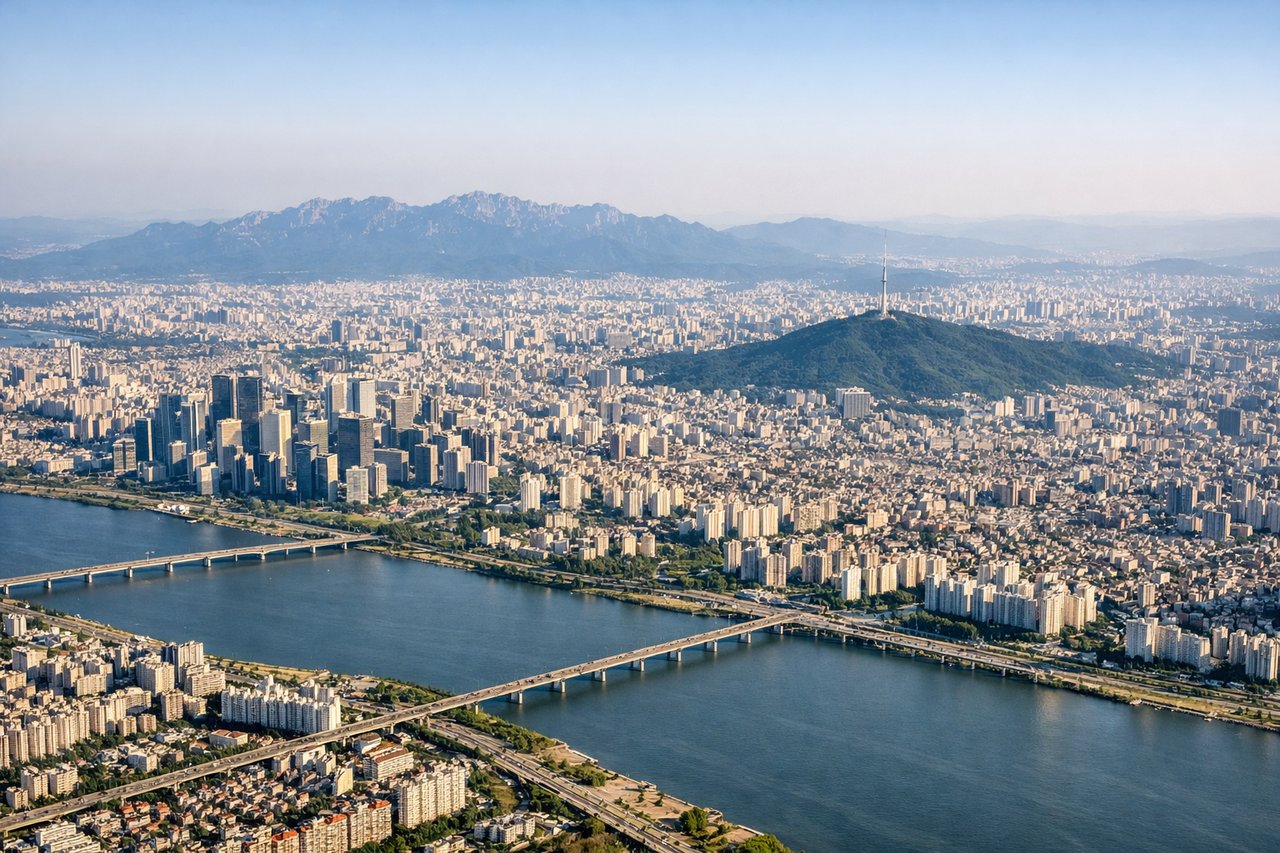
Takeoff from GMP
RIGHTRight-side seats capture the Han River estuary and Incheon's industrial waterfront during the initial climb. GMP typically departs runways 14L/14R or 32L/32R; northbound departures (most common to Beijing) turn right and climb over the Yellow Sea, giving right-side passengers the best view of the coastal geography.
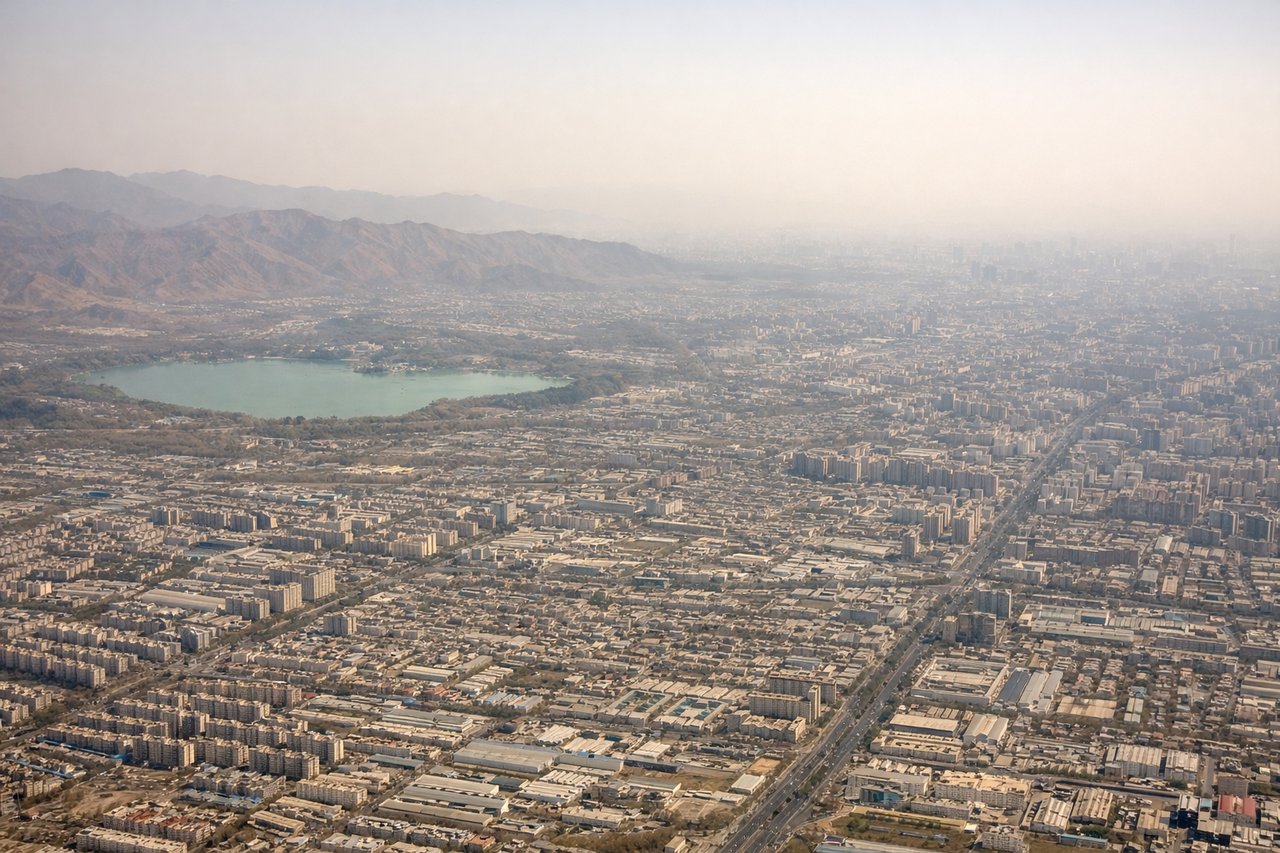
Landing at PEK
LEFTLeft-side seats offer the superior approach view into PEK. Beijing's standard arrival from the east uses runways 01L/01R or 16L/16R; eastbound approaches descend over the North China Plain with the Yanshan Mountains visible on the left (north) side. Left-side passengers see the mountain range and the transition from rural plains to Beijing's urban sprawl.
Will your flight be in sunlight?
Pick a date and time in the Sun Map to watch the sun move across your whole flight.
About This Route
Which side of the plane should I sit on flying from Gimpo (GMP) to Capital (PEK)?
Sit on the Right side of the plane for the best views on flights from Seoul to Beijing. Right-side seats win overall due to the superior takeoff experience over the Han River estuary and Yellow Sea, which is more visually distinctive than the landing approach. The takeoff view is more dramatic and geographically varied than the landing's gradual transition over plains.
What can I see during takeoff from Gimpo in Seoul?
During takeoff from Gimpo (GMP), sit on the Right side for the best views. Right-side seats capture the Han River estuary and Incheon's industrial waterfront during the initial climb. GMP typically departs runways 14L/14R or 32L/32R; northbound departures (most common to Beijing) turn right and climb over the Yellow Sea, giving right-side passengers the best view of the coastal geography. Notable sights include: Han River estuary with tidal mudflats, Incheon port and container terminals, Ganghwa Island (large island west of Seoul), Yellow Sea coastline.
What can I see when landing at Capital in Beijing?
When landing at Capital (PEK), sit on the Left side for the best views. Left-side seats offer the superior approach view into PEK. Beijing's standard arrival from the east uses runways 01L/01R or 16L/16R; eastbound approaches descend over the North China Plain with the Yanshan Mountains visible on the left (north) side. Left-side passengers see the mountain range and the transition from rural plains to Beijing's urban sprawl. Notable sights include: Yanshan Mountains (northern horizon), North China Plain agricultural grid, Ming Tombs area (northwest of Beijing), Beijing urban districts and ring roads.
How long is the flight from Seoul to Beijing?
The flight from Gimpo (GMP) to Capital (PEK) takes about 2 hours 15 minutes. The shortest flight path between them is 575 miles (926 km); winds and air traffic control usually add a few percent.
What does the Seoul to Beijing flight path pass over?
The flight crosses the Yellow Sea at roughly 37°N latitude. Midway, you'll pass over open water with no major landmarks visible. The North Korean coastline remains too far south to see clearly. As you approach the Chinese coast near Tianjin (around 39°N, 117.5°E), the Bohai Sea's southern shore becomes visible, followed by the transition to the North China Plain's agricultural landscape before the final descent into Beijing.