While takeoff offers superior alpine scenery on the right, the landing approach over the Øresund Strait and Swedish coast on the left is more visually distinctive and unique to this route. The left side captures the dramatic international waterway and coastal geography that defines the Copenhagen approach, whereas the Alps are visible from many European routes.
Flown GVA to CPH? Did we get it right?
Flight Path
Geneva to Copenhagen is 707 miles (1,138 km), a flight of about 2 hours 15 minutes.
The flight path crosses the Jura Mountains (30 minutes post-takeoff), then transitions over the Rhine Valley and into the Vosges Mountains (eastern France). By cruise altitude, the aircraft passes over the Burgundy region and the Loire Valley. Approaching Denmark, the flight descends over northern Germany and the North German Plain, with the Kiel Canal and Lübeck Bay visible during descent. The final approach crosses the Danish islands (Lolland, Falster) before reaching the Øresund Strait.
Great circle distance and headings ›


Phase by phase
Takeoff from GVA
RIGHTRight-side seats capture the Mont Blanc massif and the Alps as the aircraft climbs northward. Geneva typically departs runway 04 or 22; northbound departures (04) offer the best alpine views on the right wing during the initial climb-out over the Jura foothills.
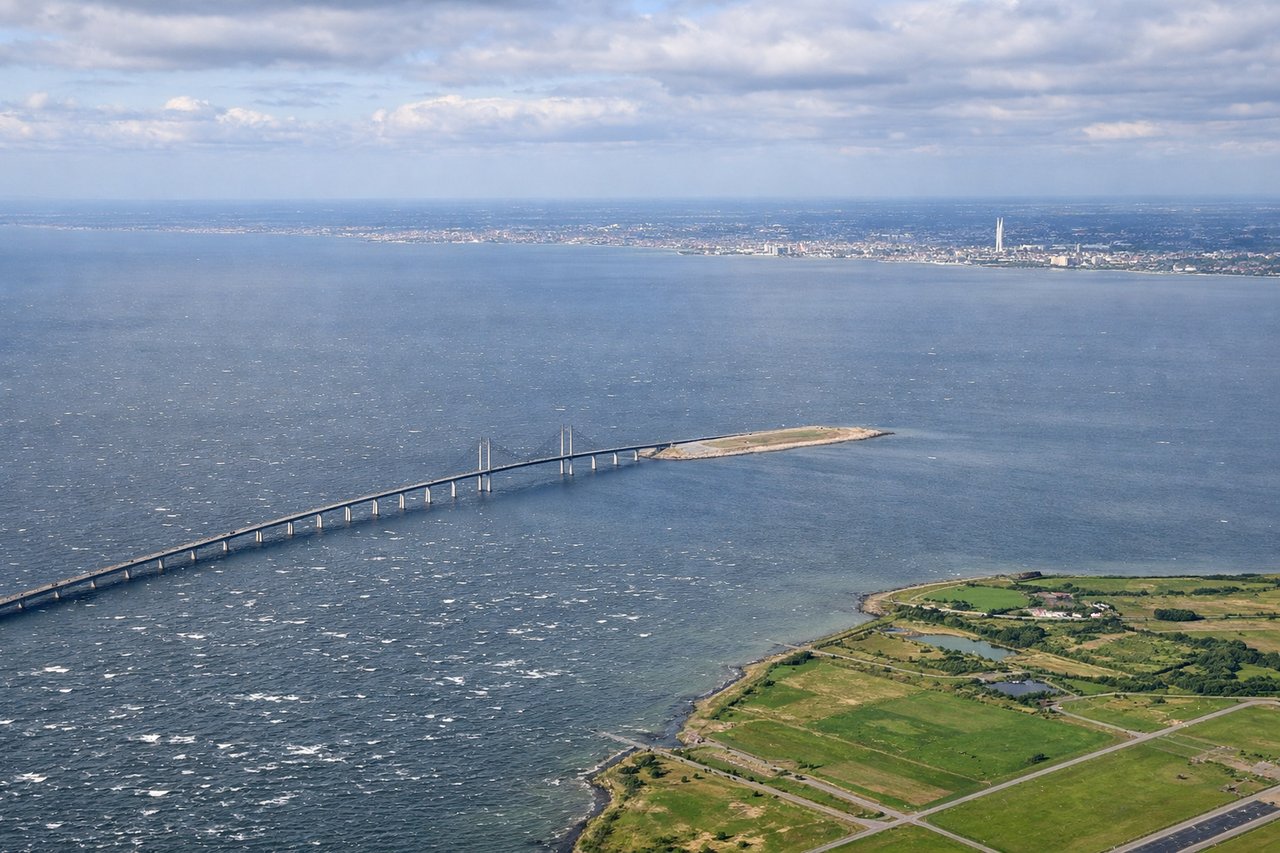
Landing at CPH
LEFTLeft-side seats provide views of the Danish coastline, the Øresund Strait, and Sweden across the water. Copenhagen typically lands runway 04L or 22R; southbound approaches (22R) descending over the Øresund offer the most dramatic coastal perspective on the left wing during final approach.
Will your flight be in sunlight?
Pick a date and time in the Sun Map to watch the sun move across your whole flight.
About This Route
Which side of the plane should I sit on flying from Geneva Cointrin (GVA) to Kastrup (CPH)?
Sit on the Left side of the plane for the best views on flights from Geneva to Copenhagen. While takeoff offers superior alpine scenery on the right, the landing approach over the Øresund Strait and Swedish coast on the left is more visually distinctive and unique to this route. The left side captures the dramatic international waterway and coastal geography that defines the Copenhagen approach, whereas the Alps are visible from many European routes.
What can I see during takeoff from Geneva Cointrin in Geneva?
During takeoff from Geneva Cointrin (GVA), sit on the Right side for the best views. Right-side seats capture the Mont Blanc massif and the Alps as the aircraft climbs northward. Geneva typically departs runway 04 or 22; northbound departures (04) offer the best alpine views on the right wing during the initial climb-out over the Jura foothills. Notable sights include: Mont Blanc (4,808m, visible as the dominant snow-capped peak on the southeastern horizon), Lake Geneva (Lac Léman) receding below, the Jura Mountains (lower, forested ridges to the north), Chamonix Valley (deep glacial valley cutting into the Alps to the southeast).
What can I see when landing at Kastrup in Copenhagen?
When landing at Kastrup (CPH), sit on the Left side for the best views. Left-side seats provide views of the Danish coastline, the Øresund Strait, and Sweden across the water. Copenhagen typically lands runway 04L or 22R; southbound approaches (22R) descending over the Øresund offer the most dramatic coastal perspective on the left wing during final approach. Notable sights include: Øresund Strait (the narrow waterway separating Denmark and Sweden), Malmö, Sweden (visible across the water on the eastern shore), Copenhagen city center and Amager Island (the airport's location), the Øresund Bridge (the rail-road bridge connecting Denmark and Sweden, visible as a thin line crossing the strait).
How long is the flight from Geneva to Copenhagen?
The flight from Geneva Cointrin (GVA) to Kastrup (CPH) takes about 2 hours 15 minutes. The shortest flight path between them is 707 miles (1,138 km); winds and air traffic control usually add a few percent.
What does the Geneva to Copenhagen flight path pass over?
The flight path crosses the Jura Mountains (30 minutes post-takeoff), then transitions over the Rhine Valley and into the Vosges Mountains (eastern France). By cruise altitude, the aircraft passes over the Burgundy region and the Loire Valley. Approaching Denmark, the flight descends over northern Germany and the North German Plain, with the Kiel Canal and Lübeck Bay visible during descent. The final approach crosses the Danish islands (Lolland, Falster) before reaching the Øresund Strait.