The left side wins overall because the Hong Kong departure delivers a genuinely striking mix of harbor, skyline, and mountains that few routes can match, while the right side's best moment—Osaka Bay on arrival—is scenic but comparatively modest. The long ocean cruise segment is neutral for both sides, so the takeoff advantage decides it.
Flight Path
East China Sea crossing with the Ryukyu Island chain (Okinawa, Miyako-jima) occasionally visible to the south before the route approaches Japan near the Kii Channel and Shikoku's coastline.
Great circle distance and headings ›Phase by phase
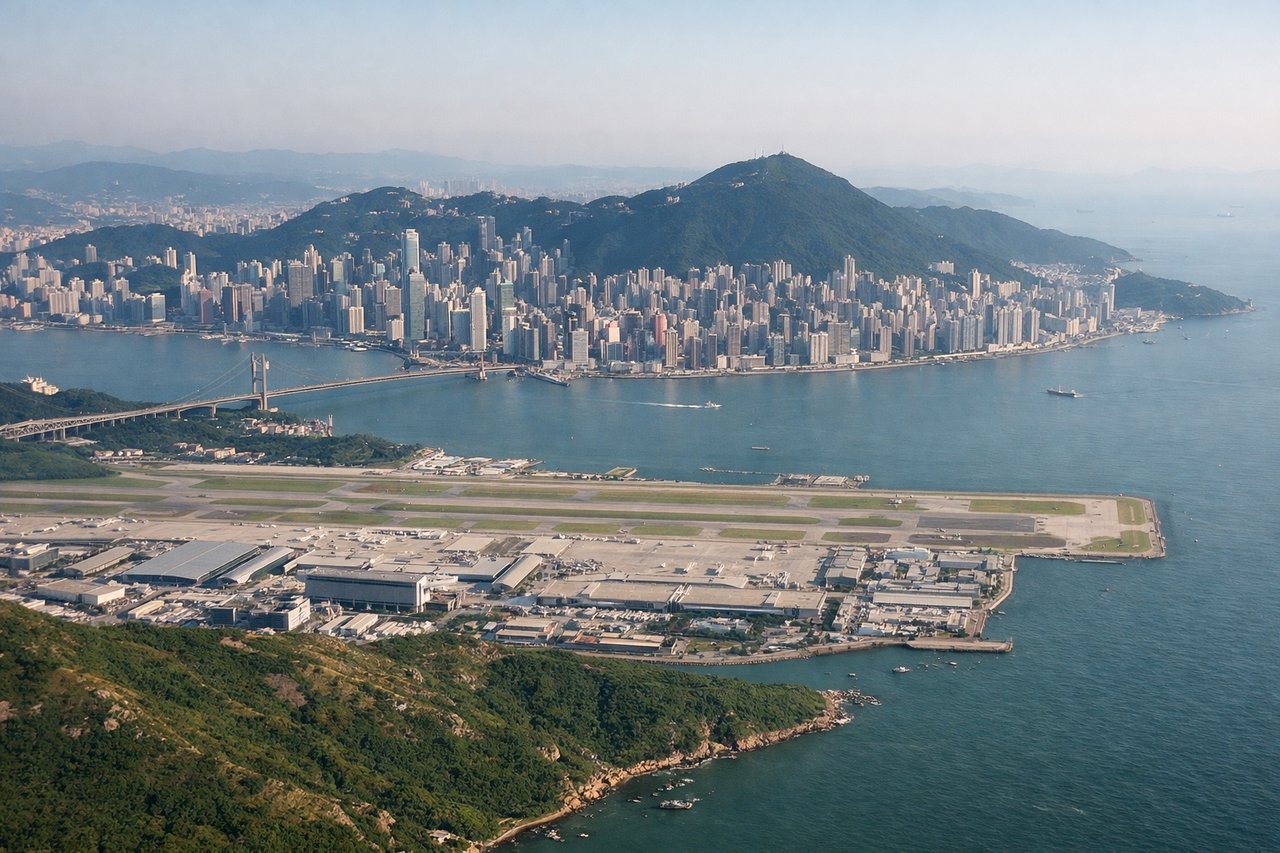
Takeoff from HKG
LEFTDeparting HKG toward the northeast (typical winter runway 07 operations), the left side faces north over Kowloon and the New Territories, showing Victoria Harbour, the dense high-rise skyline, and the jagged peaks of Lion Rock and Ma On Shan behind the city. The right side mostly shows open South China Sea and low outlying islands, which is far less dramatic.
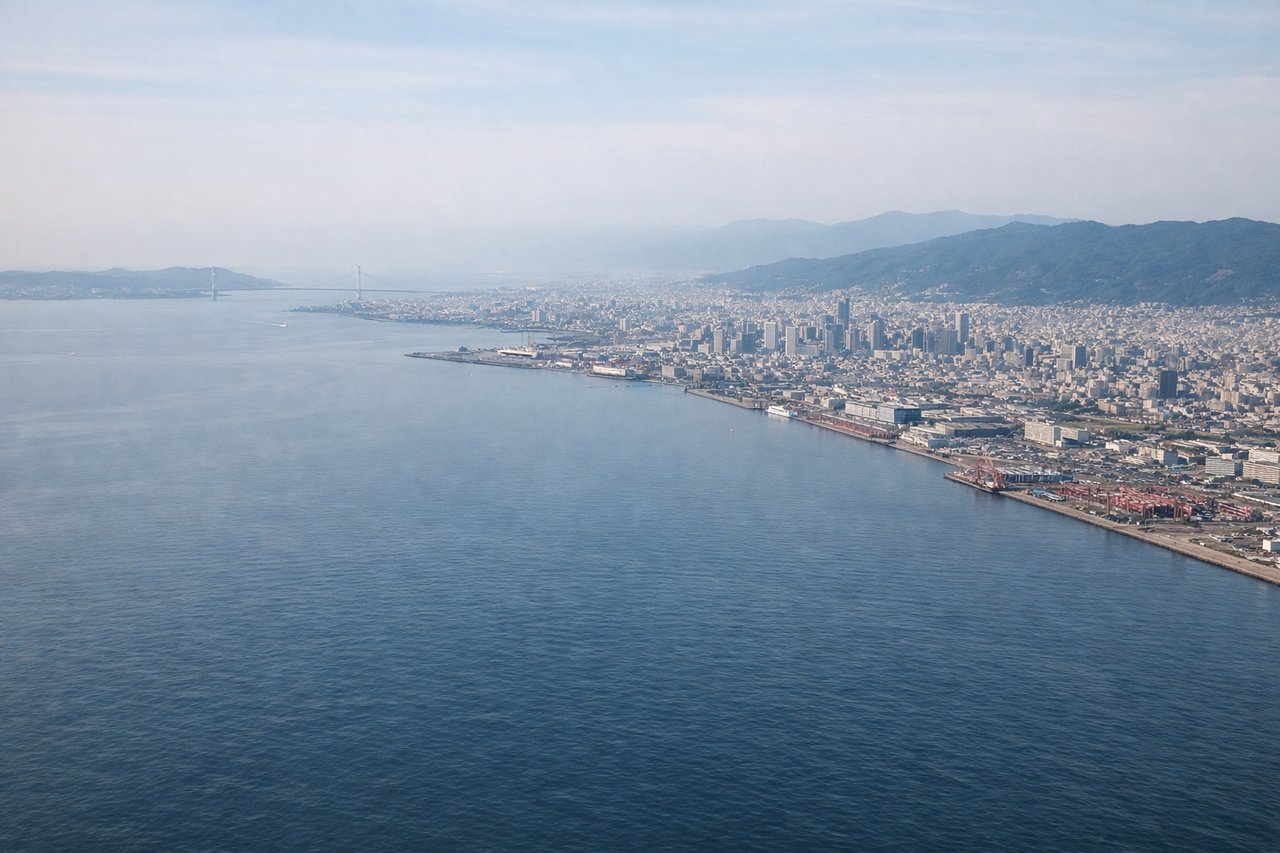
Landing at KIX
RIGHTOn the descent into KIX, the approach path curves down over Osaka Bay before lining up with the runway, and the right side offers views north across the water toward Kobe's skyline and the wooded slopes of Mt. Rokko, plus the long Akashi Kaikyo Bridge to Awaji Island. The left side mainly faces open bay water with less identifiable scenery.
Landmarks on this routeAll landmarks →
Will your flight be in sunlight?
See exactly which side of the plane gets sun and shade at your departure time.
About This Route
Which side of the plane should I sit on flying from Hong Kong International (HKG) to Kansai International (KIX)?
Sit on the Left side of the plane for the best views on flights from Hong Kong to Osaka. The left side wins overall because the Hong Kong departure delivers a genuinely striking mix of harbor, skyline, and mountains that few routes can match, while the right side's best moment—Osaka Bay on arrival—is scenic but comparatively modest. The long ocean cruise segment is neutral for both sides, so the takeoff advantage decides it.
What can I see during takeoff from Hong Kong International in Hong Kong?
During takeoff from Hong Kong International (HKG), sit on the Left side for the best views. Departing HKG toward the northeast (typical winter runway 07 operations), the left side faces north over Kowloon and the New Territories, showing Victoria Harbour, the dense high-rise skyline, and the jagged peaks of Lion Rock and Ma On Shan behind the city. The right side mostly shows open South China Sea and low outlying islands, which is far less dramatic. Notable sights include: Victoria Harbour, Kowloon skyline, Lion Rock, New Territories mountains.
What can I see when landing at Kansai International in Osaka?
When landing at Kansai International (KIX), sit on the Right side for the best views. On the descent into KIX, the approach path curves down over Osaka Bay before lining up with the runway, and the right side offers views north across the water toward Kobe's skyline and the wooded slopes of Mt. Rokko, plus the long Akashi Kaikyo Bridge to Awaji Island. The left side mainly faces open bay water with less identifiable scenery. Notable sights include: Osaka Bay, Kobe skyline, Mt. Rokko, Akashi Kaikyo Bridge to Awaji Island.
How long is the flight from Hong Kong to Osaka?
The flight from Hong Kong International (HKG) to Kansai International (KIX) takes 3h 35m.
What does the Hong Kong to Osaka flight path pass over?
East China Sea crossing with the Ryukyu Island chain (Okinawa, Miyako-jima) occasionally visible to the south before the route approaches Japan near the Kii Channel and Shikoku's coastline.