The left side captures Hong Kong's skyline and harbor at departure, sweeping views of Siberian taiga, the Alaska Range, and the Canadian Rockies during the polar-route cruise, and the Dallas-Fort Worth metro area on arrival, while the right side is dominated by open ocean, Arctic ice, and flat prairie.
Flight Path
Gobi Desert and Mongolian steppe, Lake Baikal region, Siberian taiga, Bering Sea coastline, Alaska Range including Denali, and the Canadian Rockies of British Columbia and Alberta
Great circle distance and headings ›


.jpg?width=600)


Phase by phase
Takeoff from HKG
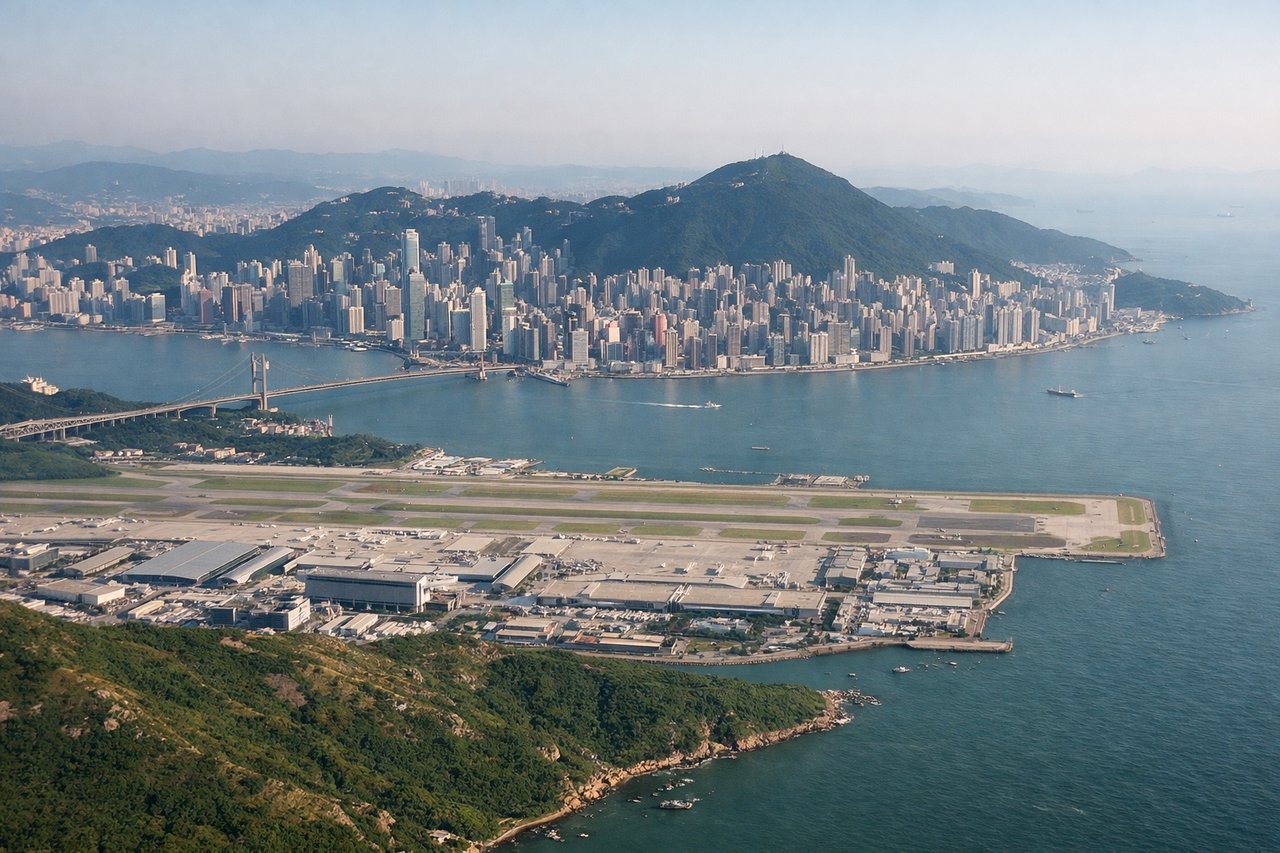
LEFTDeparting HKG's northeast-facing runway in typical winter operations, the aircraft banks toward the mainland, putting Hong Kong Island's skyline, Victoria Harbour, and the Kowloon peninsula on the left side. The right side only shows open South China Sea water during the turn.
Landing at DFW
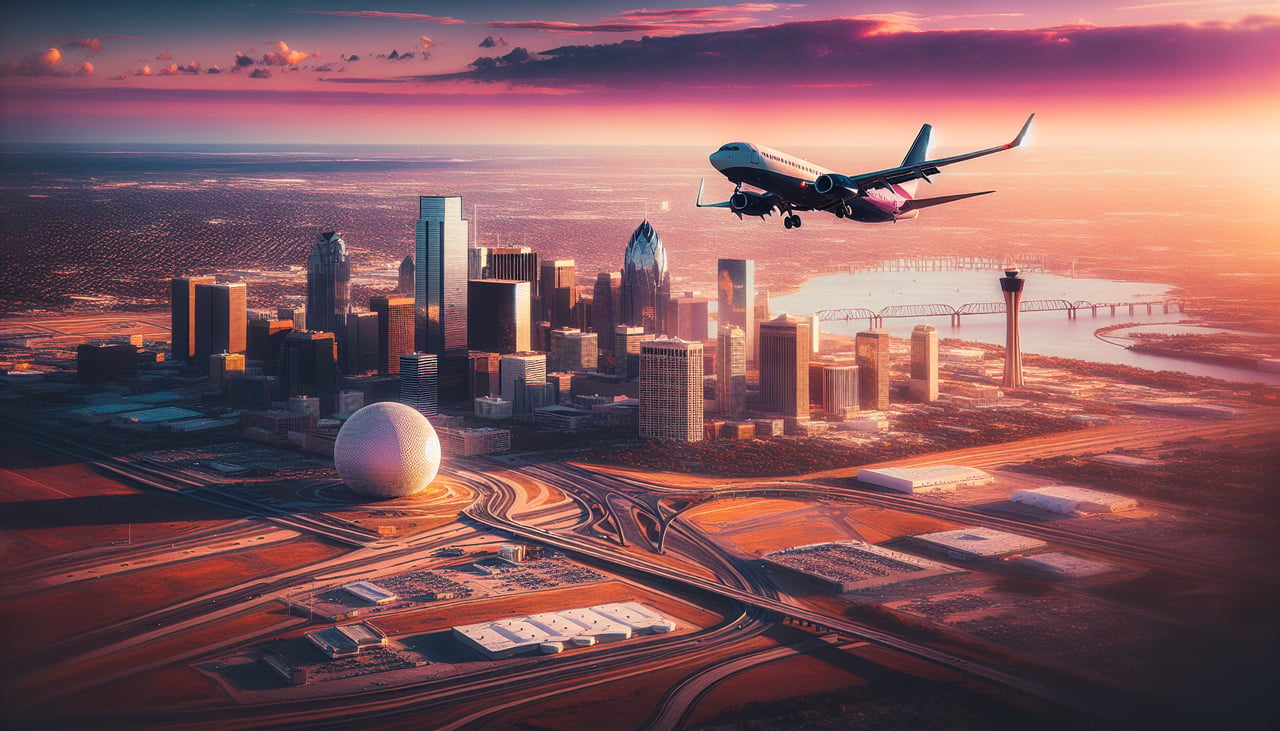
LEFTOn the descent into DFW from the north under typical southerly wind arrivals, the final turn onto the north-south runways gives passengers on the left a view of the Fort Worth-Dallas metro sprawl, the Trinity River, and the reservoirs northwest of the airport. The right side mostly faces flat, undeveloped prairie with fewer visual reference points.
Landmarks on this routeAll landmarks →
Will your flight be in sunlight?
See exactly which side of the plane gets sun and shade at your departure time.
About This Route
Which side of the plane should I sit on flying from Hong Kong International (HKG) to Dallas Fort Worth International (DFW)?
Sit on the Left side of the plane for the best views on flights from Hong Kong to Dallas-Fort Worth. The left side captures Hong Kong's skyline and harbor at departure, sweeping views of Siberian taiga, the Alaska Range, and the Canadian Rockies during the polar-route cruise, and the Dallas-Fort Worth metro area on arrival, while the right side is dominated by open ocean, Arctic ice, and flat prairie.
What can I see during takeoff from Hong Kong International in Hong Kong?
During takeoff from Hong Kong International (HKG), sit on the Left side for the best views. Departing HKG's northeast-facing runway in typical winter operations, the aircraft banks toward the mainland, putting Hong Kong Island's skyline, Victoria Harbour, and the Kowloon peninsula on the left side. The right side only shows open South China Sea water during the turn. Notable sights include: Victoria Harbour, Hong Kong Island skyline, Lantau Island bridges, Kowloon peninsula.
What can I see when landing at Dallas Fort Worth International in Dallas-Fort Worth?
When landing at Dallas Fort Worth International (DFW), sit on the Left side for the best views. On the descent into DFW from the north under typical southerly wind arrivals, the final turn onto the north-south runways gives passengers on the left a view of the Fort Worth-Dallas metro sprawl, the Trinity River, and the reservoirs northwest of the airport. The right side mostly faces flat, undeveloped prairie with fewer visual reference points. Notable sights include: Grapevine Lake, Trinity River, Dallas-Fort Worth skyline, DFW terminal complex.
How long is the flight from Hong Kong to Dallas-Fort Worth?
The flight from Hong Kong International (HKG) to Dallas Fort Worth International (DFW) takes 14h 35m.
What does the Hong Kong to Dallas-Fort Worth flight path pass over?
Gobi Desert and Mongolian steppe, Lake Baikal region, Siberian taiga, Bering Sea coastline, Alaska Range including Denali, and the Canadian Rockies of British Columbia and Alberta