Left side wins both ends of the flight. During the long cruise over Central Asia and Europe, the left (south-facing) side also gets better views of the Himalayas if the route tracks north of them, the Caspian Sea, and the Alps on some routing variants. Right side has open ocean and featureless steppe for much of the journey.
Flight Path
The route typically tracks northwest over southern China, then across Myanmar or Bangladesh, over the Tibetan Plateau or its northern fringes, across Central Asia including Kazakhstan's steppe, the Caspian Sea, then over Russia or Ukraine, Poland, and into the Netherlands. Notable features include the Tibetan Plateau and Himalayan foothills visible to the south, the vast flat Kazakh steppe, the Caspian Sea (the world's largest inland body of water, clearly visible as a large blue expanse), the Ural region transition, and the North European Plain approaching Amsterdam.
Great circle distance and headings ›


Phase by phase
Takeoff from HKG
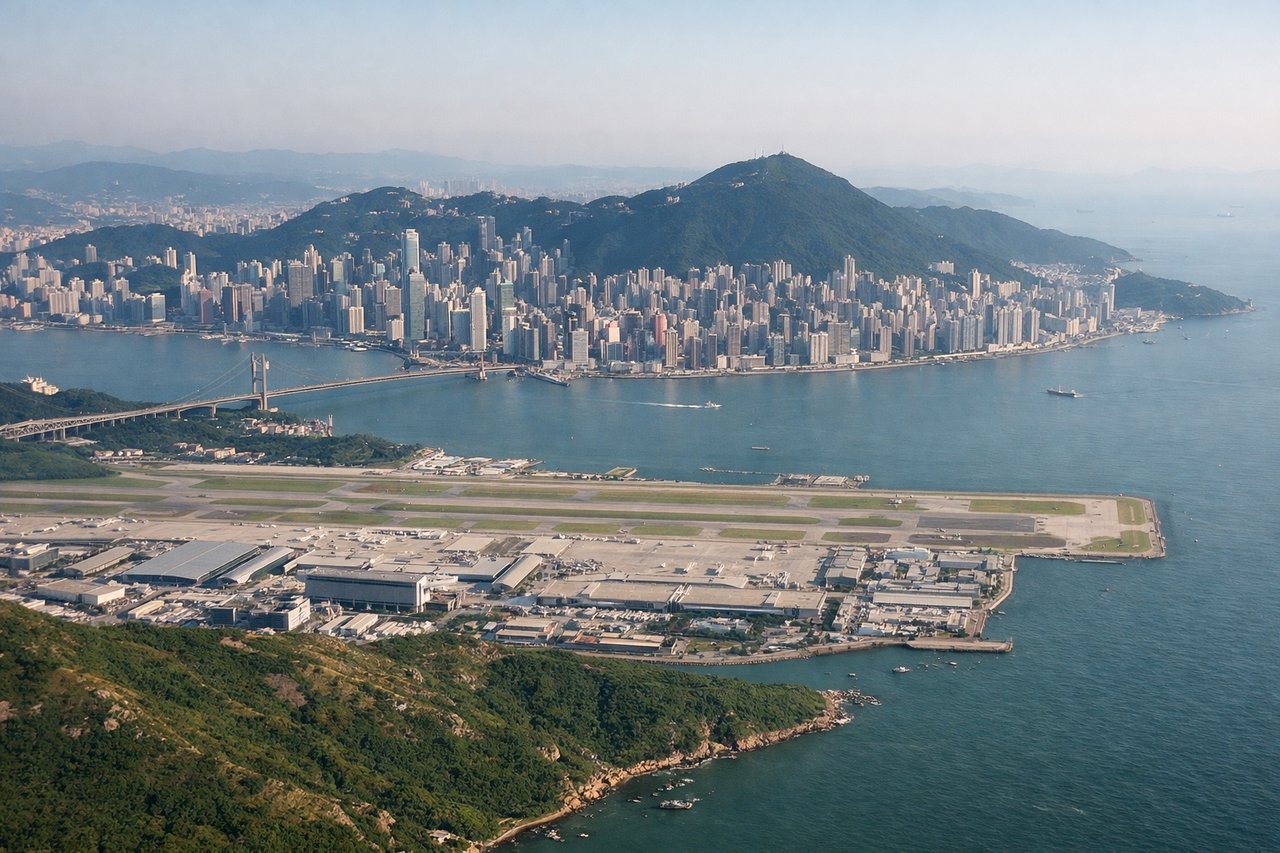
LEFTHKG departures heading east on runway 07L/07R give the left side a direct view over Lantau Island, the dramatic peaks of Lantau, and the dense urban sprawl of Kowloon and Hong Kong Island across the harbor. The right side faces open South China Sea with little of interest.
Landing at AMS
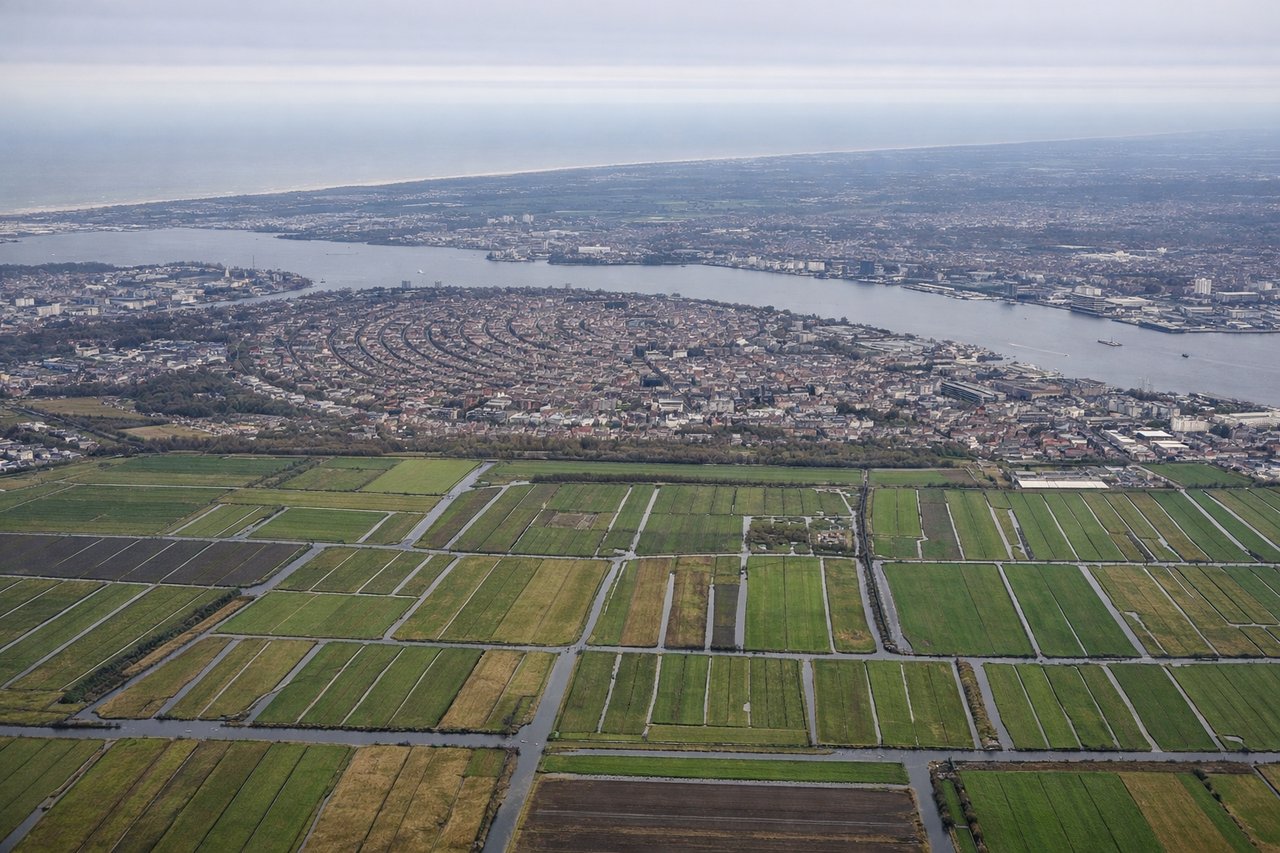
LEFTSchiphol typically uses westerly runways (18R/36L or 06/24 configuration), and on approach from the east the left side looks south over the Dutch polder landscape, the Amstel River, and Amsterdam city center including the canal ring. The right side faces north over flat agricultural land with fewer distinguishing features.
Landmarks on this routeAll landmarks →
Will your flight be in sunlight?
See exactly which side of the plane gets sun and shade at your departure time.
About This Route
Which side of the plane should I sit on flying from Hong Kong International (HKG) to Schiphol (AMS)?
Sit on the Left side of the plane for the best views on flights from Hong Kong to Amsterdam. Left side wins both ends of the flight. During the long cruise over Central Asia and Europe, the left (south-facing) side also gets better views of the Himalayas if the route tracks north of them, the Caspian Sea, and the Alps on some routing variants. Right side has open ocean and featureless steppe for much of the journey.
What can I see during takeoff from Hong Kong International in Hong Kong?
During takeoff from Hong Kong International (HKG), sit on the Left side for the best views. HKG departures heading east on runway 07L/07R give the left side a direct view over Lantau Island, the dramatic peaks of Lantau, and the dense urban sprawl of Kowloon and Hong Kong Island across the harbor. The right side faces open South China Sea with little of interest. Notable sights include: Lantau Peak (934m), Victoria Harbour and Hong Kong Island skyline, Kowloon Peninsula, Tsing Ma Bridge.
What can I see when landing at Schiphol in Amsterdam?
When landing at Schiphol (AMS), sit on the Left side for the best views. Schiphol typically uses westerly runways (18R/36L or 06/24 configuration), and on approach from the east the left side looks south over the Dutch polder landscape, the Amstel River, and Amsterdam city center including the canal ring. The right side faces north over flat agricultural land with fewer distinguishing features. Notable sights include: Amsterdam canal ring, Amstel River, Dutch polder farmland grid, IJmeer lake.
How long is the flight from Hong Kong to Amsterdam?
The flight from Hong Kong International (HKG) to Schiphol (AMS) takes Approximately 11.5 to 12.5 hours.
What does the Hong Kong to Amsterdam flight path pass over?
The route typically tracks northwest over southern China, then across Myanmar or Bangladesh, over the Tibetan Plateau or its northern fringes, across Central Asia including Kazakhstan's steppe, the Caspian Sea, then over Russia or Ukraine, Poland, and into the Netherlands. Notable features include the Tibetan Plateau and Himalayan foothills visible to the south, the vast flat Kazakh steppe, the Caspian Sea (the world's largest inland body of water, clearly visible as a large blue expanse), the Ural region transition, and the North European Plain approaching Amsterdam.