The right side wins because the cruise portion tracks south of the Caucasus, Caspian Sea, and Tian Shan range, putting these dramatic features in view, and the Hong Kong approach favors the same side with Lantau's peaks and the South China Sea islands.
Flown AMS to HKG? Did we get it right?
Flight Path
Amsterdam to Hong Kong is 5,763 miles (9,274 km), a flight of about 11 hours 50 minutes.
Caucasus foothills near the Black Sea, the Caspian Sea, the steppe of Kazakhstan, and the snow-capped Tian Shan range along the Kazakhstan-China border
Great circle distance and headings ›


Phase by phase
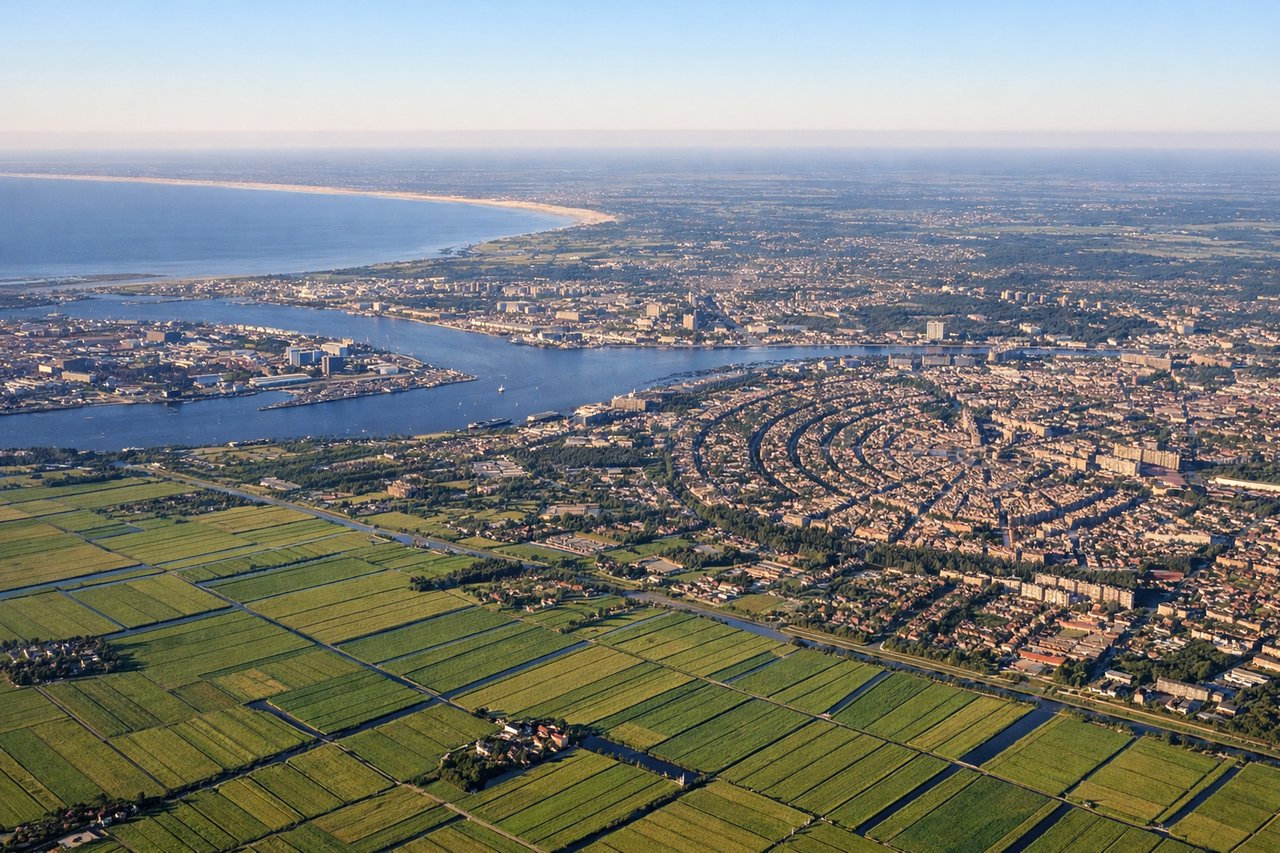
Takeoff from AMS
RIGHTDeparting from the Polderbaan, the aircraft climbs south then banks left onto its eastbound track toward Germany, which swings the right side toward Amsterdam's outskirts, the IJsselmeer, and the North Sea coastline before leveling off over the flat Dutch polders.

Landing at HKG
RIGHTOn approach into Hong Kong, the final turn over the Pearl River estuary brings the right side of the aircraft toward Lantau Island's steep green peaks and the scattered islands of the South China Sea before the runway's threshold at Chek Lap Kok.
Will your flight be in sunlight?
Pick a date and time in the Sun Map to watch the sun move across your whole flight.
About This Route
Which side of the plane should I sit on flying from Schiphol (AMS) to Hong Kong International (HKG)?
Sit on the Right side of the plane for the best views on flights from Amsterdam to Hong Kong. The right side wins because the cruise portion tracks south of the Caucasus, Caspian Sea, and Tian Shan range, putting these dramatic features in view, and the Hong Kong approach favors the same side with Lantau's peaks and the South China Sea islands.
What can I see during takeoff from Schiphol in Amsterdam?
During takeoff from Schiphol (AMS), sit on the Right side for the best views. Departing from the Polderbaan, the aircraft climbs south then banks left onto its eastbound track toward Germany, which swings the right side toward Amsterdam's outskirts, the IJsselmeer, and the North Sea coastline before leveling off over the flat Dutch polders. Notable sights include: IJsselmeer lake, Amsterdam's northern suburbs, Dutch polder patchwork, North Sea coastline.
What can I see when landing at Hong Kong International in Hong Kong?
When landing at Hong Kong International (HKG), sit on the Right side for the best views. On approach into Hong Kong, the final turn over the Pearl River estuary brings the right side of the aircraft toward Lantau Island's steep green peaks and the scattered islands of the South China Sea before the runway's threshold at Chek Lap Kok. Notable sights include: Lantau Island peaks, South China Sea islands, Hong Kong-Zhuhai-Macau Bridge, Pearl River estuary.
How long is the flight from Amsterdam to Hong Kong?
The flight from Schiphol (AMS) to Hong Kong International (HKG) takes about 11 hours 50 minutes. The shortest flight path between them is 5,763 miles (9,274 km); winds and air traffic control usually add a few percent.
What does the Amsterdam to Hong Kong flight path pass over?
Caucasus foothills near the Black Sea, the Caspian Sea, the steppe of Kazakhstan, and the snow-capped Tian Shan range along the Kazakhstan-China border