Both sides face over 14 hours of open South Atlantic with little to see, but the left side wins out because of the exceptional Cape Town arrival, where Table Mountain, the city bowl, and Table Bay come into view during the descent — a far more dramatic bookend than the brief, distant glimpse of Washington DC available on the right during takeoff.
Flown IAD to CPT? Did we get it right?
Flight Path
Washington to Cape Town is 7,931 miles (12,764 km), a flight of about 17 hours 5 minutes.
The great-circle path crosses the open South Atlantic Ocean for the bulk of the flight, passing within visual range of remote, volcanic Ascension Island roughly at the midpoint; otherwise no land is visible until the South African coast appears during descent into Cape Town.
Great circle distance and headings ›


Phase by phase

Takeoff from IAD
RIGHTDepartures from IAD typically climb out over the Northern Virginia suburbs before turning to align with the transatlantic routing east of Washington. On the right side, passengers get a distant but recognizable glimpse of the Potomac River and the Washington DC skyline (Capitol dome, Washington Monument) before the aircraft turns out toward the Atlantic and the scenery gives way to open water.
Landing at CPT
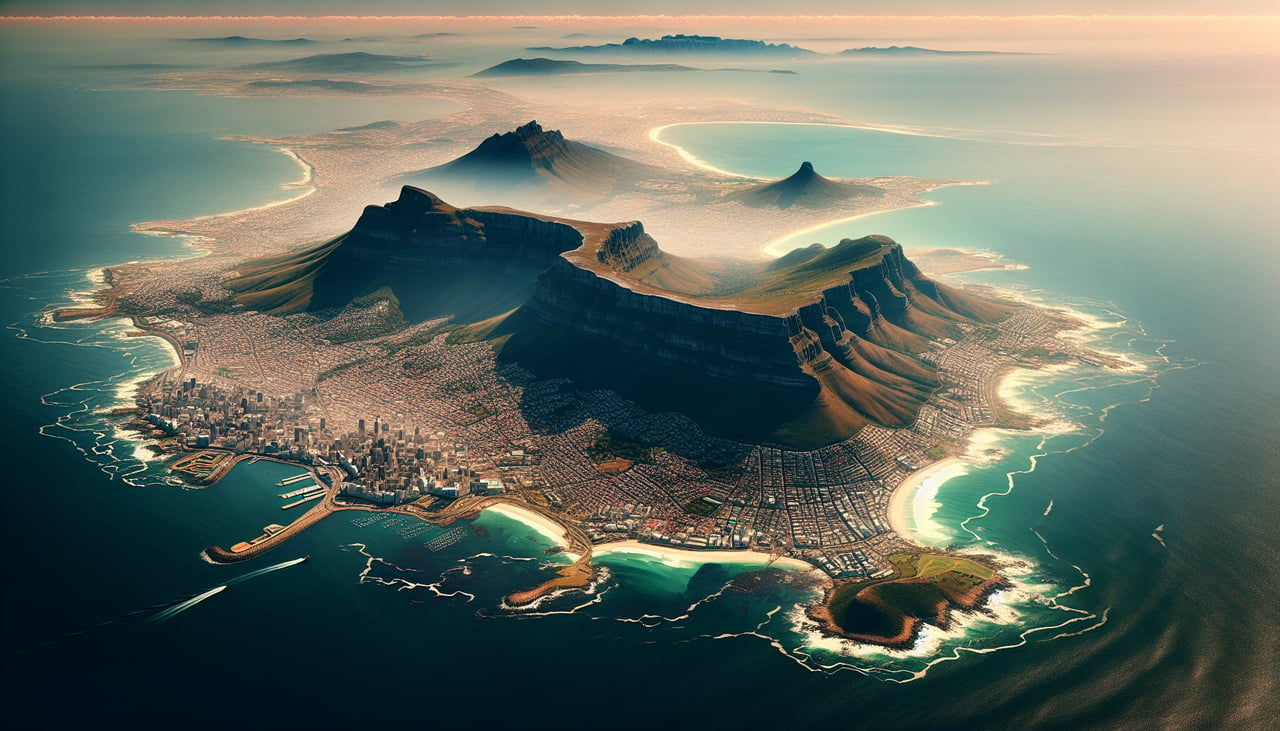
LEFTOn the final approach into Cape Town, the aircraft crosses the South African coastline and banks to line up with the runway, putting Table Mountain's flat-topped massif, the city bowl, and Table Bay squarely on the left side. This is one of the most dramatic landfalls in commercial aviation, with the Cape Peninsula's mountains trailing off toward the horizon.
Will your flight be in sunlight?
Pick a date and time in the Sun Map to watch the sun move across your whole flight.
About This Route
Which side of the plane should I sit on flying from Washington Dulles International (IAD) to Cape Town International (CPT)?
Sit on the Left side of the plane for the best views on flights from Washington to Cape Town. Both sides face over 14 hours of open South Atlantic with little to see, but the left side wins out because of the exceptional Cape Town arrival, where Table Mountain, the city bowl, and Table Bay come into view during the descent — a far more dramatic bookend than the brief, distant glimpse of Washington DC available on the right during takeoff.
What can I see during takeoff from Washington Dulles International in Washington?
During takeoff from Washington Dulles International (IAD), sit on the Right side for the best views. Departures from IAD typically climb out over the Northern Virginia suburbs before turning to align with the transatlantic routing east of Washington. On the right side, passengers get a distant but recognizable glimpse of the Potomac River and the Washington DC skyline (Capitol dome, Washington Monument) before the aircraft turns out toward the Atlantic and the scenery gives way to open water. Notable sights include: Potomac River, Washington DC skyline (Capitol, Washington Monument), Chesapeake Bay in the distance.
What can I see when landing at Cape Town International in Cape Town?
When landing at Cape Town International (CPT), sit on the Left side for the best views. On the final approach into Cape Town, the aircraft crosses the South African coastline and banks to line up with the runway, putting Table Mountain's flat-topped massif, the city bowl, and Table Bay squarely on the left side. This is one of the most dramatic landfalls in commercial aviation, with the Cape Peninsula's mountains trailing off toward the horizon. Notable sights include: Table Mountain, Cape Town city bowl, Table Bay and Robben Island, Cape Peninsula mountain chain.
How long is the flight from Washington to Cape Town?
The flight from Washington Dulles International (IAD) to Cape Town International (CPT) takes about 17 hours 5 minutes. The shortest flight path between them is 7,931 miles (12,764 km); winds and air traffic control usually add a few percent.
What does the Washington to Cape Town flight path pass over?
The great-circle path crosses the open South Atlantic Ocean for the bulk of the flight, passing within visual range of remote, volcanic Ascension Island roughly at the midpoint; otherwise no land is visible until the South African coast appears during descent into Cape Town.