This is a 14-plus hour flight, and while the right side wins the short takeoff and landing views with city scenery, the left side dominates the many hours of cruise, passing the volcanic Aleutian Islands, the snow-capped peaks of Alaska's and Kamchatka's coastlines, and glimpses of the Sea of Japan — far more dramatic terrain than the Arctic tundra and Hudson Bay seen on the right.
Flown IAD to ICN? Did we get it right?
Flight Path
Washington to Seoul is 6,943 miles (11,173 km), a flight of about 14 hours 35 minutes.
The route's midpoint lies over the North Pacific near the Aleutian Islands and Bering Sea, with the volcanic ranges of Alaska's Alaska Peninsula and Russia's Kamchatka Peninsula flanking the flight path.
Great circle distance and headings ›

Phase by phase

Takeoff from IAD
RIGHTDeparting Dulles on a north-northwest heading, right-side passengers get a brief but recognizable glimpse of downtown Washington DC and the Potomac River before the jet climbs away, while the left side only shows flat Piedmont farmland and distant Blue Ridge foothills.
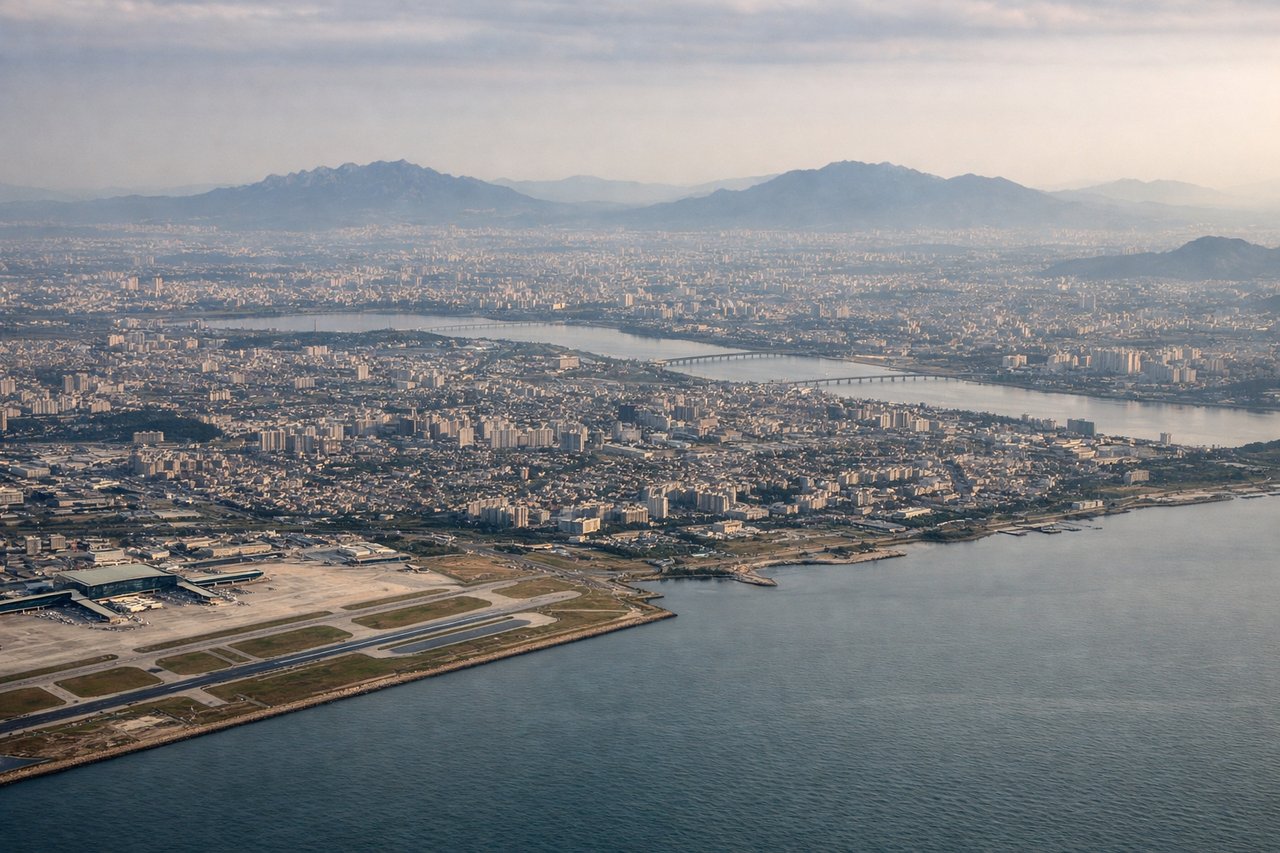
Landing at ICN
RIGHTArrival into Incheon typically curves over the Seoul metropolitan area before turning onto final approach, giving right-side passengers a wide view of the capital's skyline, the Han River, and the mountains that ring the city, while the left side mostly shows flat tidal mudflats and the Yellow Sea.
Will your flight be in sunlight?
Pick a date and time in the Sun Map to watch the sun move across your whole flight.
About This Route
Which side of the plane should I sit on flying from Washington Dulles International (IAD) to Incheon International (ICN)?
Sit on the Left side of the plane for the best views on flights from Washington to Seoul. This is a 14-plus hour flight, and while the right side wins the short takeoff and landing views with city scenery, the left side dominates the many hours of cruise, passing the volcanic Aleutian Islands, the snow-capped peaks of Alaska's and Kamchatka's coastlines, and glimpses of the Sea of Japan — far more dramatic terrain than the Arctic tundra and Hudson Bay seen on the right.
What can I see during takeoff from Washington Dulles International in Washington?
During takeoff from Washington Dulles International (IAD), sit on the Right side for the best views. Departing Dulles on a north-northwest heading, right-side passengers get a brief but recognizable glimpse of downtown Washington DC and the Potomac River before the jet climbs away, while the left side only shows flat Piedmont farmland and distant Blue Ridge foothills. Notable sights include: Washington DC monuments and Capitol dome, Potomac River, upper Chesapeake Bay, Virginia Piedmont farmland.
What can I see when landing at Incheon International in Seoul?
When landing at Incheon International (ICN), sit on the Right side for the best views. Arrival into Incheon typically curves over the Seoul metropolitan area before turning onto final approach, giving right-side passengers a wide view of the capital's skyline, the Han River, and the mountains that ring the city, while the left side mostly shows flat tidal mudflats and the Yellow Sea. Notable sights include: Seoul skyline, Han River, mountains surrounding Seoul, Incheon's tidal Yellow Sea coastline.
How long is the flight from Washington to Seoul?
The flight from Washington Dulles International (IAD) to Incheon International (ICN) takes about 14 hours 35 minutes. The shortest flight path between them is 6,943 miles (11,173 km); winds and air traffic control usually add a few percent.
What does the Washington to Seoul flight path pass over?
The route's midpoint lies over the North Pacific near the Aleutian Islands and Bering Sea, with the volcanic ranges of Alaska's Alaska Peninsula and Russia's Kamchatka Peninsula flanking the flight path.