The left seat wins at takeoff for the DC views, but the right seat delivers the more dramatic and sustained scenery. During the flight south over Virginia and the Carolinas, the right side tracks closer to the Atlantic coastal plain and eventually picks up the Gulf Coast approach. The Lake Pontchartrain and Mississippi River arrival on the right is one of the most visually distinctive approaches in the US, making right the better overall pick.
Flown IAD to MSY? Did we get it right?
Flight Path
Washington to New Orleans is 955 miles (1,537 km), a flight of about 2 hours 25 minutes.
The flight tracks roughly south-southwest over the Virginia Piedmont, crossing the Appalachian ridgelines of the Blue Ridge and then the flatter Carolinas. Over South Carolina and Georgia the terrain flattens into coastal plain pine forest. The Alabama and Mississippi segments are flat with river systems including the Pearl River visible. The final descent crosses the Louisiana wetlands and Lake Pontchartrain before the Mississippi River delta region comes into view.
Great circle distance and headings ›

Phase by phase
Takeoff from IAD
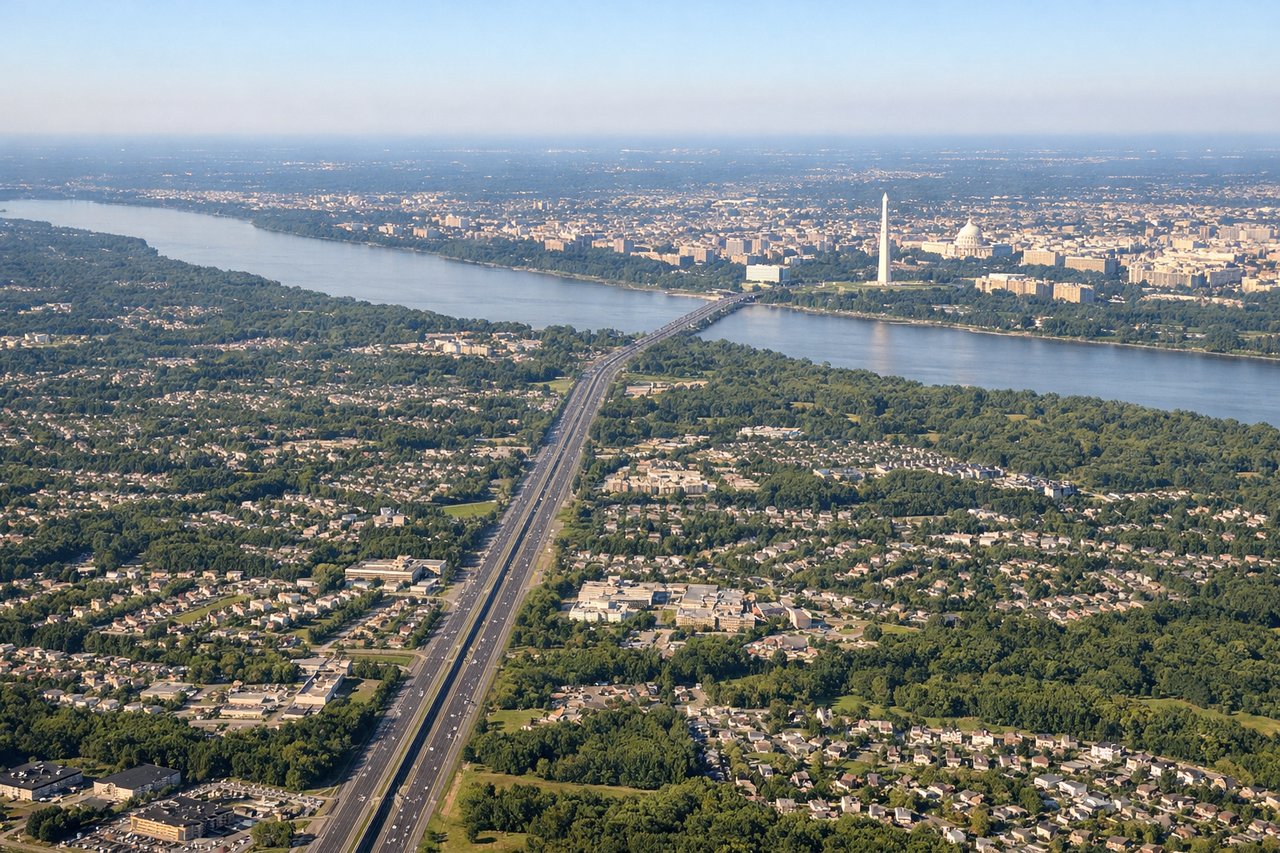
LEFTDulles typically departs east on runway 01R/19L or uses runways oriented northeast, meaning a left-side seat faces northwest toward the DC metro area during the climbing turn south. You get a clear view of the Potomac River, the Washington Monument and Capitol dome, and the dense urban grid of DC proper as the aircraft banks.
Landing at MSY
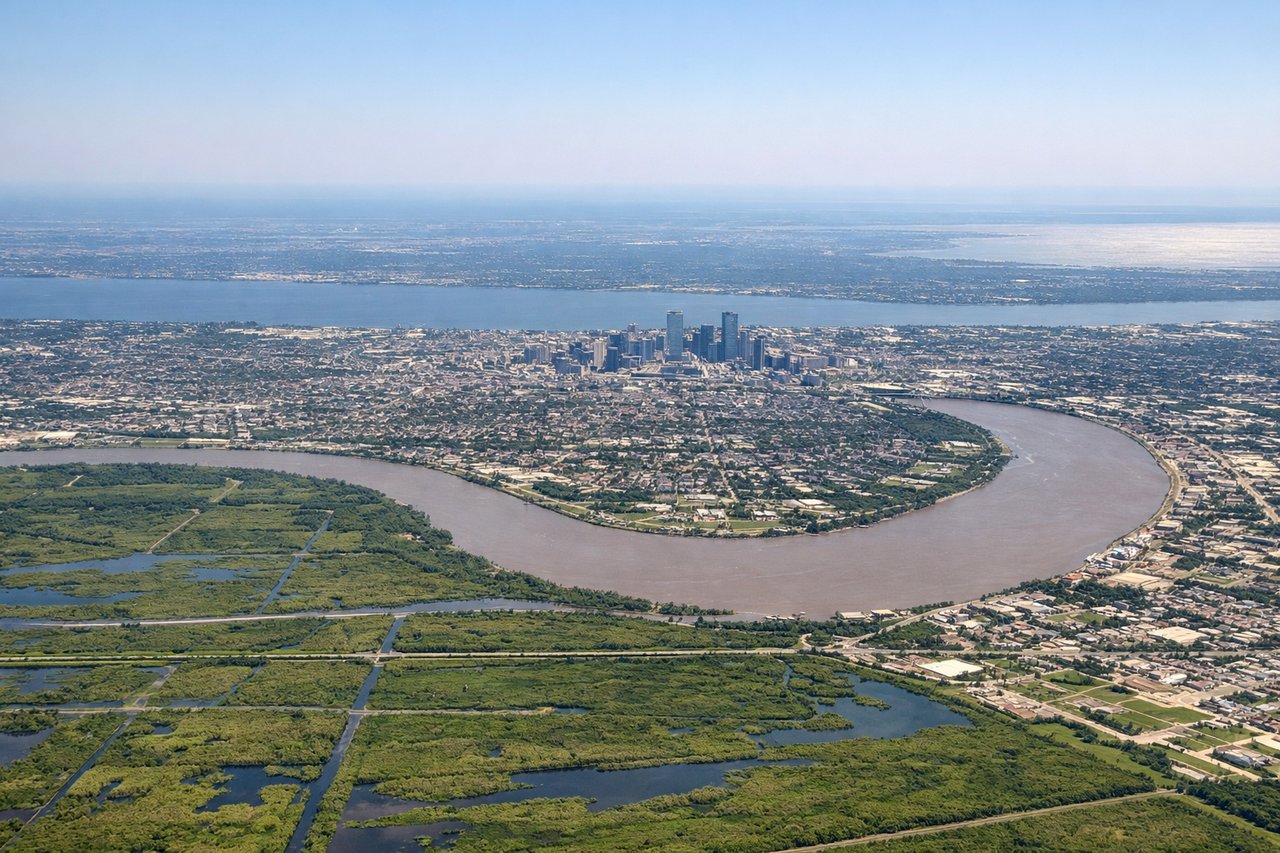
RIGHTMSY sits just west of New Orleans, and aircraft typically approach from the north or northeast on runway 20 heading southwest. A right-side seat gives you the view east over Lake Pontchartrain, the Lake Pontchartrain Causeway, and the distinctive crescent bend of the Mississippi River with the French Quarter and downtown New Orleans skyline visible before touchdown.
Will your flight be in sunlight?
Pick a date and time in the Sun Map to watch the sun move across your whole flight.
About This Route
Which side of the plane should I sit on flying from Washington Dulles International (IAD) to Louis Armstrong New Orleans International (MSY)?
Sit on the Right side of the plane for the best views on flights from Washington to New Orleans. The left seat wins at takeoff for the DC views, but the right seat delivers the more dramatic and sustained scenery. During the flight south over Virginia and the Carolinas, the right side tracks closer to the Atlantic coastal plain and eventually picks up the Gulf Coast approach. The Lake Pontchartrain and Mississippi River arrival on the right is one of the most visually distinctive approaches in the US, making right the better overall pick.
What can I see during takeoff from Washington Dulles International in Washington?
During takeoff from Washington Dulles International (IAD), sit on the Left side for the best views. Dulles typically departs east on runway 01R/19L or uses runways oriented northeast, meaning a left-side seat faces northwest toward the DC metro area during the climbing turn south. You get a clear view of the Potomac River, the Washington Monument and Capitol dome, and the dense urban grid of DC proper as the aircraft banks. Notable sights include: Potomac River, Washington Monument and National Mall, Capitol Hill dome, Tysons Corner urban cluster.
What can I see when landing at Louis Armstrong New Orleans International in New Orleans?
When landing at Louis Armstrong New Orleans International (MSY), sit on the Right side for the best views. MSY sits just west of New Orleans, and aircraft typically approach from the north or northeast on runway 20 heading southwest. A right-side seat gives you the view east over Lake Pontchartrain, the Lake Pontchartrain Causeway, and the distinctive crescent bend of the Mississippi River with the French Quarter and downtown New Orleans skyline visible before touchdown. Notable sights include: Lake Pontchartrain, Lake Pontchartrain Causeway, Mississippi River crescent bend, New Orleans downtown skyline.
How long is the flight from Washington to New Orleans?
The flight from Washington Dulles International (IAD) to Louis Armstrong New Orleans International (MSY) takes about 2 hours 25 minutes. The shortest flight path between them is 955 miles (1,537 km); winds and air traffic control usually add a few percent.
What does the Washington to New Orleans flight path pass over?
The flight tracks roughly south-southwest over the Virginia Piedmont, crossing the Appalachian ridgelines of the Blue Ridge and then the flatter Carolinas. Over South Carolina and Georgia the terrain flattens into coastal plain pine forest. The Alabama and Mississippi segments are flat with river systems including the Pearl River visible. The final descent crosses the Louisiana wetlands and Lake Pontchartrain before the Mississippi River delta region comes into view.