While the JFK departure gives a strong skyline moment on the left, the right side accumulates more scenery over the course of this ultra-long-haul route: portions of Siberia's plateau terrain and Mongolia's steppe are more consistently visible on that side as the great-circle path curves southward, and the Bangkok approach delivers a genuine city-and-river landmark right before landing.
Flight Path
The midpoint of this polar great-circle route falls over the Russian Arctic and central Siberia — the ice-covered Arctic Ocean gives way to the tundra of the Taymyr Peninsula and the vast, largely unpopulated Central Siberian Plateau, with few identifiable landmarks but dramatic stretches of ice, permafrost terrain, and braided river systems visible in clear weather.
Great circle distance and headings ›.jpg?width=600)
.jpeg?width=600)

.jpg?width=600)
Phase by phase
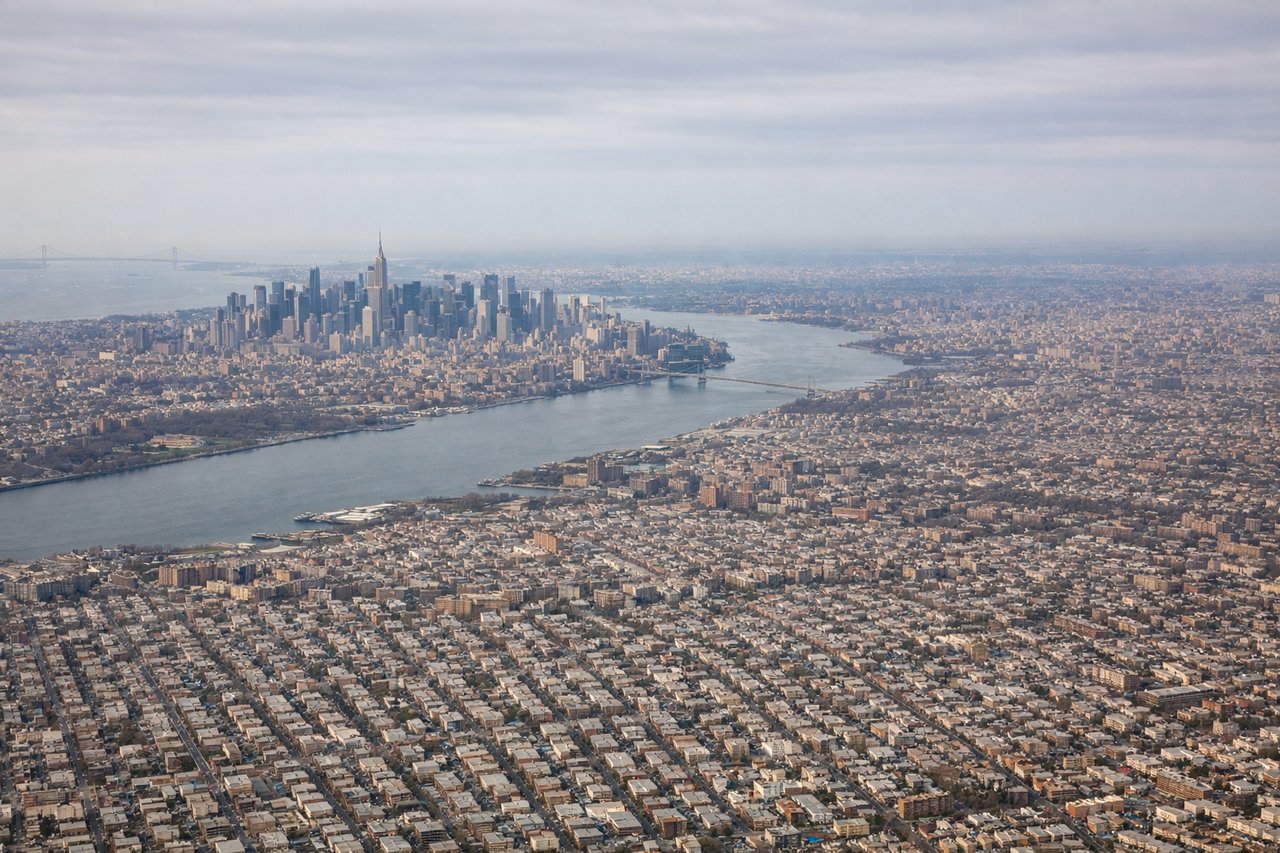
Takeoff from JFK
LEFTDeparting JFK, the initial climb path passes over Jamaica Bay and Brooklyn before the aircraft turns toward the north for the long polar routing, putting Manhattan's skyline, the East River, and New York Harbor on the left side of the plane. It's a brief but genuinely dramatic urban view to start an otherwise remote-terrain flight.
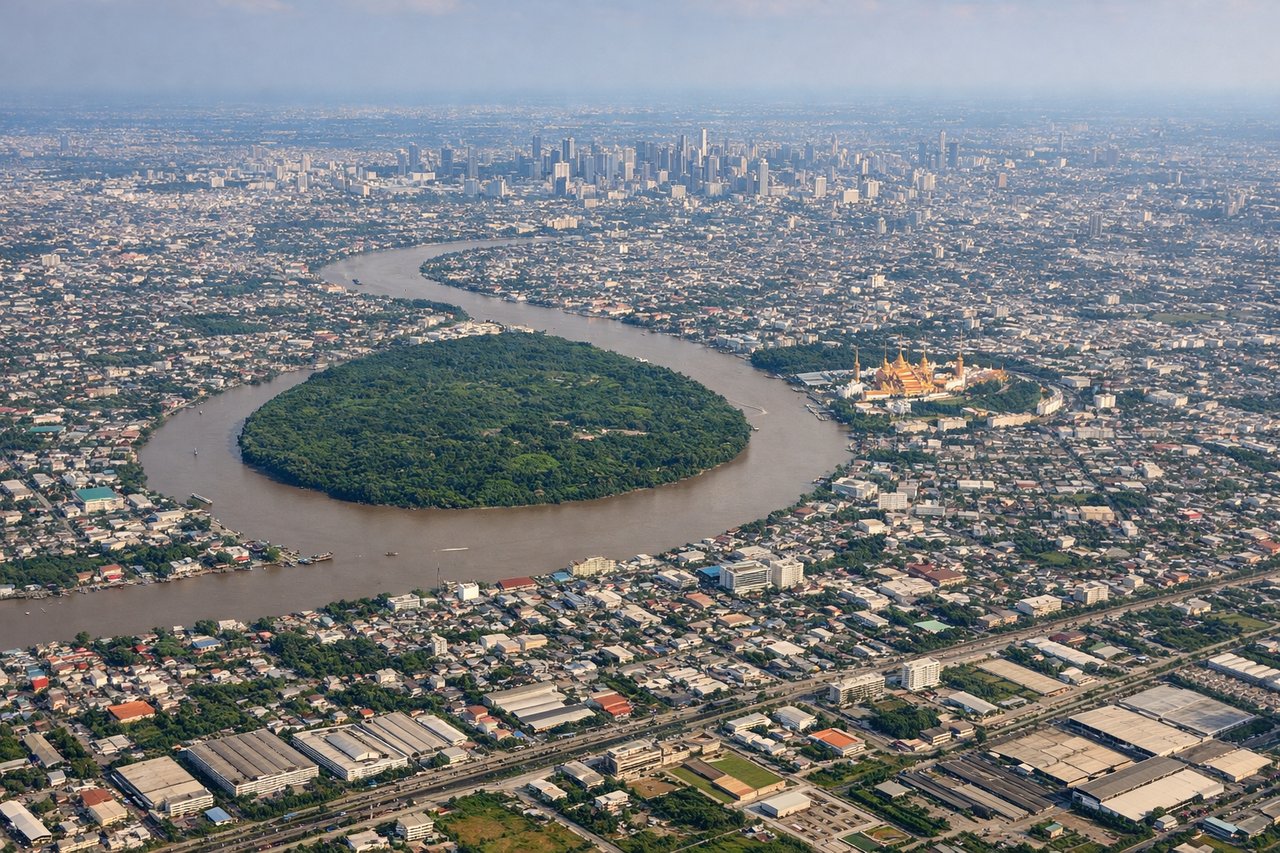
Landing at BKK
RIGHTOn the descent into Suvarnabhumi from the north, the flight path takes the aircraft down over central Thailand's rice-paddy plains before swinging toward the runway, putting Bangkok's skyline and the winding Chao Phraya River on the right side of the cabin. Passengers get a clear look at the city's dense high-rise core and the river's distinctive bends just before touchdown.
Landmarks on this routeAll landmarks →
Will your flight be in sunlight?
See exactly which side of the plane gets sun and shade at your departure time.
About This Route
Which side of the plane should I sit on flying from John F Kennedy International (JFK) to Suvarnabhumi Airport (BKK)?
Sit on the Right side of the plane for the best views on flights from New York to Bangkok. While the JFK departure gives a strong skyline moment on the left, the right side accumulates more scenery over the course of this ultra-long-haul route: portions of Siberia's plateau terrain and Mongolia's steppe are more consistently visible on that side as the great-circle path curves southward, and the Bangkok approach delivers a genuine city-and-river landmark right before landing.
What can I see during takeoff from John F Kennedy International in New York?
During takeoff from John F Kennedy International (JFK), sit on the Left side for the best views. Departing JFK, the initial climb path passes over Jamaica Bay and Brooklyn before the aircraft turns toward the north for the long polar routing, putting Manhattan's skyline, the East River, and New York Harbor on the left side of the plane. It's a brief but genuinely dramatic urban view to start an otherwise remote-terrain flight. Notable sights include: Manhattan skyline, Jamaica Bay wetlands, Verrazzano-Narrows Bridge, New York Harbor.
What can I see when landing at Suvarnabhumi Airport in Bangkok?
When landing at Suvarnabhumi Airport (BKK), sit on the Right side for the best views. On the descent into Suvarnabhumi from the north, the flight path takes the aircraft down over central Thailand's rice-paddy plains before swinging toward the runway, putting Bangkok's skyline and the winding Chao Phraya River on the right side of the cabin. Passengers get a clear look at the city's dense high-rise core and the river's distinctive bends just before touchdown. Notable sights include: Chao Phraya River bends, Bangkok skyline, Suvarnabhumi's surrounding canals and rice paddies, Gulf of Thailand haze on the horizon.
How long is the flight from New York to Bangkok?
The flight from John F Kennedy International (JFK) to Suvarnabhumi Airport (BKK) takes 17h 35m.
What does the New York to Bangkok flight path pass over?
The midpoint of this polar great-circle route falls over the Russian Arctic and central Siberia — the ice-covered Arctic Ocean gives way to the tundra of the Taymyr Peninsula and the vast, largely unpopulated Central Siberian Plateau, with few identifiable landmarks but dramatic stretches of ice, permafrost terrain, and braided river systems visible in clear weather.