Although the JFK approach favors the right side, the left side wins overall because of the Bangkok skyline at departure and, during the long cruise phase on this polar-leaning route, the chance to see the Himalayan foothills, Central Asian steppe, and the vast white expanse of Greenland's ice sheet — far more varied and dramatic terrain than the ocean-dominated right side.
Flight Path
Himalayan foothills and Tibetan Plateau, Central Asian steppe and Kazakh desert, Siberian taiga and river systems, Arctic sea ice, and the Greenland ice sheet before descending over eastern Canada toward the U.S. Northeast
Great circle distance and headings ›.jpg?width=600)

.jpeg?width=600)
.jpg?width=600)
Phase by phase
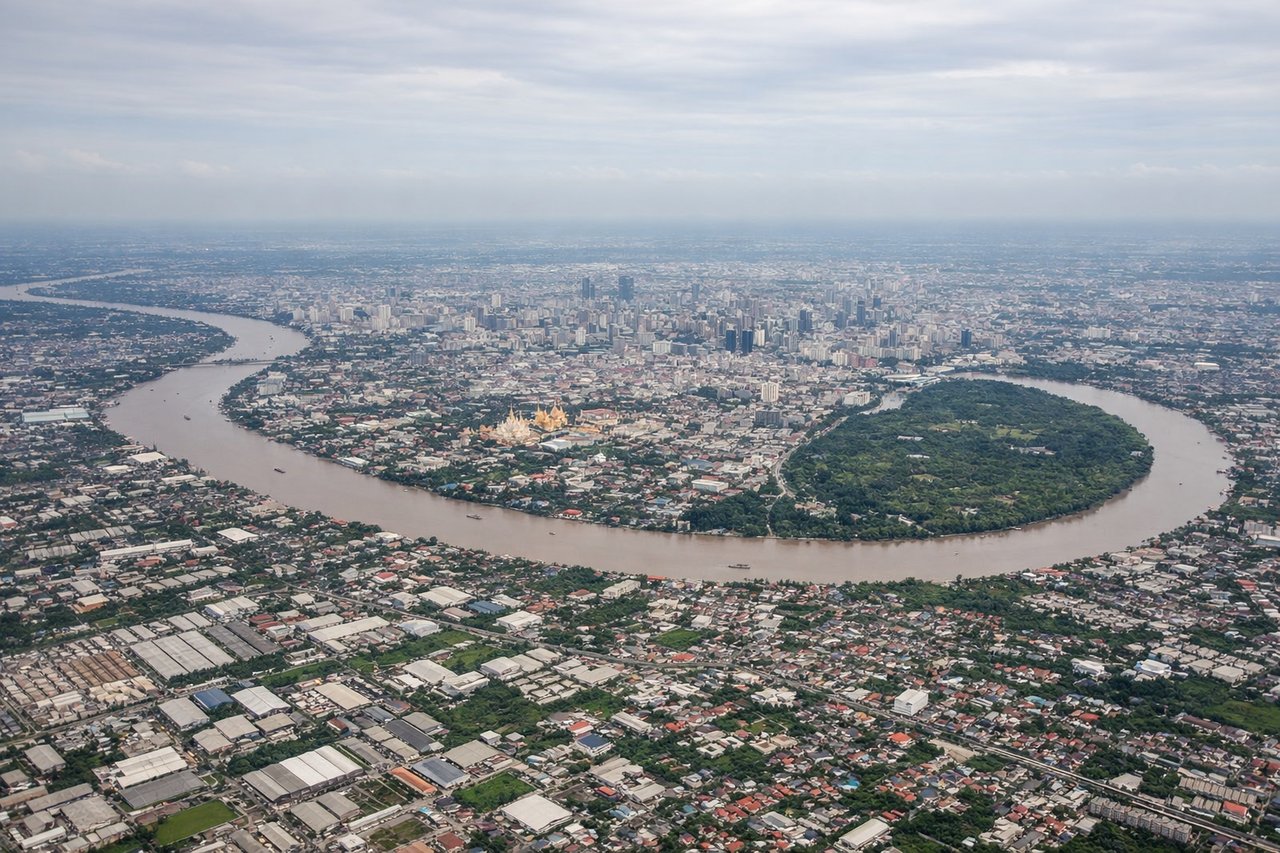
Takeoff from BKK
LEFTDeparting Suvarnabhumi heading north, the left side faces west toward central Bangkok, giving a brief but striking view of the Chao Phraya River winding through the skyscrapers before the plane climbs away from the city.
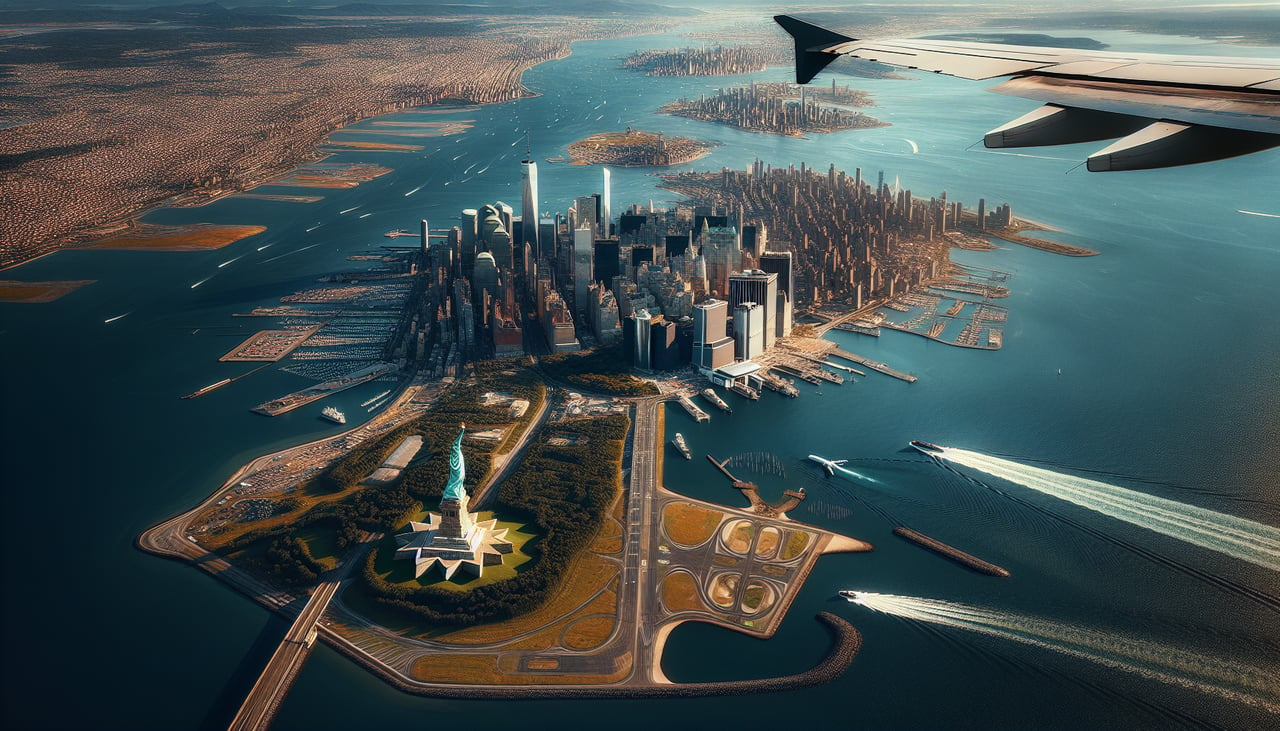
Landing at JFK
RIGHTOn the descent into JFK's runway 22, the approach path curves down over Long Island and Jamaica Bay, and the right side offers the classic view of the Manhattan skyline before the final turn to land.
Landmarks on this routeAll landmarks →
Will your flight be in sunlight?
See exactly which side of the plane gets sun and shade at your departure time.
About This Route
Which side of the plane should I sit on flying from Suvarnabhumi Airport (BKK) to John F Kennedy International (JFK)?
Sit on the Left side of the plane for the best views on flights from Bangkok to New York. Although the JFK approach favors the right side, the left side wins overall because of the Bangkok skyline at departure and, during the long cruise phase on this polar-leaning route, the chance to see the Himalayan foothills, Central Asian steppe, and the vast white expanse of Greenland's ice sheet — far more varied and dramatic terrain than the ocean-dominated right side.
What can I see during takeoff from Suvarnabhumi Airport in Bangkok?
During takeoff from Suvarnabhumi Airport (BKK), sit on the Left side for the best views. Departing Suvarnabhumi heading north, the left side faces west toward central Bangkok, giving a brief but striking view of the Chao Phraya River winding through the skyscrapers before the plane climbs away from the city. Notable sights include: Chao Phraya River, Bangkok skyline (Sathorn/Silom towers), Bang Na canals, Gulf of Thailand haze on the horizon.
What can I see when landing at John F Kennedy International in New York?
When landing at John F Kennedy International (JFK), sit on the Right side for the best views. On the descent into JFK's runway 22, the approach path curves down over Long Island and Jamaica Bay, and the right side offers the classic view of the Manhattan skyline before the final turn to land. Notable sights include: Manhattan skyline, East River, Jamaica Bay wetlands, Rockaway Peninsula.
How long is the flight from Bangkok to New York?
The flight from Suvarnabhumi Airport (BKK) to John F Kennedy International (JFK) takes 17h30m.
What does the Bangkok to New York flight path pass over?
Himalayan foothills and Tibetan Plateau, Central Asian steppe and Kazakh desert, Siberian taiga and river systems, Arctic sea ice, and the Greenland ice sheet before descending over eastern Canada toward the U.S. Northeast