The left side offers the more varied and dramatic scenery across the full flight: Bangkok's riverfront on departure, glimpses of Siberian taiga and possibly Lake Baikal during the long polar cruise, and the Appalachian foothills on arrival into Atlanta, compared to the right side's more featureless plains and ice-covered Arctic expanses.
Flight Path
Siberian taiga and boreal forest, Lake Baikal's elongated basin, Arctic Ocean sea ice, and the fjord-cut coastline of Canada's Arctic islands along the polar great-circle route
Great circle distance and headings ›.jpg?width=600)


.jpeg?width=600)
Phase by phase
Takeoff from BKK
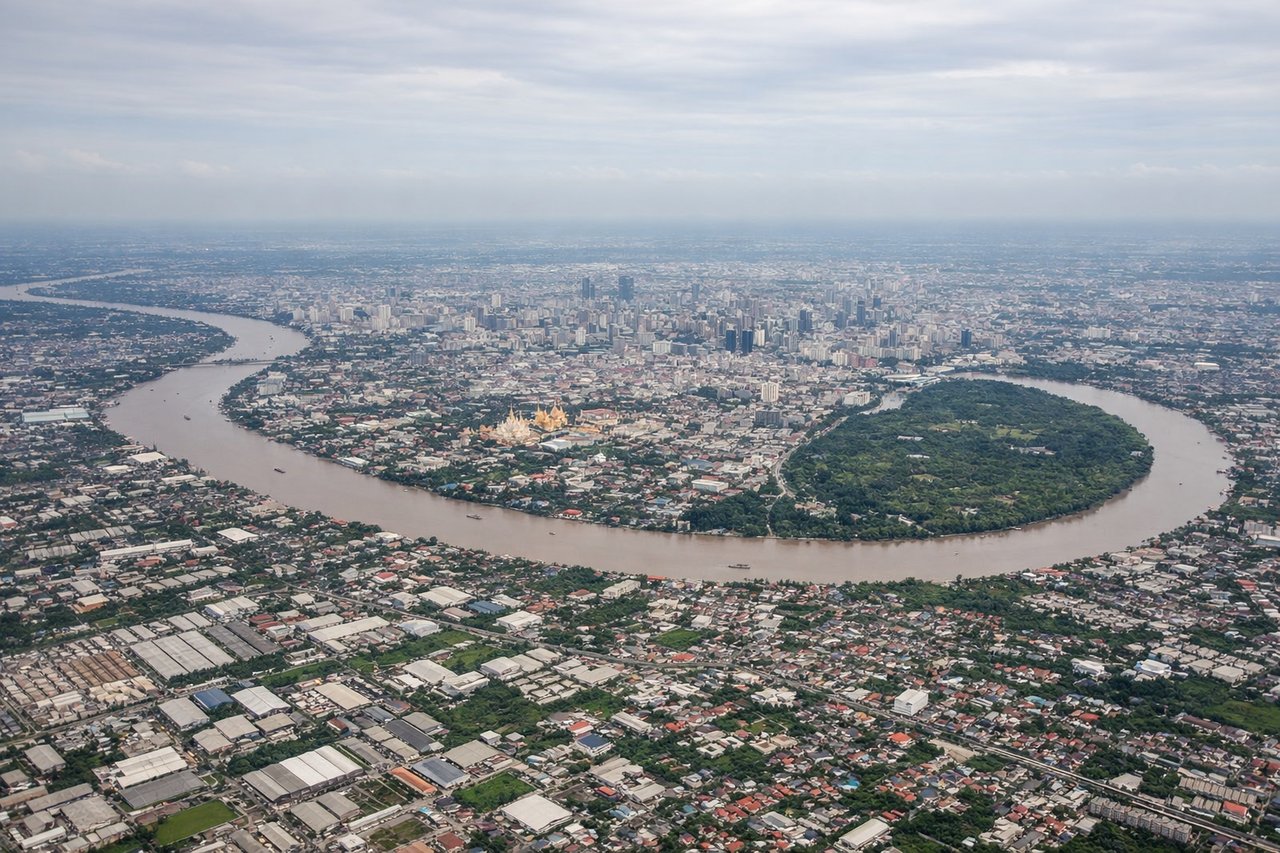
LEFTDeparting Suvarnabhumi northbound, the left side gives a clear view of the Chao Phraya River winding through Bangkok's skyline and the patchwork rice paddies of the central plain, while the right side shows only flat farmland fading into haze.
Landing at ATL
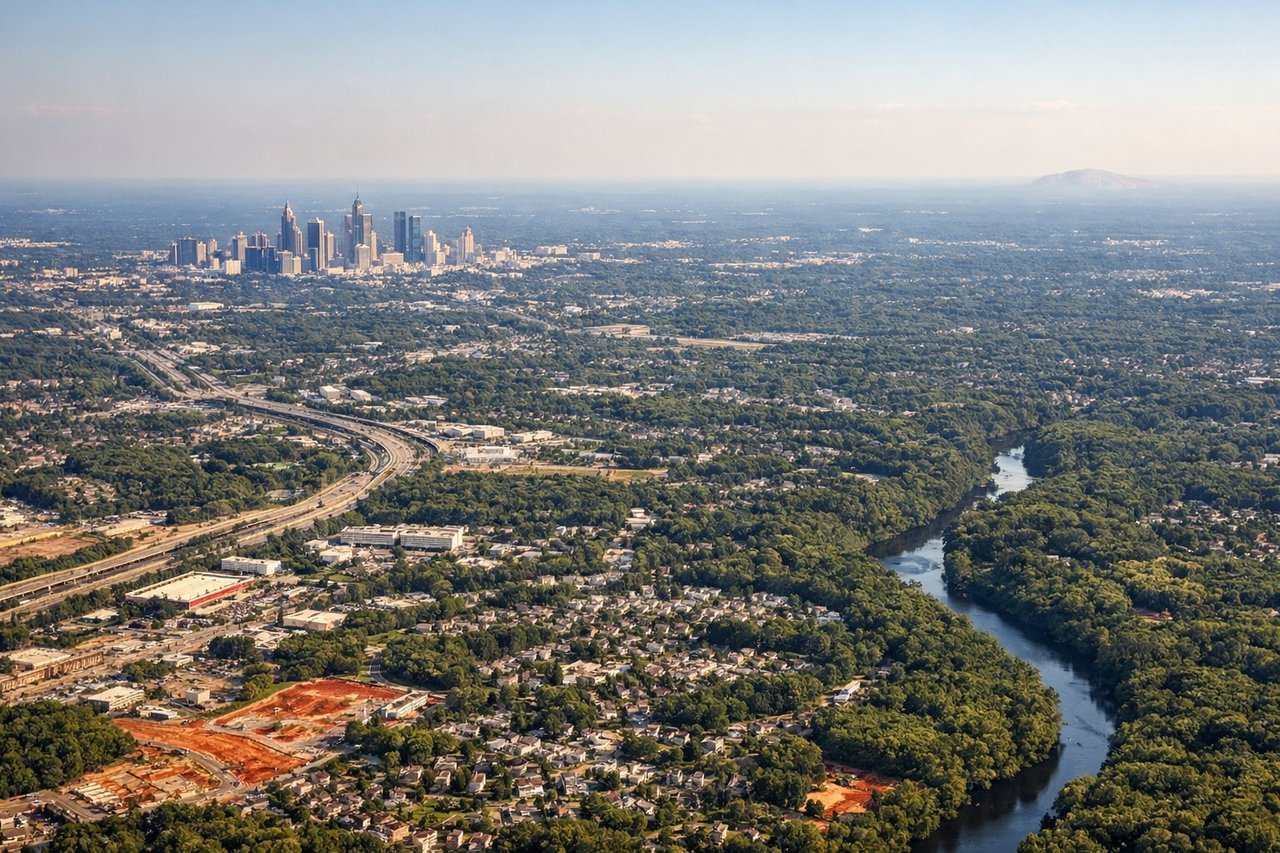
LEFTOn the descent into Atlanta from the north, the left side offers views of the forested ridges of the north Georgia foothills and the Chattahoochee River valley before the runway threshold, while the right side mostly shows flat suburban sprawl.
Landmarks on this routeAll landmarks →
Will your flight be in sunlight?
See exactly which side of the plane gets sun and shade at your departure time.
About This Route
Which side of the plane should I sit on flying from Suvarnabhumi Airport (BKK) to The William B Hartsfield Atlanta International (ATL)?
Sit on the Left side of the plane for the best views on flights from Bangkok to Atlanta. The left side offers the more varied and dramatic scenery across the full flight: Bangkok's riverfront on departure, glimpses of Siberian taiga and possibly Lake Baikal during the long polar cruise, and the Appalachian foothills on arrival into Atlanta, compared to the right side's more featureless plains and ice-covered Arctic expanses.
What can I see during takeoff from Suvarnabhumi Airport in Bangkok?
During takeoff from Suvarnabhumi Airport (BKK), sit on the Left side for the best views. Departing Suvarnabhumi northbound, the left side gives a clear view of the Chao Phraya River winding through Bangkok's skyline and the patchwork rice paddies of the central plain, while the right side shows only flat farmland fading into haze. Notable sights include: Chao Phraya River, Bangkok skyline, central Thai rice paddies.
What can I see when landing at The William B Hartsfield Atlanta International in Atlanta?
When landing at The William B Hartsfield Atlanta International (ATL), sit on the Left side for the best views. On the descent into Atlanta from the north, the left side offers views of the forested ridges of the north Georgia foothills and the Chattahoochee River valley before the runway threshold, while the right side mostly shows flat suburban sprawl. Notable sights include: North Georgia foothills, Chattahoochee River, Atlanta suburban skyline.
How long is the flight from Bangkok to Atlanta?
The flight from Suvarnabhumi Airport (BKK) to The William B Hartsfield Atlanta International (ATL) takes 16h 10m.
What does the Bangkok to Atlanta flight path pass over?
Siberian taiga and boreal forest, Lake Baikal's elongated basin, Arctic Ocean sea ice, and the fjord-cut coastline of Canada's Arctic islands along the polar great-circle route