New York to Palm Springs is 2,373 miles (3,819 km), a flight of about 5 hours 30 minutes.
Left side wins at both ends of the flight. During the transcontinental cruise at 35,000 feet the views are largely symmetrical over the Southwest desert, but the left side also offers better angles on the Colorado River corridor and Mojave Desert features during descent. The New York departure and Palm Springs arrival both strongly favor left.
Flight Path
The flight tracks roughly along the 36th parallel after clearing the Appalachians, crossing the Mississippi River near Memphis, then the flat plains of Oklahoma and Texas panhandle, the Llano Estacado, New Mexico high desert and the Rio Grande valley near Albuquerque, the Arizona plateau including the Painted Desert and Colorado River canyon country, then descending across the Mojave Desert into the Coachella Valley
Great circle distance and headings ›.jpg?width=600)
.jpeg?width=600)

.jpg?width=600)
.jpeg?width=600)
Phase by phase
Takeoff from JFK
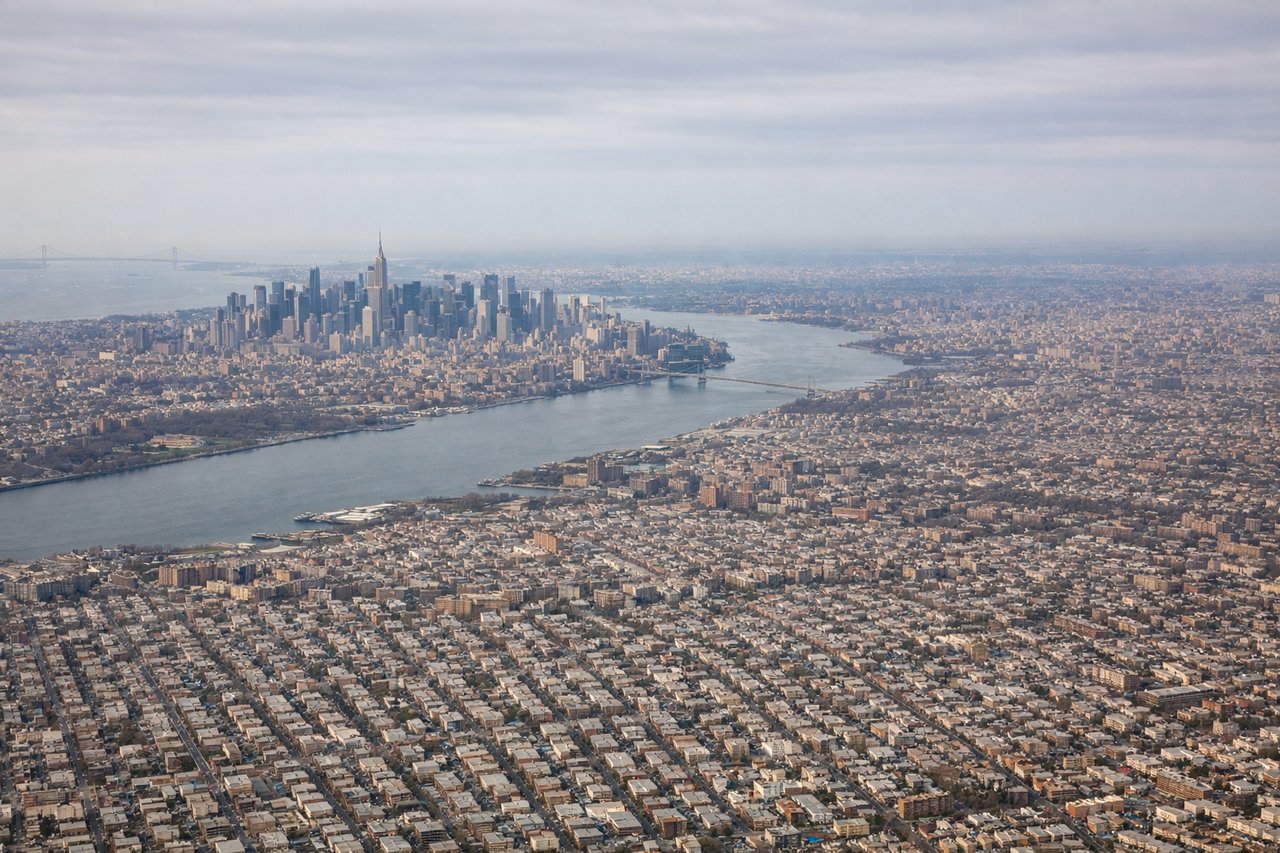
LEFTJFK primarily departs westbound on runway 31L/31R or eastbound on 22L/22R. On the dominant westbound departures heading northwest, the left side gives you Jamaica Bay, Lower Manhattan's skyline, and the Hudson River as the aircraft turns west. Right side faces south toward the Atlantic with little of interest.
Landing at PSP
LEFTPSP sits in the Coachella Valley with the San Jacinto Mountains rising dramatically to the southwest. Aircraft typically approach from the west or northwest on runway 31, meaning the left side faces south toward the San Jacinto massif and the valley floor. The right side looks north toward more open desert with less dramatic terrain.
Landmarks on this routeAll landmarks →
Will your flight be in sunlight?
Pick a date and time in the Sun Map to watch the sun move across your whole flight.
About This Route
Which side of the plane should I sit on flying from John F Kennedy International (JFK) to Palm Springs International (PSP)?
Sit on the Left side of the plane for the best views on flights from New York to Palm Springs. Left side wins at both ends of the flight. During the transcontinental cruise at 35,000 feet the views are largely symmetrical over the Southwest desert, but the left side also offers better angles on the Colorado River corridor and Mojave Desert features during descent. The New York departure and Palm Springs arrival both strongly favor left.
What can I see during takeoff from John F Kennedy International in New York?
During takeoff from John F Kennedy International (JFK), sit on the Left side for the best views. JFK primarily departs westbound on runway 31L/31R or eastbound on 22L/22R. On the dominant westbound departures heading northwest, the left side gives you Jamaica Bay, Lower Manhattan's skyline, and the Hudson River as the aircraft turns west. Right side faces south toward the Atlantic with little of interest. Notable sights include: Jamaica Bay and its wildlife refuge directly below, Lower Manhattan skyline to the northwest, the Verrazano-Narrows Bridge spanning the harbor, Hudson River corridor heading north.
What can I see when landing at Palm Springs International in Palm Springs?
When landing at Palm Springs International (PSP), sit on the Left side for the best views. PSP sits in the Coachella Valley with the San Jacinto Mountains rising dramatically to the southwest. Aircraft typically approach from the west or northwest on runway 31, meaning the left side faces south toward the San Jacinto massif and the valley floor. The right side looks north toward more open desert with less dramatic terrain. Notable sights include: San Jacinto Peak and the Santa Rosa Mountains rising abruptly from the valley floor, the Coachella Valley floor with its distinctive date palm agriculture and golf courses, the Salton Sea visible to the southeast as a large flat body of water, Palm Springs urban grid against the mountain base.
How long is the flight from New York to Palm Springs?
The flight from John F Kennedy International (JFK) to Palm Springs International (PSP) takes about 5 hours 30 minutes. The shortest flight path between them is 2,373 miles (3,819 km); winds and air traffic control usually add a few percent.
What does the New York to Palm Springs flight path pass over?
The flight tracks roughly along the 36th parallel after clearing the Appalachians, crossing the Mississippi River near Memphis, then the flat plains of Oklahoma and Texas panhandle, the Llano Estacado, New Mexico high desert and the Rio Grande valley near Albuquerque, the Arizona plateau including the Painted Desert and Colorado River canyon country, then descending across the Mojave Desert into the Coachella Valley