Palm Springs to New York is 2,373 miles (3,819 km), a flight of about 5 hours.
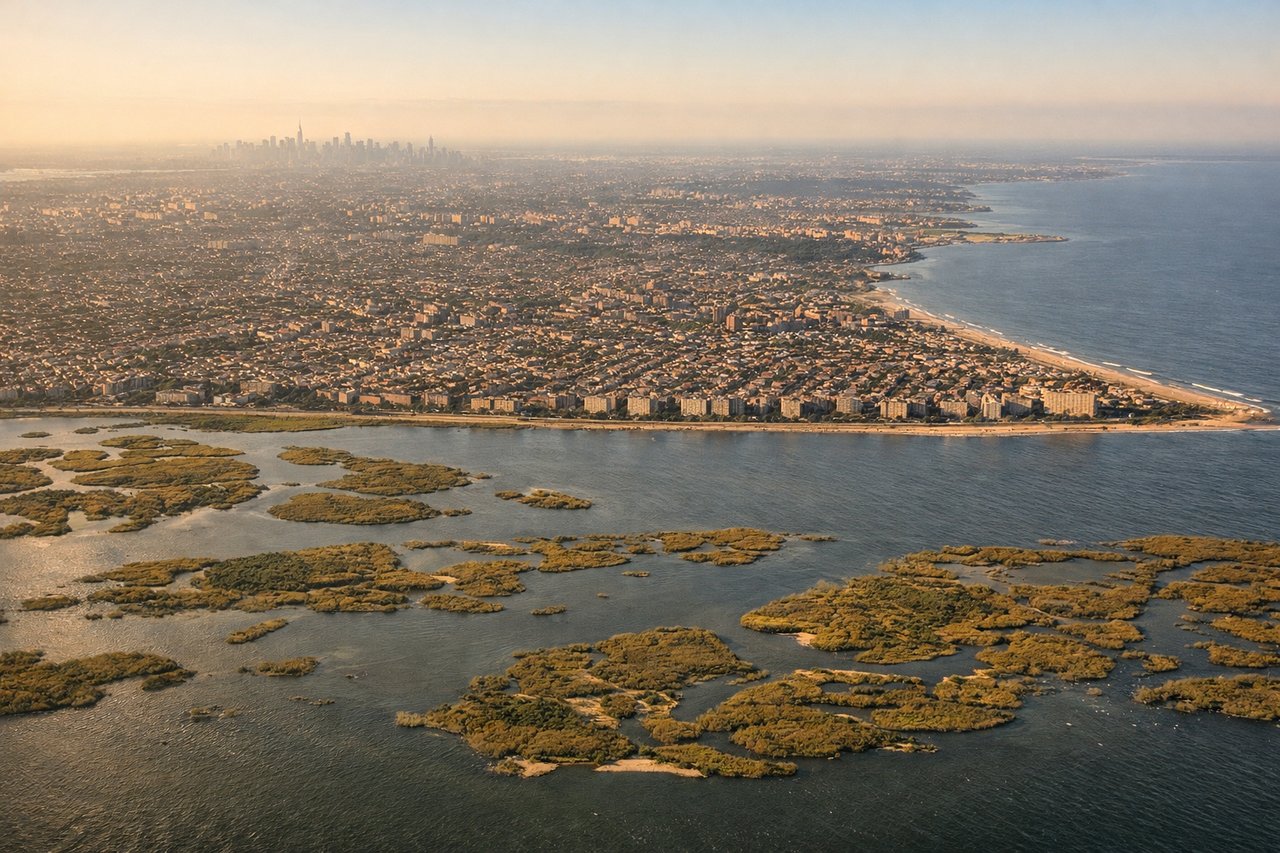
The left side captures the Colorado River crossings, the vast Grand Canyon region from a distance, and the spectacular JFK approach over Jamaica Bay with Manhattan on the horizon. While the right side wins at takeoff with the Salton Sea, the left side delivers more consistently across the full flight including the iconic New York arrival.
Flight Path
The flight tracks northeast over the Mojave Desert, crosses the Colorado River near Lake Havasu, passes north of the Grand Canyon rim (visible as a vast eroded plateau from altitude), crosses the Rockies over southern Colorado or northern New Mexico, then traverses the Great Plains of Kansas and Missouri, crosses the Mississippi River near St. Louis, continues over Indiana and Ohio, crosses the Appalachian Mountains in Pennsylvania, and descends over New Jersey toward Long Island
Great circle distance and headings ›.jpeg?width=600)
.jpg?width=600)

.jpeg?width=600)
.jpg?width=600)
Phase by phase
Takeoff from PSP
RIGHTPSP typically departs east on runway 31L/13R or uses runway 31 heading northwest. On an eastbound departure climbing out over the Coachella Valley, the right side faces south toward the Santa Rosa Mountains and the Salton Sea. The Salton Sea is unmistakable — a vast inland body of water glinting in the desert sun roughly 20 miles southeast.
Landing at JFK
LEFTJFK approaches typically come in from the southwest or west on runways 13L/13R or 22L/22R. On a standard approach from the west descending over Long Island, the left side faces south toward Lower Manhattan, the Verrazano-Narrows Bridge, and the New York Harbor. This is one of the most iconic urban approach views in aviation.
Landmarks on this routeAll landmarks →
Will your flight be in sunlight?
Pick a date and time in the Sun Map to watch the sun move across your whole flight.
About This Route
Which side of the plane should I sit on flying from Palm Springs International (PSP) to John F Kennedy International (JFK)?
Sit on the Left side of the plane for the best views on flights from Palm Springs to New York. The left side captures the Colorado River crossings, the vast Grand Canyon region from a distance, and the spectacular JFK approach over Jamaica Bay with Manhattan on the horizon. While the right side wins at takeoff with the Salton Sea, the left side delivers more consistently across the full flight including the iconic New York arrival.
What can I see during takeoff from Palm Springs International in Palm Springs?
During takeoff from Palm Springs International (PSP), sit on the Right side for the best views. PSP typically departs east on runway 31L/13R or uses runway 31 heading northwest. On an eastbound departure climbing out over the Coachella Valley, the right side faces south toward the Santa Rosa Mountains and the Salton Sea. The Salton Sea is unmistakable — a vast inland body of water glinting in the desert sun roughly 20 miles southeast. Notable sights include: Salton Sea (large inland sea to the southeast), Santa Rosa Mountains rising sharply from the valley floor, Palm Springs urban grid below in the Coachella Valley, San Jacinto Peak (10,834 ft) towering to the southwest.
What can I see when landing at John F Kennedy International in New York?
When landing at John F Kennedy International (JFK), sit on the Left side for the best views. JFK approaches typically come in from the southwest or west on runways 13L/13R or 22L/22R. On a standard approach from the west descending over Long Island, the left side faces south toward Lower Manhattan, the Verrazano-Narrows Bridge, and the New York Harbor. This is one of the most iconic urban approach views in aviation. Notable sights include: Lower Manhattan skyline (One World Trade Center visible), Verrazano-Narrows Bridge spanning the harbor entrance, Jamaica Bay directly below on final approach, Brooklyn waterfront and piers.
How long is the flight from Palm Springs to New York?
The flight from Palm Springs International (PSP) to John F Kennedy International (JFK) takes about 5 hours. The shortest flight path between them is 2,373 miles (3,819 km); winds and air traffic control usually add a few percent.
What does the Palm Springs to New York flight path pass over?
The flight tracks northeast over the Mojave Desert, crosses the Colorado River near Lake Havasu, passes north of the Grand Canyon rim (visible as a vast eroded plateau from altitude), crosses the Rockies over southern Colorado or northern New Mexico, then traverses the Great Plains of Kansas and Missouri, crosses the Mississippi River near St. Louis, continues over Indiana and Ohio, crosses the Appalachian Mountains in Pennsylvania, and descends over New Jersey toward Long Island