New York to Punta Cana is 1,559 miles (2,508 km), a flight of about 3 hours 45 minutes.
The right side wins on both ends of the flight: a scenic NYC departure view and a turquoise-water Punta Cana approach, versus mostly featureless open ocean on the left throughout.
Flight Path
Open Atlantic Ocean with occasional views of the northern Bahamian islands (Great Abaco, Eleuthera) beneath scattered cumulus clouds during cruise.
Great circle distance and headings ›Phase by phase
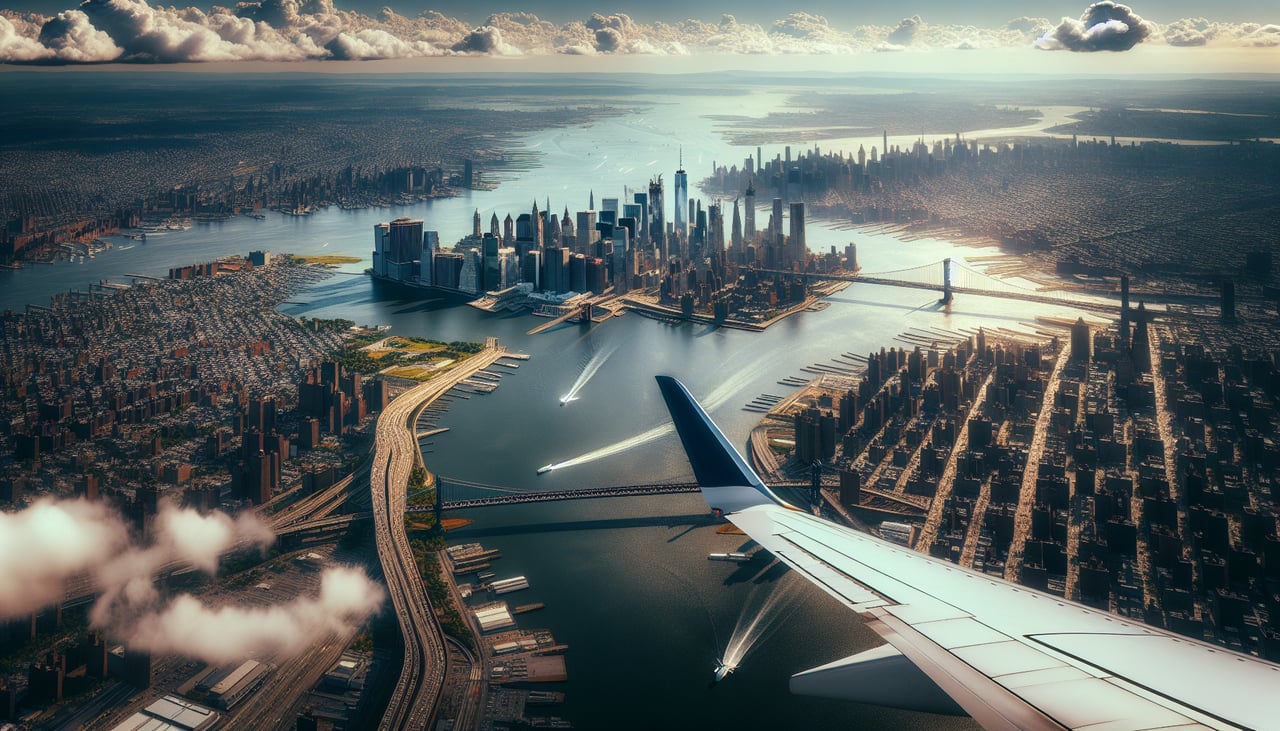
Takeoff from JFK
RIGHTDeparting JFK southbound, the right side offers a brief but excellent view of the New York skyline and Jamaica Bay wetlands as the aircraft climbs out over the Rockaways, before the Jersey Shore barrier islands slide by below. The left side only shows open Atlantic water almost immediately after takeoff.
Landing at PUJ
RIGHTOn approach to PUJ's east-facing runway, the turn onto final typically brings the turquoise beaches and reef-lined coastline of Bavaro and Punta Cana into view on the right side. The left side during this turn mostly faces inland scrubland with less visual interest.
Landmarks on this routeAll landmarks →
Will your flight be in sunlight?
Pick a date and time in the Sun Map to watch the sun move across your whole flight.
About This Route
Which side of the plane should I sit on flying from John F Kennedy International (JFK) to Punta Cana International (PUJ)?
Sit on the Right side of the plane for the best views on flights from New York to Punta Cana. The right side wins on both ends of the flight: a scenic NYC departure view and a turquoise-water Punta Cana approach, versus mostly featureless open ocean on the left throughout.
What can I see during takeoff from John F Kennedy International in New York?
During takeoff from John F Kennedy International (JFK), sit on the Right side for the best views. Departing JFK southbound, the right side offers a brief but excellent view of the New York skyline and Jamaica Bay wetlands as the aircraft climbs out over the Rockaways, before the Jersey Shore barrier islands slide by below. The left side only shows open Atlantic water almost immediately after takeoff. Notable sights include: Lower Manhattan skyline, JFK's Jamaica Bay wildlife refuge, Rockaway Peninsula, New Jersey barrier islands.
What can I see when landing at Punta Cana International in Punta Cana?
When landing at Punta Cana International (PUJ), sit on the Right side for the best views. On approach to PUJ's east-facing runway, the turn onto final typically brings the turquoise beaches and reef-lined coastline of Bavaro and Punta Cana into view on the right side. The left side during this turn mostly faces inland scrubland with less visual interest. Notable sights include: Bavaro Beach, Punta Cana coral reef shallows, coastal resort belt, Caribbean Sea turquoise shading.
How long is the flight from New York to Punta Cana?
The flight from John F Kennedy International (JFK) to Punta Cana International (PUJ) takes about 3 hours 45 minutes. The shortest flight path between them is 1,559 miles (2,508 km); winds and air traffic control usually add a few percent.
What does the New York to Punta Cana flight path pass over?
Open Atlantic Ocean with occasional views of the northern Bahamian islands (Great Abaco, Eleuthera) beneath scattered cumulus clouds during cruise.