Punta Cana to New York is 1,559 miles (2,508 km), a flight of about 4 hours.
Left side wins both ends of the flight — the turquoise Caribbean reef coast at departure and the New York Harbor approach at landing. Over the open ocean mid-flight there is little difference, but the bookend views make left the clear choice for the full journey.
Flight Path
The flight tracks northwest over the Turks and Caicos Islands and the Bahamas archipelago, where the shallow Bahama Banks produce vivid turquoise water visible from cruise altitude. The flight then crosses the Florida Straits and the southeastern US coastline near the Carolinas before heading up the Eastern Seaboard. The Gulf Stream's darker blue water contrasts with the pale Bahama Banks and is visible from altitude. The New Jersey Pine Barrens and the coastal barrier islands of New Jersey appear in the final descent.
Great circle distance and headings ›Phase by phase
Takeoff from PUJ
LEFTPUJ's primary runway 08/26 means departures heading northwest toward JFK will typically turn left after takeoff, putting the left side over the Caribbean coastline and the resort strip of Bavaro Beach. The right side faces inland scrubland with little of interest.
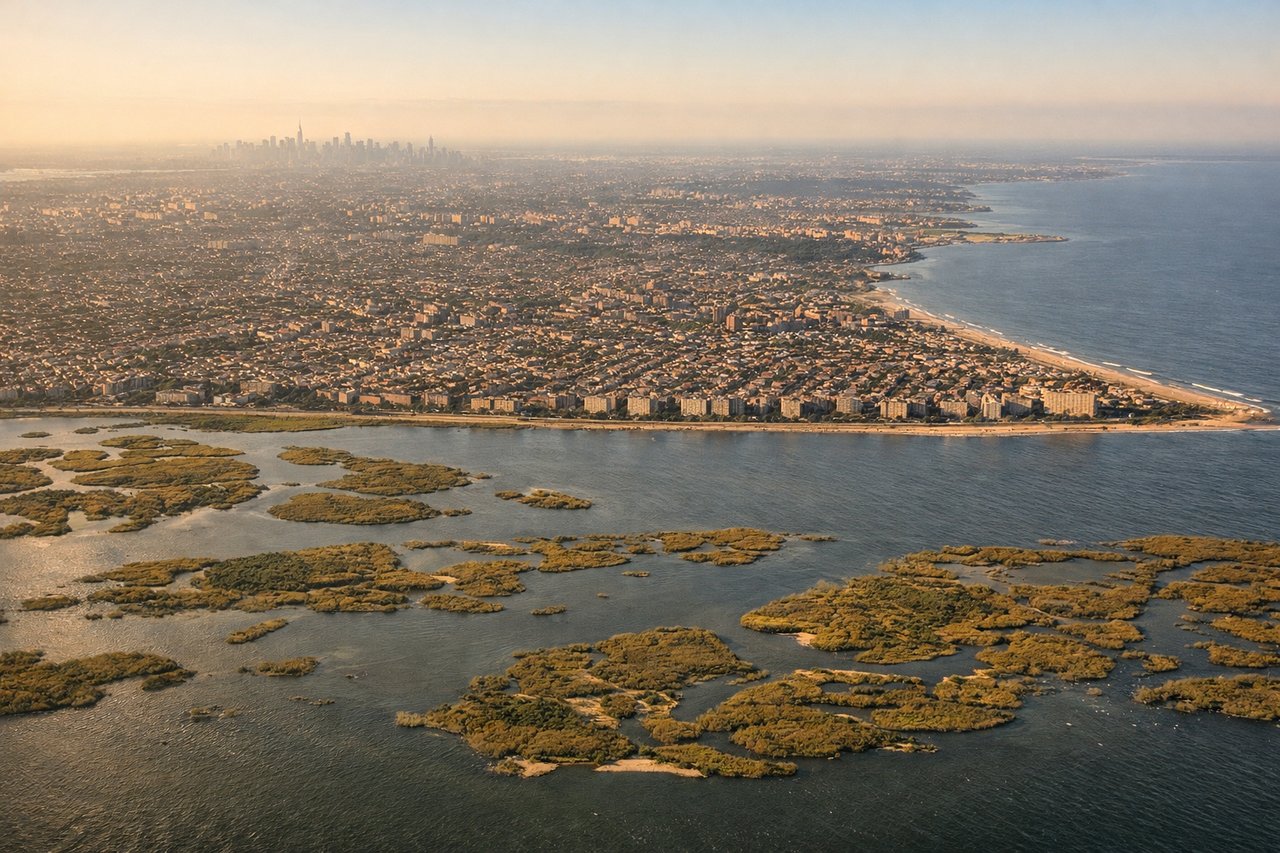
Landing at JFK
LEFTJFK approaches from the south or southwest on runway 13L/13R in prevailing conditions, meaning the left side gets the Lower Manhattan skyline, Upper Bay, and the Verrazano-Narrows Bridge clearly visible during the descent over Brooklyn. The right side looks toward Queens and Long Island with far less dramatic scenery.
Landmarks on this routeAll landmarks →
Will your flight be in sunlight?
Pick a date and time in the Sun Map to watch the sun move across your whole flight.
About This Route
Which side of the plane should I sit on flying from Punta Cana International (PUJ) to John F Kennedy International (JFK)?
Sit on the Left side of the plane for the best views on flights from Punta Cana to New York. Left side wins both ends of the flight — the turquoise Caribbean reef coast at departure and the New York Harbor approach at landing. Over the open ocean mid-flight there is little difference, but the bookend views make left the clear choice for the full journey.
What can I see during takeoff from Punta Cana International in Punta Cana?
During takeoff from Punta Cana International (PUJ), sit on the Left side for the best views. PUJ's primary runway 08/26 means departures heading northwest toward JFK will typically turn left after takeoff, putting the left side over the Caribbean coastline and the resort strip of Bavaro Beach. The right side faces inland scrubland with little of interest. Notable sights include: Bavaro Beach resort strip, Punta Cana lagoon coastline, shallow turquoise reef waters off the eastern Dominican Republic coast, Cap Cana marina development.
What can I see when landing at John F Kennedy International in New York?
When landing at John F Kennedy International (JFK), sit on the Left side for the best views. JFK approaches from the south or southwest on runway 13L/13R in prevailing conditions, meaning the left side gets the Lower Manhattan skyline, Upper Bay, and the Verrazano-Narrows Bridge clearly visible during the descent over Brooklyn. The right side looks toward Queens and Long Island with far less dramatic scenery. Notable sights include: Lower Manhattan skyline, Verrazano-Narrows Bridge, Upper New York Bay, Brooklyn waterfront and Coney Island.
How long is the flight from Punta Cana to New York?
The flight from Punta Cana International (PUJ) to John F Kennedy International (JFK) takes about 4 hours. The shortest flight path between them is 1,559 miles (2,508 km); winds and air traffic control usually add a few percent.
What does the Punta Cana to New York flight path pass over?
The flight tracks northwest over the Turks and Caicos Islands and the Bahamas archipelago, where the shallow Bahama Banks produce vivid turquoise water visible from cruise altitude. The flight then crosses the Florida Straits and the southeastern US coastline near the Carolinas before heading up the Eastern Seaboard. The Gulf Stream's darker blue water contrasts with the pale Bahama Banks and is visible from altitude. The New Jersey Pine Barrens and the coastal barrier islands of New Jersey appear in the final descent.