New York to Basse Terre is 1,741 miles (2,803 km), a flight of about 4 hours.
Left side wins at both ends of the flight. At departure you get Jamaica Bay, Brooklyn, and the Manhattan skyline. At arrival you get the full volcanic profile of St. Kitts with Mount Liamuiga and the view toward Nevis. The right side offers open Atlantic for most of the journey with little geographic interest at either airport.
Flight Path
The flight tracks southeast over the open Atlantic, passing east of the Bahamas chain (visible as low sandy islands and turquoise shallows if routing is close enough), then over the northeastern Caribbean. Puerto Rico and the Virgin Islands may be visible to the right (west) in the final hour depending on routing. The Leeward Islands chain becomes visible as a string of volcanic peaks emerging from the sea as you approach St. Kitts, with Anguilla, St. Martin, St. Barts, and St. Eustatius potentially visible in sequence.
Great circle distance and headings ›Phase by phase
Takeoff from JFK
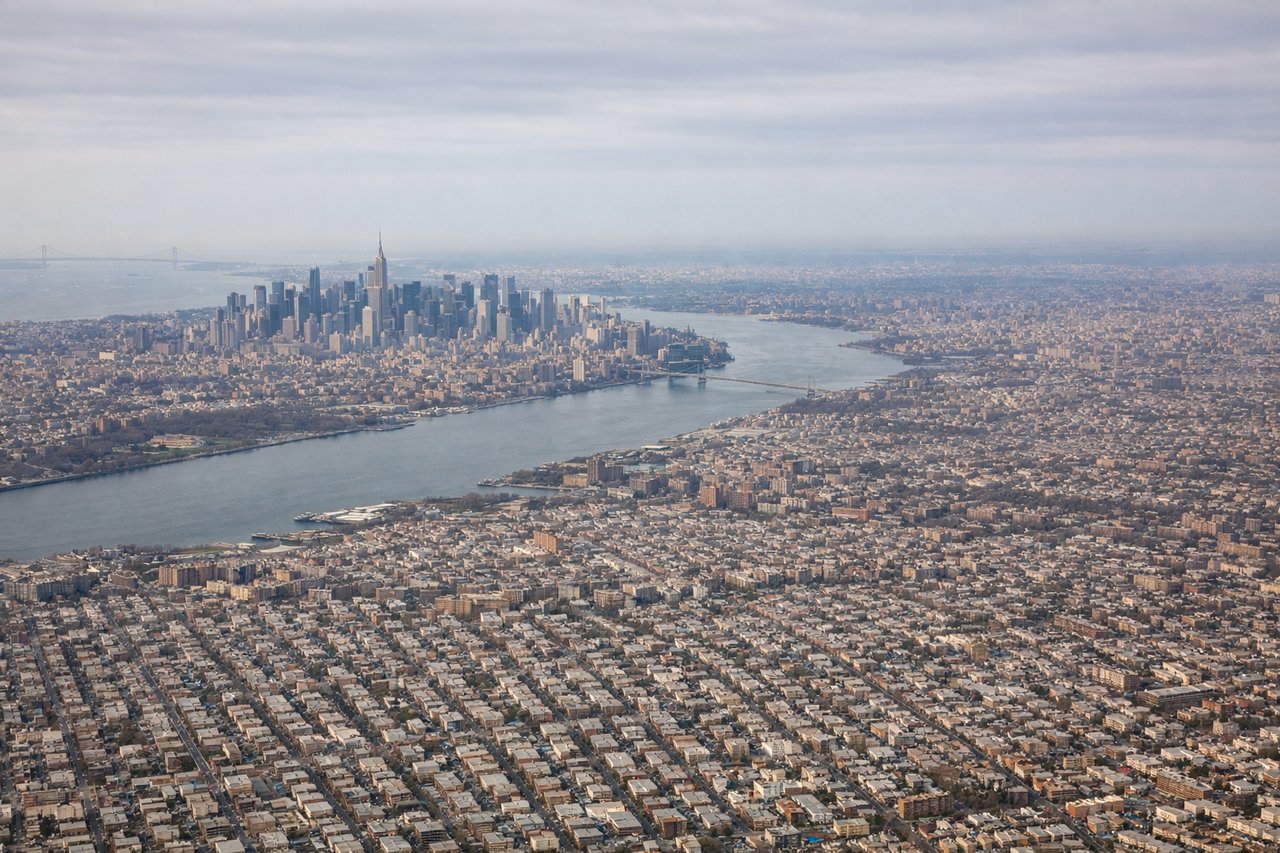
LEFTJFK typically departs eastward over Jamaica Bay on runway 31L/R or southward on 22L/R. On the common eastbound departure, the left side gives you Jamaica Bay, the Rockaway Peninsula, and a sweeping view back over Brooklyn and lower Manhattan as the aircraft turns south. The right side faces the Atlantic Ocean with little to see.
Landing at SKB
LEFTRobert L. Bradshaw Airport on St. Kitts has a single runway oriented roughly 13/31. Arrivals typically come in from the northwest on runway 31, meaning the aircraft approaches from over the Caribbean Sea. The left side faces the island of St. Kitts itself, with the dramatic cone of Mount Liamuiga dominating the northwest end of the island, plus the narrow southeastern peninsula and the channel toward Nevis.
Landmarks on this routeAll landmarks →
Will your flight be in sunlight?
Pick a date and time in the Sun Map to watch the sun move across your whole flight.
About This Route
Which side of the plane should I sit on flying from John F Kennedy International (JFK) to Robert L Bradshaw (SKB)?
Sit on the Left side of the plane for the best views on flights from New York to Basse Terre. Left side wins at both ends of the flight. At departure you get Jamaica Bay, Brooklyn, and the Manhattan skyline. At arrival you get the full volcanic profile of St. Kitts with Mount Liamuiga and the view toward Nevis. The right side offers open Atlantic for most of the journey with little geographic interest at either airport.
What can I see during takeoff from John F Kennedy International in New York?
During takeoff from John F Kennedy International (JFK), sit on the Left side for the best views. JFK typically departs eastward over Jamaica Bay on runway 31L/R or southward on 22L/R. On the common eastbound departure, the left side gives you Jamaica Bay, the Rockaway Peninsula, and a sweeping view back over Brooklyn and lower Manhattan as the aircraft turns south. The right side faces the Atlantic Ocean with little to see. Notable sights include: Jamaica Bay and its wildlife refuge, Rockaway Peninsula barrier beach, Brooklyn waterfront and Verrazano-Narrows Bridge, Lower Manhattan skyline receding to the northwest.
What can I see when landing at Robert L Bradshaw in Basse Terre?
When landing at Robert L Bradshaw (SKB), sit on the Left side for the best views. Robert L. Bradshaw Airport on St. Kitts has a single runway oriented roughly 13/31. Arrivals typically come in from the northwest on runway 31, meaning the aircraft approaches from over the Caribbean Sea. The left side faces the island of St. Kitts itself, with the dramatic cone of Mount Liamuiga dominating the northwest end of the island, plus the narrow southeastern peninsula and the channel toward Nevis. Notable sights include: Mount Liamuiga volcanic cone (3,792 ft), St. Kitts southeastern peninsula and salt ponds, Nevis Peak across The Narrows channel, Caribbean Sea coastline of St. Kitts.
How long is the flight from New York to Basse Terre?
The flight from John F Kennedy International (JFK) to Robert L Bradshaw (SKB) takes about 4 hours. The shortest flight path between them is 1,741 miles (2,803 km); winds and air traffic control usually add a few percent.
What does the New York to Basse Terre flight path pass over?
The flight tracks southeast over the open Atlantic, passing east of the Bahamas chain (visible as low sandy islands and turquoise shallows if routing is close enough), then over the northeastern Caribbean. Puerto Rico and the Virgin Islands may be visible to the right (west) in the final hour depending on routing. The Leeward Islands chain becomes visible as a string of volcanic peaks emerging from the sea as you approach St. Kitts, with Anguilla, St. Martin, St. Barts, and St. Eustatius potentially visible in sequence.