Basse Terre to New York is 1,741 miles (2,803 km), a flight of about 4 hours 15 minutes.
While the takeoff offers Caribbean scenery, the landing approach into JFK provides more dramatic and visually distinctive views of a major metropolitan area, Jamaica Bay's unique ecosystem, and the Long Island coastline. The approach descent offers better sightseeing opportunities than the Caribbean departure.
Flight Path
The flight path crosses the Atlantic Ocean northwestward. Notable features include the Bahamas archipelago (visible around 1.5 hours into flight if conditions permit), with the shallow turquoise banks and islands of the central Bahamas appearing as a distinctive pattern of light blue water and tan sandbars. The flight then crosses open Atlantic for several hours before approaching the U.S. East Coast, where the continental shelf becomes visible as a subtle color change in the water, followed by the North Carolina and Virginia coastlines, and eventually the New Jersey and Long Island shores as the aircraft descends toward New York airspace.
Great circle distance and headings ›Phase by phase
Takeoff from SKB
RIGHTRight-side seats offer views of the southeastern Caribbean as the aircraft climbs northwestward. You'll see the island's volcanic terrain and the surrounding turquoise waters of the Caribbean Sea immediately after departure.
Landing at JFK
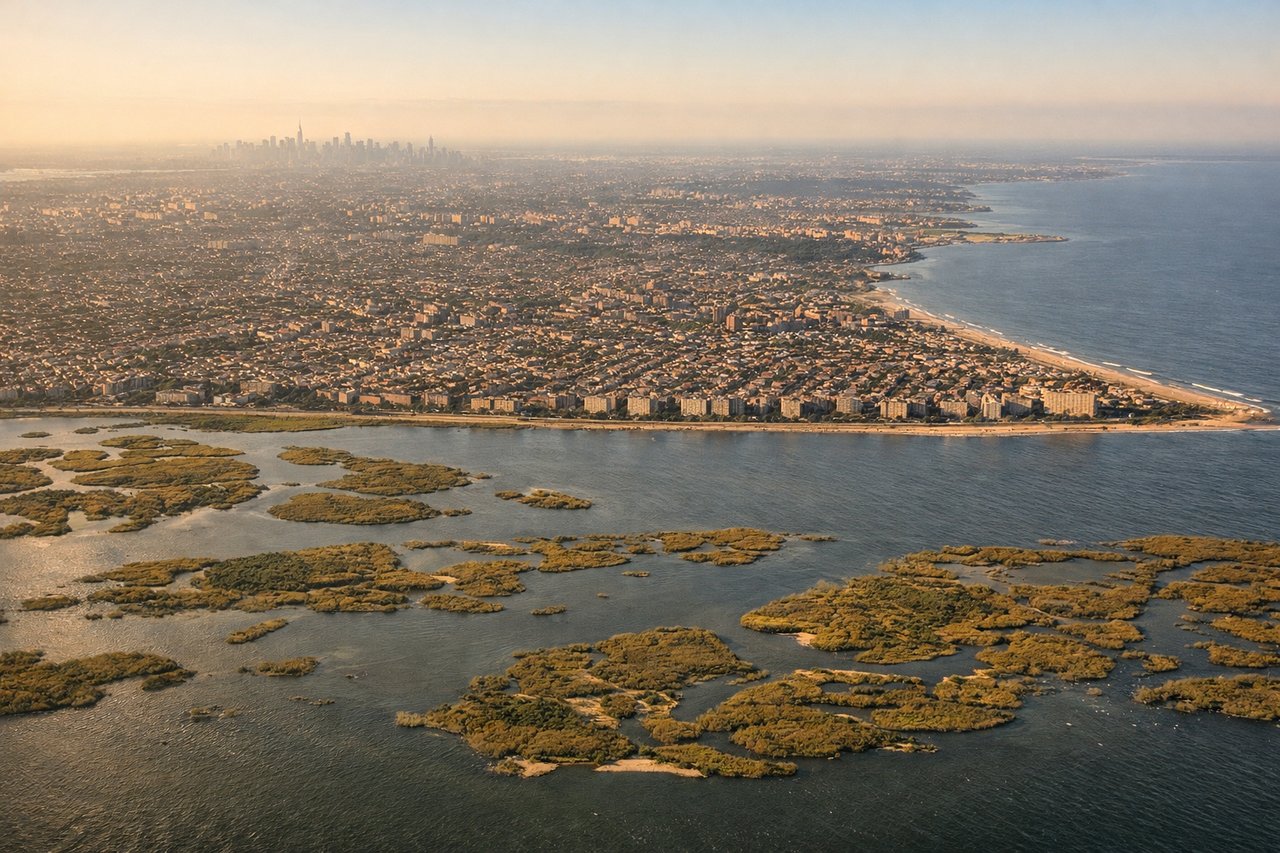
LEFTLeft-side seats provide excellent views during the final approach into JFK. You'll see the New York City metropolitan area, Jamaica Bay, and the Long Island coastline as the aircraft descends from the northwest.
Landmarks on this routeAll landmarks →
Will your flight be in sunlight?
Pick a date and time in the Sun Map to watch the sun move across your whole flight.
About This Route
Which side of the plane should I sit on flying from Robert L Bradshaw (SKB) to John F Kennedy International (JFK)?
Sit on the Left side of the plane for the best views on flights from Basse Terre to New York. While the takeoff offers Caribbean scenery, the landing approach into JFK provides more dramatic and visually distinctive views of a major metropolitan area, Jamaica Bay's unique ecosystem, and the Long Island coastline. The approach descent offers better sightseeing opportunities than the Caribbean departure.
What can I see during takeoff from Robert L Bradshaw in Basse Terre?
During takeoff from Robert L Bradshaw (SKB), sit on the Right side for the best views. Right-side seats offer views of the southeastern Caribbean as the aircraft climbs northwestward. You'll see the island's volcanic terrain and the surrounding turquoise waters of the Caribbean Sea immediately after departure. Notable sights include: Brimstone Hill Fortress (elevated fortification on the western peninsula), the central volcanic ridge of Saint Kitts, Nevis island to the southeast across the narrow channel, and the Atlantic coastline to the northeast.
What can I see when landing at John F Kennedy International in New York?
When landing at John F Kennedy International (JFK), sit on the Left side for the best views. Left-side seats provide excellent views during the final approach into JFK. You'll see the New York City metropolitan area, Jamaica Bay, and the Long Island coastline as the aircraft descends from the northwest. Notable sights include: Manhattan's skyline and East River, Jamaica Bay with its barrier islands and wetlands, the Rockaway Peninsula, and the Long Island Sound coastline.
How long is the flight from Basse Terre to New York?
The flight from Robert L Bradshaw (SKB) to John F Kennedy International (JFK) takes about 4 hours 15 minutes. The shortest flight path between them is 1,741 miles (2,803 km); winds and air traffic control usually add a few percent.
What does the Basse Terre to New York flight path pass over?
The flight path crosses the Atlantic Ocean northwestward. Notable features include the Bahamas archipelago (visible around 1.5 hours into flight if conditions permit), with the shallow turquoise banks and islands of the central Bahamas appearing as a distinctive pattern of light blue water and tan sandbars. The flight then crosses open Atlantic for several hours before approaching the U.S. East Coast, where the continental shelf becomes visible as a subtle color change in the water, followed by the North Carolina and Virginia coastlines, and eventually the New Jersey and Long Island shores as the aircraft descends toward New York airspace.