Basse Terre to Miami is 1,270 miles (2,044 km), a flight of about 3 hours 15 minutes.
Right side delivers the best views at both ends of the flight — the volcanic islands of St. Kitts and Nevis on departure and the Miami Beach to downtown approach on arrival. The mid-flight portion over open water offers little differentiation between sides.
Flight Path
The flight tracks northwest over the northeastern Caribbean, passing near Puerto Rico and Hispaniola visible on the horizon to the west, then crosses the Turks and Caicos Islands and the shallow Bahama Banks — the vivid turquoise of the Great Bahama Bank is one of the most striking aerial features on this route, visible from both sides as the aircraft descends toward Florida
Great circle distance and headings ›Phase by phase
Takeoff from SKB
RIGHTSKB's runway 07/25 means departures heading northwest toward MIA will typically use runway 07, climbing out over the southeastern end of St. Kitts. Right side passengers get a clear view back over the volcanic peak of Mount Liamuiga and the island's leeward coastline as the aircraft banks northwest.
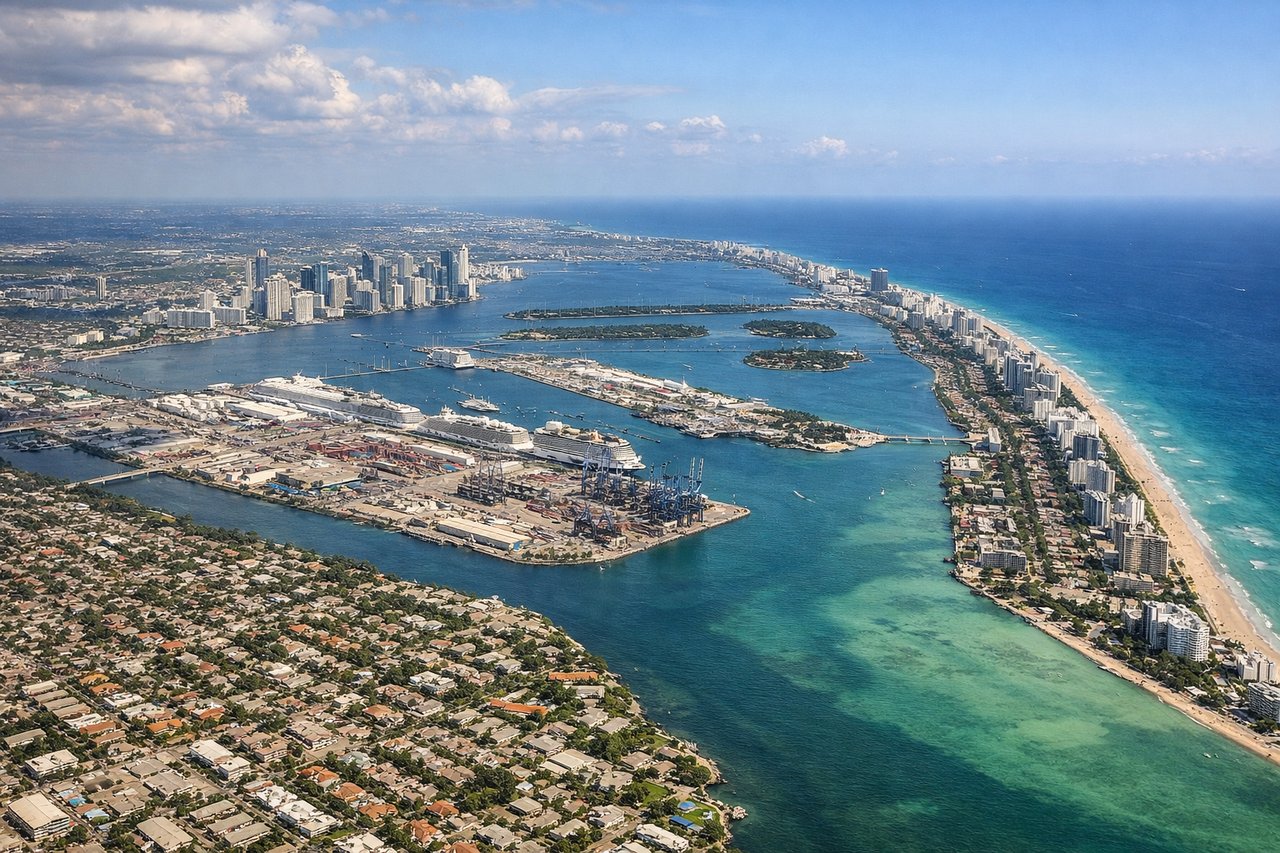
Landing at MIA
RIGHTMIA arrivals from the southeast typically use runway 08L/08R or 09, approaching from the east over Miami Beach and Biscayne Bay. Right side passengers get the best view of the Miami Beach barrier island, Biscayne Bay, and the downtown Miami skyline as the aircraft descends on final approach.
Landmarks on this routeAll landmarks →
Will your flight be in sunlight?
Pick a date and time in the Sun Map to watch the sun move across your whole flight.
About This Route
Which side of the plane should I sit on flying from Robert L Bradshaw (SKB) to Miami International (MIA)?
Sit on the Right side of the plane for the best views on flights from Basse Terre to Miami. Right side delivers the best views at both ends of the flight — the volcanic islands of St. Kitts and Nevis on departure and the Miami Beach to downtown approach on arrival. The mid-flight portion over open water offers little differentiation between sides.
What can I see during takeoff from Robert L Bradshaw in Basse Terre?
During takeoff from Robert L Bradshaw (SKB), sit on the Right side for the best views. SKB's runway 07/25 means departures heading northwest toward MIA will typically use runway 07, climbing out over the southeastern end of St. Kitts. Right side passengers get a clear view back over the volcanic peak of Mount Liamuiga and the island's leeward coastline as the aircraft banks northwest. Notable sights include: Mount Liamuiga (3,792 ft volcanic peak, central St. Kitts), The Narrows strait between St. Kitts and Nevis, Nevis Peak rising from the southern island, Southeast Peninsula of St. Kitts with its salt ponds.
What can I see when landing at Miami International in Miami?
When landing at Miami International (MIA), sit on the Right side for the best views. MIA arrivals from the southeast typically use runway 08L/08R or 09, approaching from the east over Miami Beach and Biscayne Bay. Right side passengers get the best view of the Miami Beach barrier island, Biscayne Bay, and the downtown Miami skyline as the aircraft descends on final approach. Notable sights include: Miami Beach barrier island and Art Deco district, Biscayne Bay with its clear shallow water, Downtown Miami skyline, Port of Miami on Dodge Island.
How long is the flight from Basse Terre to Miami?
The flight from Robert L Bradshaw (SKB) to Miami International (MIA) takes about 3 hours 15 minutes. The shortest flight path between them is 1,270 miles (2,044 km); winds and air traffic control usually add a few percent.
What does the Basse Terre to Miami flight path pass over?
The flight tracks northwest over the northeastern Caribbean, passing near Puerto Rico and Hispaniola visible on the horizon to the west, then crosses the Turks and Caicos Islands and the shallow Bahama Banks — the vivid turquoise of the Great Bahama Bank is one of the most striking aerial features on this route, visible from both sides as the aircraft descends toward Florida