The right side delivers the strongest single landmark on departure (Kilimanjaro), the most interesting cruise-phase terrain (Ethiopian highlands, Rift Valley lakes, Red Sea coastline), and a scenic Bosphorus/Istanbul view on arrival, while the left side spends much of the flight over comparatively featureless Sahara desert.
Flight Path
Rift Valley lakes of Kenya, Ethiopian highlands near the Blue Nile headwaters, the Nile River corridor through Sudan and Egypt, and the Red Sea coastline before crossing into the eastern Mediterranean
Great circle distance and headings ›


.jpg?width=600)
_in_Istanbul.jpg?width=600)
Phase by phase
Takeoff from JRO
RIGHTKilimanjaro International sits just south of Mount Kilimanjaro's massif, and as the aircraft climbs out and turns onto its northbound routing, the snow-capped volcanic cone becomes visible off the right side. It's one of the most recognizable single landmarks on any African departure.
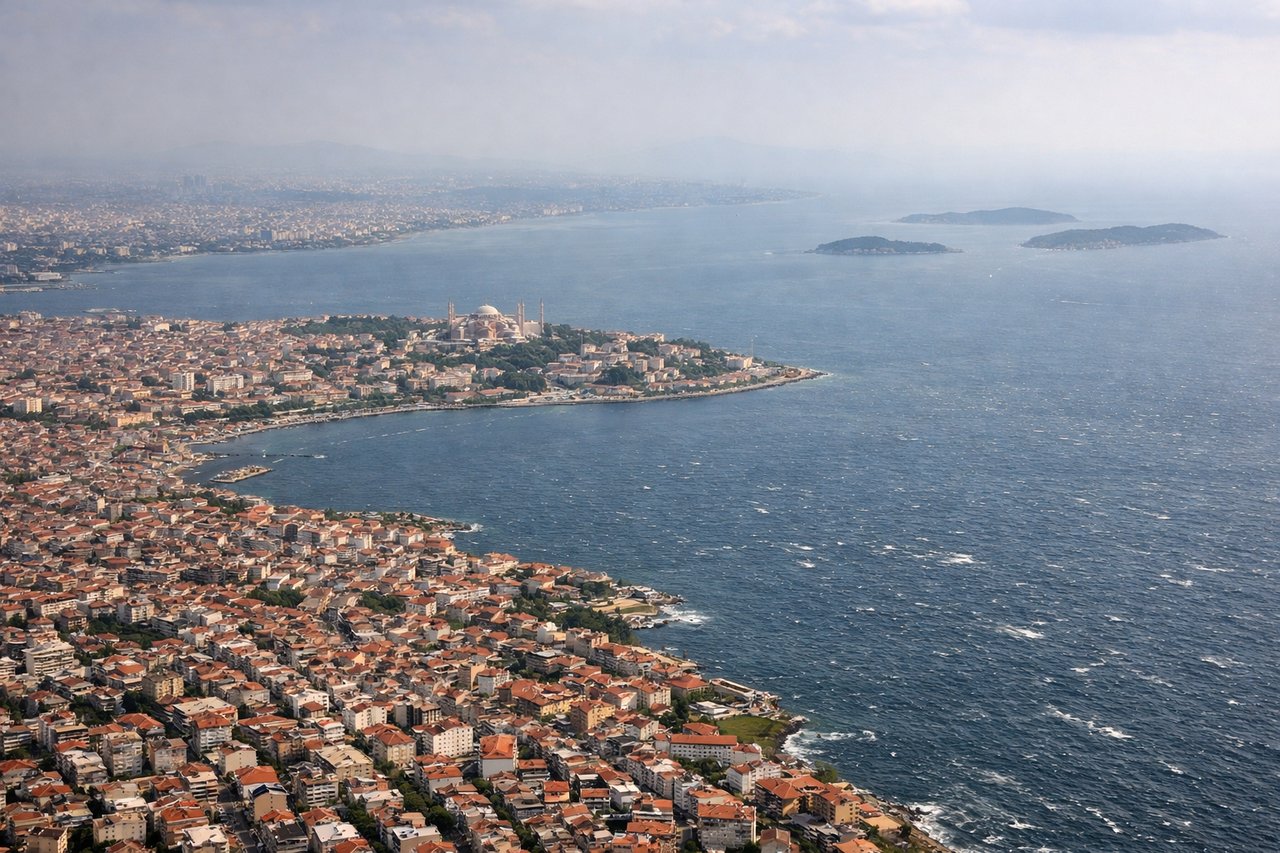
Landing at IST
RIGHTOn approach into Istanbul Airport from the south, the aircraft typically tracks up over the Sea of Marmara before turning onto final for the north-south runways. This puts the Bosphorus strait, the historic peninsula, and the sprawling city skyline visible off the right side during the descent.
Landmarks on this routeAll landmarks →
Will your flight be in sunlight?
See exactly which side of the plane gets sun and shade at your departure time.
About This Route
Which side of the plane should I sit on flying from Kilimanjaro International (JRO) to İstanbul Airport (IST)?
Sit on the Right side of the plane for the best views on flights from Kilimanjaro to Istanbul. The right side delivers the strongest single landmark on departure (Kilimanjaro), the most interesting cruise-phase terrain (Ethiopian highlands, Rift Valley lakes, Red Sea coastline), and a scenic Bosphorus/Istanbul view on arrival, while the left side spends much of the flight over comparatively featureless Sahara desert.
What can I see during takeoff from Kilimanjaro International in Kilimanjaro?
During takeoff from Kilimanjaro International (JRO), sit on the Right side for the best views. Kilimanjaro International sits just south of Mount Kilimanjaro's massif, and as the aircraft climbs out and turns onto its northbound routing, the snow-capped volcanic cone becomes visible off the right side. It's one of the most recognizable single landmarks on any African departure. Notable sights include: Mount Kilimanjaro, Mount Meru (distant), Maasai Steppe plains.
What can I see when landing at İstanbul Airport in Istanbul?
When landing at İstanbul Airport (IST), sit on the Right side for the best views. On approach into Istanbul Airport from the south, the aircraft typically tracks up over the Sea of Marmara before turning onto final for the north-south runways. This puts the Bosphorus strait, the historic peninsula, and the sprawling city skyline visible off the right side during the descent. Notable sights include: Bosphorus Strait, Sea of Marmara coastline, Istanbul city skyline, Black Sea coast to the north.
How long is the flight from Kilimanjaro to Istanbul?
The flight from Kilimanjaro International (JRO) to İstanbul Airport (IST) takes 7h 10m.
What does the Kilimanjaro to Istanbul flight path pass over?
Rift Valley lakes of Kenya, Ethiopian highlands near the Blue Nile headwaters, the Nile River corridor through Sudan and Egypt, and the Red Sea coastline before crossing into the eastern Mediterranean