The takeoff from Santorini offers more dramatic and visually distinctive scenery—the caldera and Aegean islands are iconic and immediately striking. While Frankfurt's approach is interesting, the Santorini departure provides the more memorable window experience.
Flight Path
The flight path crosses the central Mediterranean and then moves over the Balkans. Notable features include the Peloponnese peninsula and Gulf of Corinth (visible during initial climb), the Ionian Sea, Albania and Greece's western coast, the Pindus Mountains in central Greece, the Balkans including parts of North Macedonia and Serbia, the Danube River valley as you approach central Europe, and the Carpathian Mountains to the east before descending into the Rhine-Main region.
Great circle distance and headings ›
.jpg?width=600)


Phase by phase
Takeoff from JTR
LEFTLeft seats offer immediate views of Santorini's caldera and the Aegean Sea as the aircraft climbs northwestward. You'll see the volcanic crater, neighboring islands, and the deep blue water that defines this region.
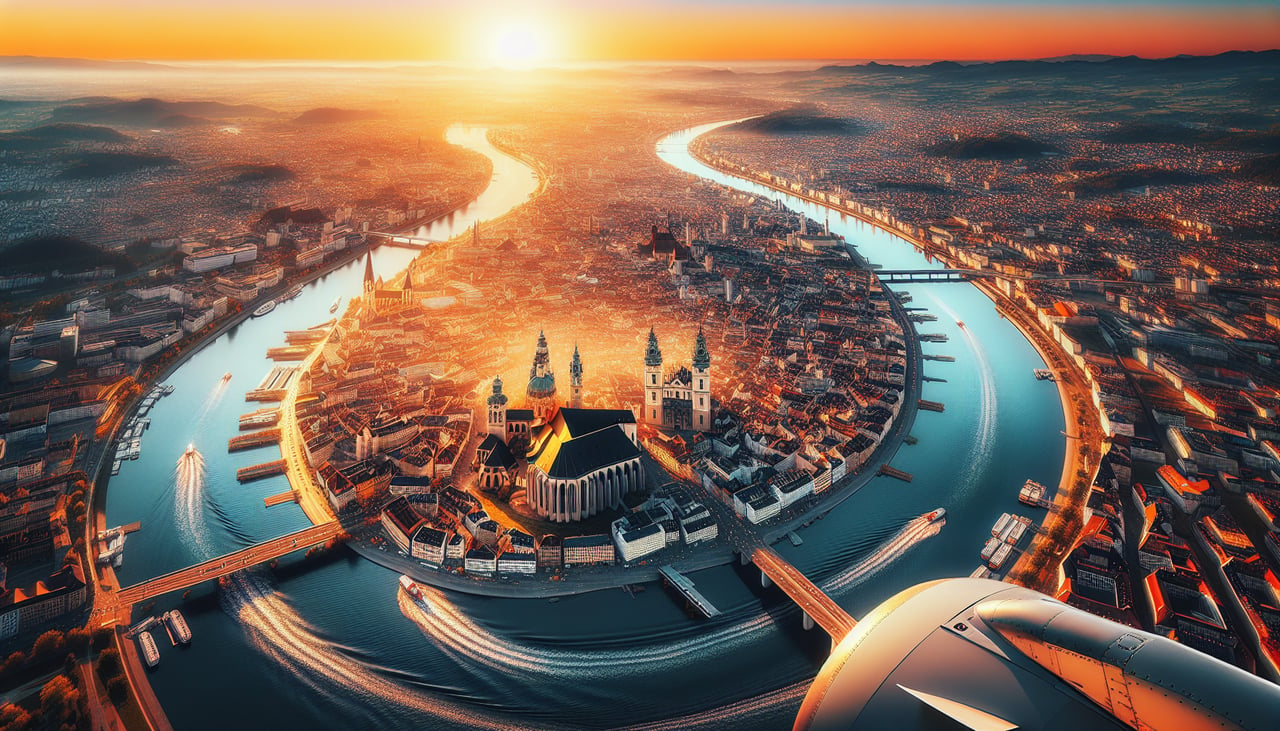
Landing at FRA
RIGHTRight seats provide excellent views during the descent into Frankfurt as the aircraft approaches from the south. You'll see the Main River valley, the Rhine-Main region's urban sprawl, and the distinctive Frankfurt skyline before touchdown.
Landmarks on this routeAll landmarks →
Will your flight be in sunlight?
See exactly which side of the plane gets sun and shade at your departure time.
About This Route
Which side of the plane should I sit on flying from Santorini (JTR) to Frankfurt Main (FRA)?
Sit on the Left side of the plane for the best views on flights from Santorini to Frankfurt. The takeoff from Santorini offers more dramatic and visually distinctive scenery—the caldera and Aegean islands are iconic and immediately striking. While Frankfurt's approach is interesting, the Santorini departure provides the more memorable window experience.
What can I see during takeoff from Santorini in Santorini?
During takeoff from Santorini (JTR), sit on the Left side for the best views. Left seats offer immediate views of Santorini's caldera and the Aegean Sea as the aircraft climbs northwestward. You'll see the volcanic crater, neighboring islands, and the deep blue water that defines this region. Notable sights include: Santorini caldera (the main volcanic crater), Thirassia island to the west, Nea Kameni (central volcanic cone), Palea Kameni.
What can I see when landing at Frankfurt Main in Frankfurt?
When landing at Frankfurt Main (FRA), sit on the Right side for the best views. Right seats provide excellent views during the descent into Frankfurt as the aircraft approaches from the south. You'll see the Main River valley, the Rhine-Main region's urban sprawl, and the distinctive Frankfurt skyline before touchdown. Notable sights include: Main River (winding through the landscape), Rhine-Main confluence area, Frankfurt city center with its high-rise district, Taunus hills to the north.
How long is the flight from Santorini to Frankfurt?
The flight from Santorini (JTR) to Frankfurt Main (FRA) takes Approximately 4 hours 15 minutes.
What does the Santorini to Frankfurt flight path pass over?
The flight path crosses the central Mediterranean and then moves over the Balkans. Notable features include the Peloponnese peninsula and Gulf of Corinth (visible during initial climb), the Ionian Sea, Albania and Greece's western coast, the Pindus Mountains in central Greece, the Balkans including parts of North Macedonia and Serbia, the Danube River valley as you approach central Europe, and the Carpathian Mountains to the east before descending into the Rhine-Main region.