While takeoff offers dramatic volcanic scenery, the landing approach into Rome provides more sustained and varied visual interest—the Tiber River, extensive urban landscape, and surrounding countryside offer richer detail and context than the brief caldera views at departure.
Flown JTR to FCO? Did we get it right?
Flight Path
Santorini to Rome is 800 miles (1,288 km), a flight of about 2 hours 45 minutes.
The flight path crosses the Ionian Sea and passes over southern Italy. Notable features include the Peloponnese peninsula (visible during climb-out to the west), the transition from Greek to Italian airspace over the Ionian Sea, and the approach to mainland Italy near Calabria. The Apennine Mountains run north-south through central Italy and may be visible during descent, particularly the lower ranges in Lazio approaching Rome.
Great circle distance and headings ›


Phase by phase
Takeoff from JTR
LEFTLeft seats offer immediate views of Santorini's caldera and the Aegean Sea as the aircraft climbs northwestward. You'll see the volcanic islands and surrounding archipelago clearly during the initial climb-out phase.
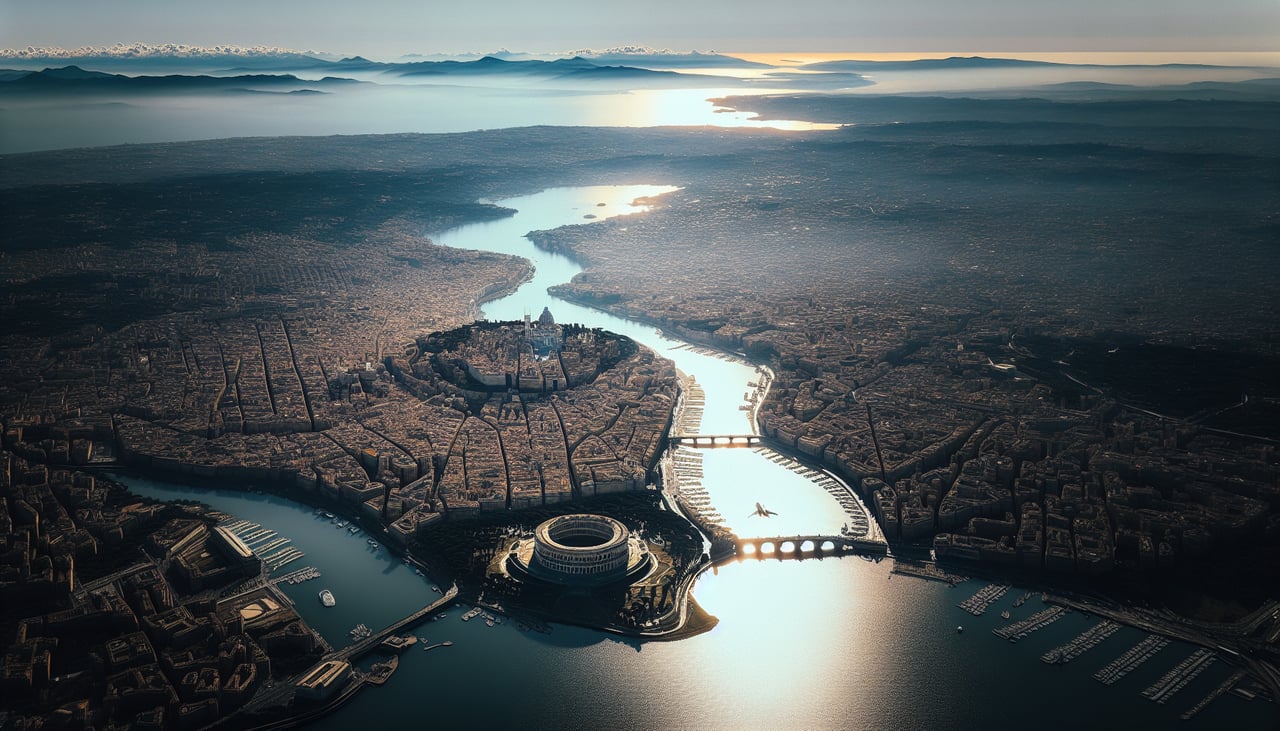
Landing at FCO
RIGHTRight seats provide excellent views during the descent into Rome as the aircraft approaches from the southeast. You'll see the Tiber River, the city's urban sprawl, and the surrounding Lazio countryside clearly during final approach.
Will your flight be in sunlight?
Pick a date and time in the Sun Map to watch the sun move across your whole flight.
About This Route
Which side of the plane should I sit on flying from Santorini (JTR) to Fiumicino (FCO)?
Sit on the Right side of the plane for the best views on flights from Santorini to Rome. While takeoff offers dramatic volcanic scenery, the landing approach into Rome provides more sustained and varied visual interest—the Tiber River, extensive urban landscape, and surrounding countryside offer richer detail and context than the brief caldera views at departure.
What can I see during takeoff from Santorini in Santorini?
During takeoff from Santorini (JTR), sit on the Left side for the best views. Left seats offer immediate views of Santorini's caldera and the Aegean Sea as the aircraft climbs northwestward. You'll see the volcanic islands and surrounding archipelago clearly during the initial climb-out phase. Notable sights include: Santorini caldera, Nea Kameni volcanic cone, Palea Kameni island, Aegean Sea coastline.
What can I see when landing at Fiumicino in Rome?
When landing at Fiumicino (FCO), sit on the Right side for the best views. Right seats provide excellent views during the descent into Rome as the aircraft approaches from the southeast. You'll see the Tiber River, the city's urban sprawl, and the surrounding Lazio countryside clearly during final approach. Notable sights include: Tiber River, Rome city center and urban districts, Alban Hills to the southeast, Campagna Romana plains.
How long is the flight from Santorini to Rome?
The flight from Santorini (JTR) to Fiumicino (FCO) takes about 2 hours 45 minutes. The shortest flight path between them is 800 miles (1,288 km); winds and air traffic control usually add a few percent.
What does the Santorini to Rome flight path pass over?
The flight path crosses the Ionian Sea and passes over southern Italy. Notable features include the Peloponnese peninsula (visible during climb-out to the west), the transition from Greek to Italian airspace over the Ionian Sea, and the approach to mainland Italy near Calabria. The Apennine Mountains run north-south through central Italy and may be visible during descent, particularly the lower ranges in Lazio approaching Rome.