While takeoff favors the right for KUL's immediate surroundings, the landing experience at HKG is significantly more dramatic and visually rewarding from the left. Victoria Harbour and Hong Kong's iconic skyline are major highlights that outweigh the takeoff advantage.
Flown KUL to HKG? Did we get it right?
Flight Path
Kuala Lumpur to Hong Kong is 1,580 miles (2,543 km), a flight of about 4 hours.
The flight path crosses the South China Sea in a generally north-northeast direction. Notable features include the Strait of Malacca (visible during initial climb), the Malaysian peninsula's northern coastline receding below, and the approach to the South China Sea proper. Around the midpoint, you'll be over open water with no major landmarks visible. As you approach Hong Kong airspace, the Chinese mainland coast becomes visible, including the Pearl River Delta region. The final descent offers views of the New Territories and the approach to Hong Kong's harbor area.
Great circle distance and headings ›

Phase by phase
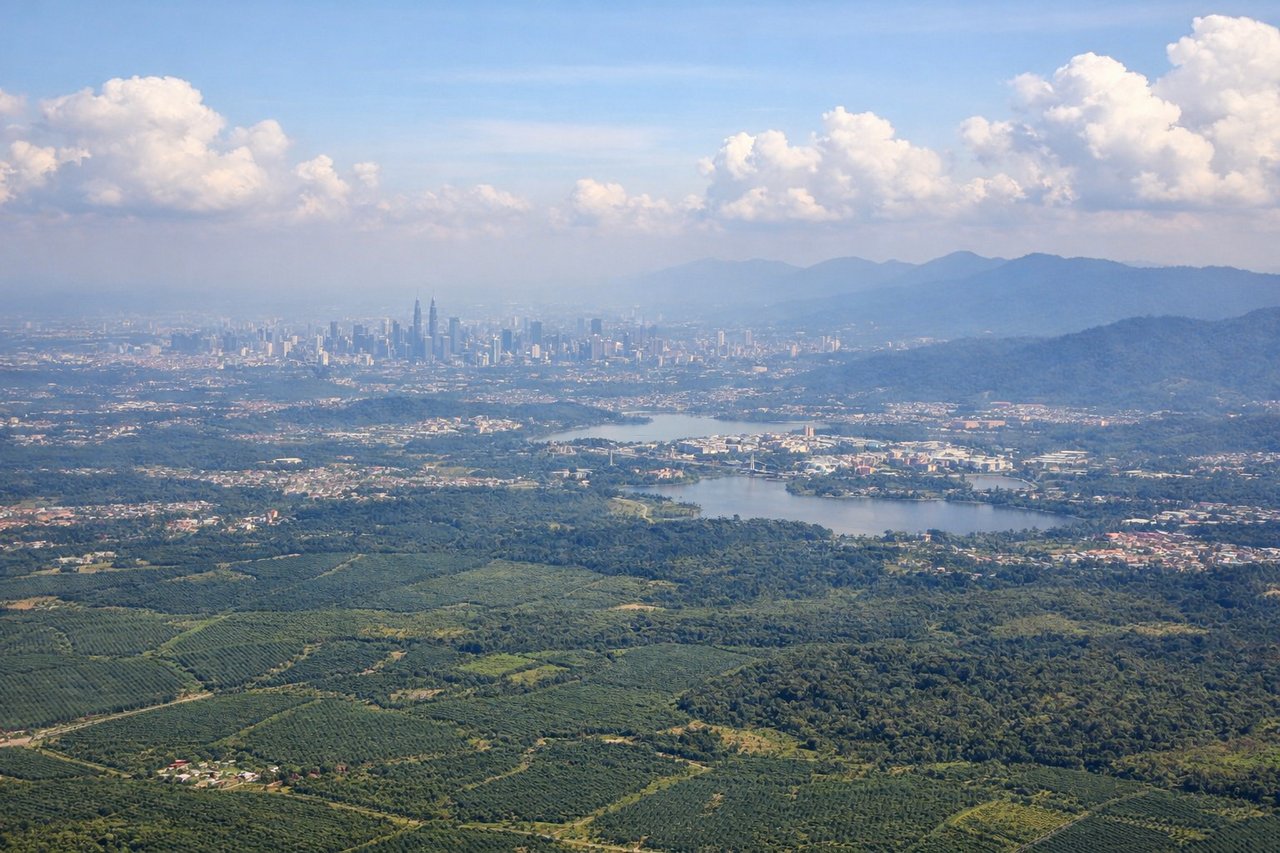
Takeoff from KUL
RIGHTKUL typically departs from runways 14L/14R or 32L/32R. Right-side seats offer views of the Klang Valley and Petronas Twin Towers during northbound climbs, plus the Strait of Malacca coastline as you gain altitude. Left seats see inland terrain and are less visually distinctive.
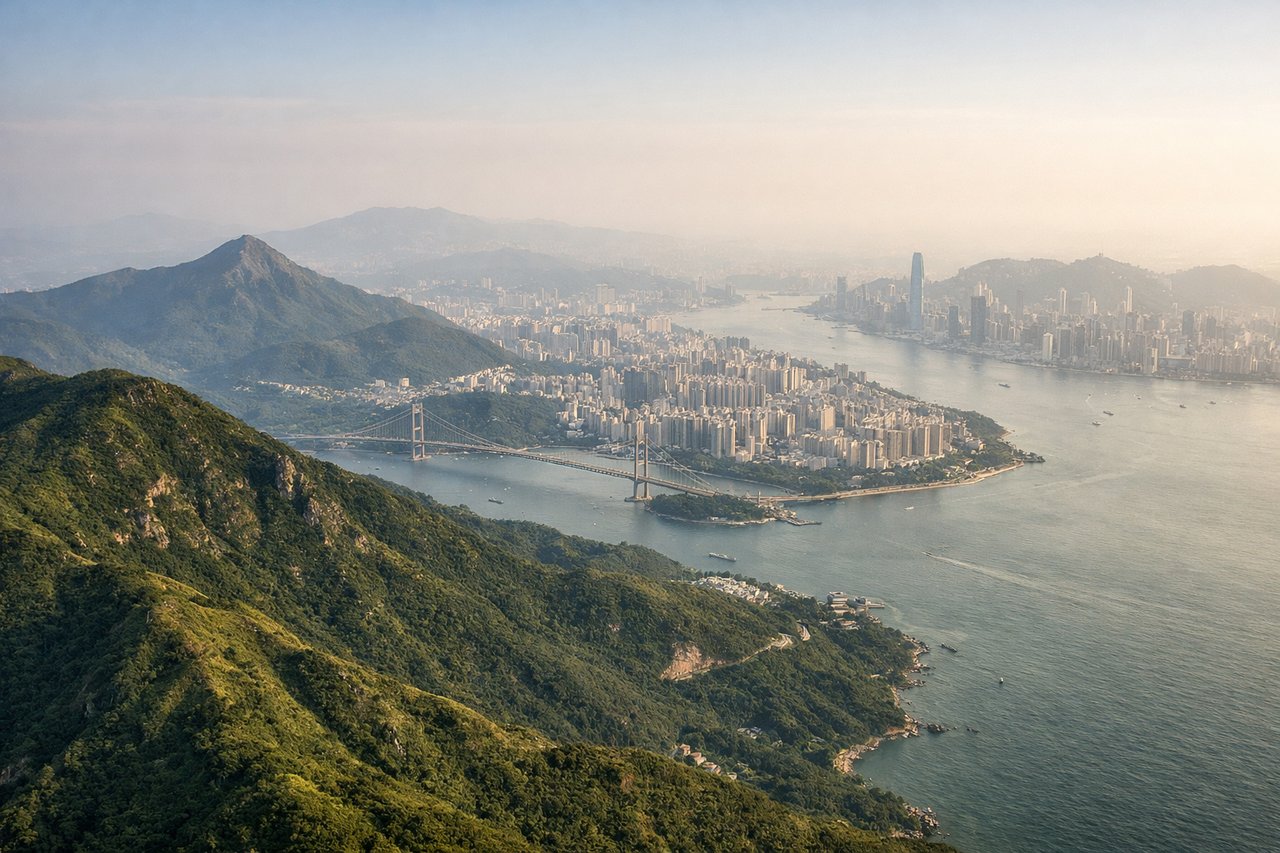
Landing at HKG
LEFTHKG approaches typically use runways 07L/07R (eastbound) or 25L/25R (westbound). Left-side seats during eastbound approaches offer excellent views of Victoria Harbour, Hong Kong Island's skyline, and Kowloon Peninsula. Westbound approaches favor left seats for views of the New Territories and Lantau Island.
Will your flight be in sunlight?
Pick a date and time in the Sun Map to watch the sun move across your whole flight.
About This Route
Which side of the plane should I sit on flying from Kuala Lumpur International (KUL) to Hong Kong International (HKG)?
Sit on the Left side of the plane for the best views on flights from Kuala Lumpur to Hong Kong. While takeoff favors the right for KUL's immediate surroundings, the landing experience at HKG is significantly more dramatic and visually rewarding from the left. Victoria Harbour and Hong Kong's iconic skyline are major highlights that outweigh the takeoff advantage.
What can I see during takeoff from Kuala Lumpur International in Kuala Lumpur?
During takeoff from Kuala Lumpur International (KUL), sit on the Right side for the best views. KUL typically departs from runways 14L/14R or 32L/32R. Right-side seats offer views of the Klang Valley and Petronas Twin Towers during northbound climbs, plus the Strait of Malacca coastline as you gain altitude. Left seats see inland terrain and are less visually distinctive. Notable sights include: Petronas Twin Towers (Kuala Lumpur city center), Klang River valley, Strait of Malacca coastline, Selangor coastal plains.
What can I see when landing at Hong Kong International in Hong Kong?
When landing at Hong Kong International (HKG), sit on the Left side for the best views. HKG approaches typically use runways 07L/07R (eastbound) or 25L/25R (westbound). Left-side seats during eastbound approaches offer excellent views of Victoria Harbour, Hong Kong Island's skyline, and Kowloon Peninsula. Westbound approaches favor left seats for views of the New Territories and Lantau Island. Notable sights include: Victoria Harbour, Hong Kong Island skyline, Kowloon Peninsula, Lantau Island.
How long is the flight from Kuala Lumpur to Hong Kong?
The flight from Kuala Lumpur International (KUL) to Hong Kong International (HKG) takes about 4 hours. The shortest flight path between them is 1,580 miles (2,543 km); winds and air traffic control usually add a few percent.
What does the Kuala Lumpur to Hong Kong flight path pass over?
The flight path crosses the South China Sea in a generally north-northeast direction. Notable features include the Strait of Malacca (visible during initial climb), the Malaysian peninsula's northern coastline receding below, and the approach to the South China Sea proper. Around the midpoint, you'll be over open water with no major landmarks visible. As you approach Hong Kong airspace, the Chinese mainland coast becomes visible, including the Pearl River Delta region. The final descent offers views of the New Territories and the approach to Hong Kong's harbor area.