While the Kuala Lumpur departure offers a nice city-and-mountain view on the right, the Istanbul arrival on the left is far more dramatic, combining the Bosphorus Strait, the historic skyline, and two seas in one sweeping view, giving the left side the stronger overall scenic value.
Flight Path
Bay of Bengal, the Indian subcontinent, Arabian Sea, Persian Gulf region, Zagros Mountains of Iran, and the Anatolian Plateau
Great circle distance and headings ›


_in_Istanbul.jpg?width=600)
Phase by phase
Takeoff from KUL
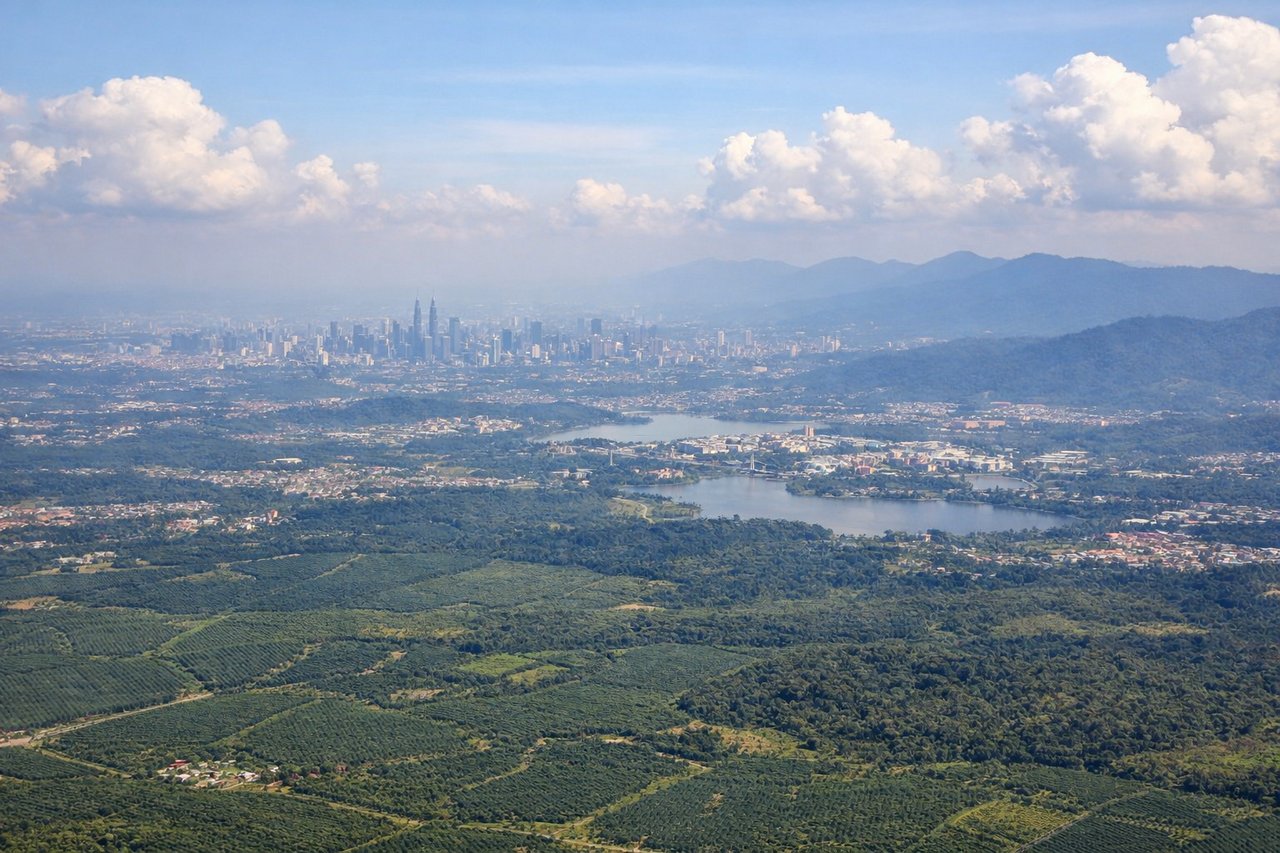
RIGHTDeparting KUL to the northwest, the climb-out passes close to Kuala Lumpur city, putting the Petronas Towers and the KL skyline on the right side, with the Titiwangsa mountain range visible further inland beyond the city. The left side mostly shows flat palm-oil plantations and the hazy Strait of Malacca coastline.
Landing at IST
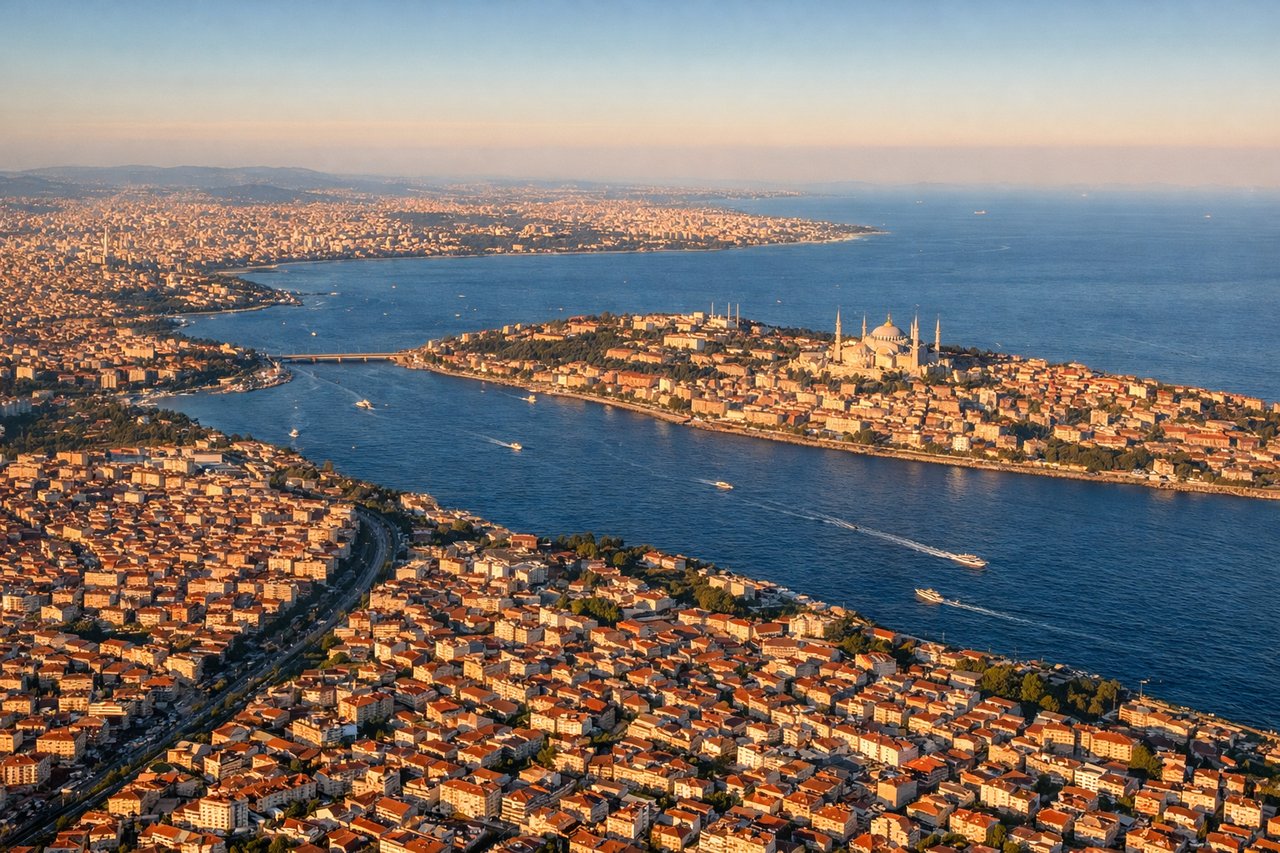
LEFTArriving from the east, the descent into IST typically swings the aircraft south of the city before turning to final approach, giving left-side passengers a view across the Bosphorus Strait and Istanbul's historic peninsula. The Sea of Marmara and the Black Sea coastline frame the city as the plane lines up with the north-south runways.
Landmarks on this routeAll landmarks →
Will your flight be in sunlight?
See exactly which side of the plane gets sun and shade at your departure time.
About This Route
Which side of the plane should I sit on flying from Kuala Lumpur International (KUL) to İstanbul Airport (IST)?
Sit on the Left side of the plane for the best views on flights from Kuala Lumpur to Istanbul. While the Kuala Lumpur departure offers a nice city-and-mountain view on the right, the Istanbul arrival on the left is far more dramatic, combining the Bosphorus Strait, the historic skyline, and two seas in one sweeping view, giving the left side the stronger overall scenic value.
What can I see during takeoff from Kuala Lumpur International in Kuala Lumpur?
During takeoff from Kuala Lumpur International (KUL), sit on the Right side for the best views. Departing KUL to the northwest, the climb-out passes close to Kuala Lumpur city, putting the Petronas Towers and the KL skyline on the right side, with the Titiwangsa mountain range visible further inland beyond the city. The left side mostly shows flat palm-oil plantations and the hazy Strait of Malacca coastline. Notable sights include: Petronas Twin Towers, Kuala Lumpur city skyline, Titiwangsa mountain range, Strait of Malacca coastline.
What can I see when landing at İstanbul Airport in Istanbul?
When landing at İstanbul Airport (IST), sit on the Left side for the best views. Arriving from the east, the descent into IST typically swings the aircraft south of the city before turning to final approach, giving left-side passengers a view across the Bosphorus Strait and Istanbul's historic peninsula. The Sea of Marmara and the Black Sea coastline frame the city as the plane lines up with the north-south runways. Notable sights include: Bosphorus Strait, historic peninsula (Hagia Sophia and Topkapi Palace area), Sea of Marmara, Black Sea coastline.
How long is the flight from Kuala Lumpur to Istanbul?
The flight from Kuala Lumpur International (KUL) to İstanbul Airport (IST) takes 10h 50m.
What does the Kuala Lumpur to Istanbul flight path pass over?
Bay of Bengal, the Indian subcontinent, Arabian Sea, Persian Gulf region, Zagros Mountains of Iran, and the Anatolian Plateau