Left side wins at both ends of the flight. Over the Pacific and Nevada desert the views are similar on both sides, but the left seat captures Kauai's most dramatic coastal scenery on departure and the full Rocky Mountain Front Range panorama on arrival into Denver.
Flight Path
The flight tracks northeast over the open Pacific for roughly the first two hours with no land visible. The California coast appears near Point Conception or the Central Valley depending on routing. The Sierra Nevada crosses below, followed by the Nevada Basin and Range desert, then the Wasatch Range of Utah, and finally the Colorado Plateau and high plains before Denver.
Great circle distance and headings ›

.jpg?width=600)
Phase by phase

Takeoff from LIH
LEFTLihue Airport typically departs runway 3 (northbound) or runway 21 (southbound). On a northeast departure toward the mainland, the left side faces west and northwest, giving you views of the Napali Coast cliffs and the interior of Kauai including Waimea Canyon. The right side faces the open Pacific with little to see.
Landing at DEN
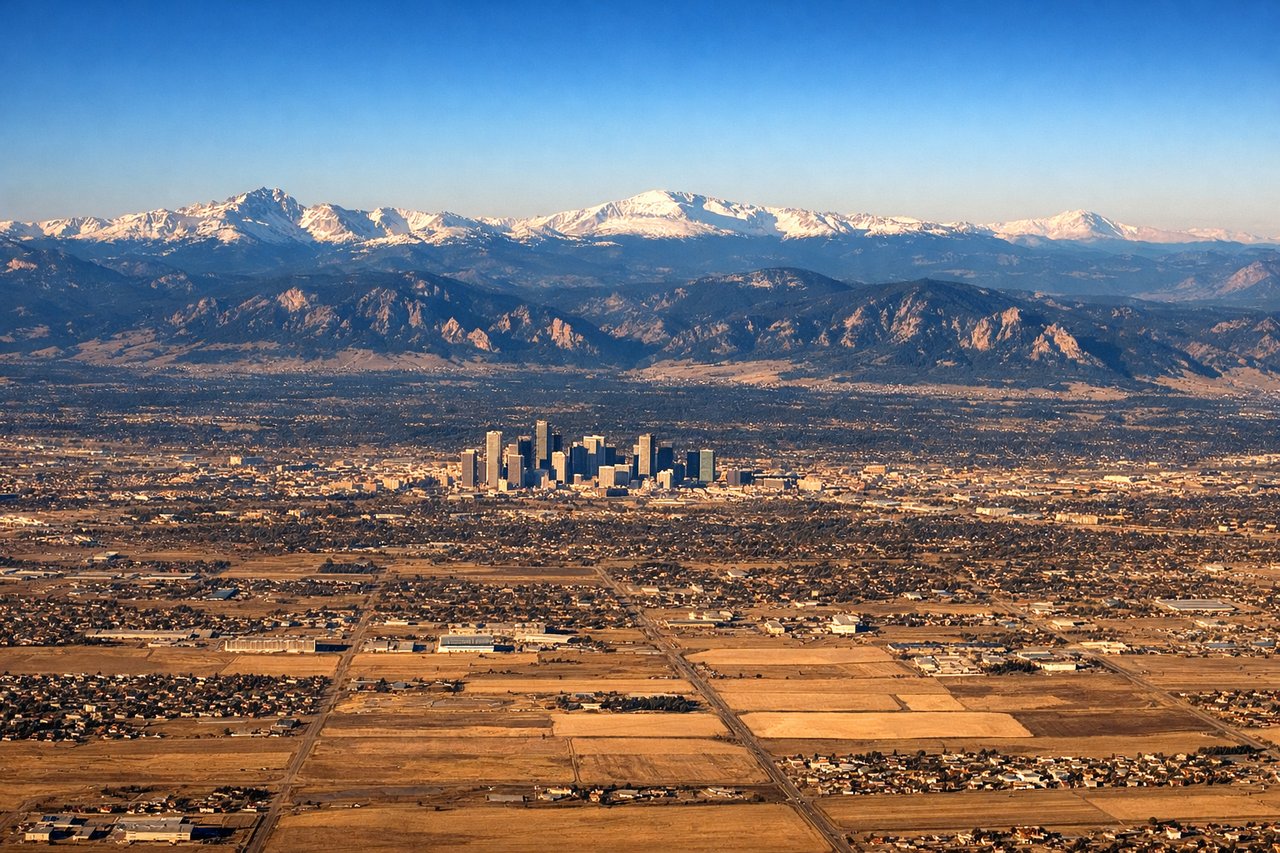
LEFTDenver International sits east of the city, and aircraft typically approach from the east or northeast on runways oriented northwest-southeast. A left-side seat on approach gives you the Denver skyline to the southwest and the entire Front Range of the Rockies — including Longs Peak and Mount Evans — spread across the western horizon. The right side faces the flat eastern plains with minimal visual interest.
Landmarks on this routeAll landmarks →
Will your flight be in sunlight?
See exactly which side of the plane gets sun and shade at your departure time.
About This Route
Which side of the plane should I sit on flying from Lihue (LIH) to Denver International (DEN)?
Sit on the Left side of the plane for the best views on flights from Lihue to Denver. Left side wins at both ends of the flight. Over the Pacific and Nevada desert the views are similar on both sides, but the left seat captures Kauai's most dramatic coastal scenery on departure and the full Rocky Mountain Front Range panorama on arrival into Denver.
What can I see during takeoff from Lihue in Lihue?
During takeoff from Lihue (LIH), sit on the Left side for the best views. Lihue Airport typically departs runway 3 (northbound) or runway 21 (southbound). On a northeast departure toward the mainland, the left side faces west and northwest, giving you views of the Napali Coast cliffs and the interior of Kauai including Waimea Canyon. The right side faces the open Pacific with little to see. Notable sights include: Napali Coast sea cliffs, Waimea Canyon, Hanalei Bay, Mount Waialeale.
What can I see when landing at Denver International in Denver?
When landing at Denver International (DEN), sit on the Left side for the best views. Denver International sits east of the city, and aircraft typically approach from the east or northeast on runways oriented northwest-southeast. A left-side seat on approach gives you the Denver skyline to the southwest and the entire Front Range of the Rockies — including Longs Peak and Mount Evans — spread across the western horizon. The right side faces the flat eastern plains with minimal visual interest. Notable sights include: Denver skyline, Front Range Rocky Mountains, Longs Peak, Mount Evans.
How long is the flight from Lihue to Denver?
The flight from Lihue (LIH) to Denver International (DEN) takes Approximately 5 hours 30 minutes.
What does the Lihue to Denver flight path pass over?
The flight tracks northeast over the open Pacific for roughly the first two hours with no land visible. The California coast appears near Point Conception or the Central Valley depending on routing. The Sierra Nevada crosses below, followed by the Nevada Basin and Range desert, then the Wasatch Range of Utah, and finally the Colorado Plateau and high plains before Denver.