The right seat wins overall because the Lisbon departure is genuinely spectacular — the Tagus estuary, the bridge, and the city laid out below are hard to beat. The landing views from the left are solid but the D.C. area from altitude is less dramatic than Lisbon's coastal geography. If you had to pick one side for the whole flight, right gives you the better show at the most memorable moment.
Flight Path
The flight tracks northwest over the Atlantic, crossing the Azores archipelago roughly 2 to 3 hours after departure — Faial, Pico with its prominent volcanic cone, and São Miguel may be visible below if skies are clear. The mid-Atlantic is open ocean for the bulk of the flight. Approaching North America, the flight crosses over Newfoundland or Nova Scotia depending on routing, where the Canadian Maritime coastline, the Gulf of St. Lawrence, and the forested interior of Nova Scotia become visible. The final descent crosses the Appalachian ridges of Pennsylvania or Maryland before the Shenandoah Valley and the Blue Ridge come into view on approach to Dulles.
Great circle distance and headings ›.jpg?width=600)
.jpg?width=600)
.jpeg?width=600)
Phase by phase
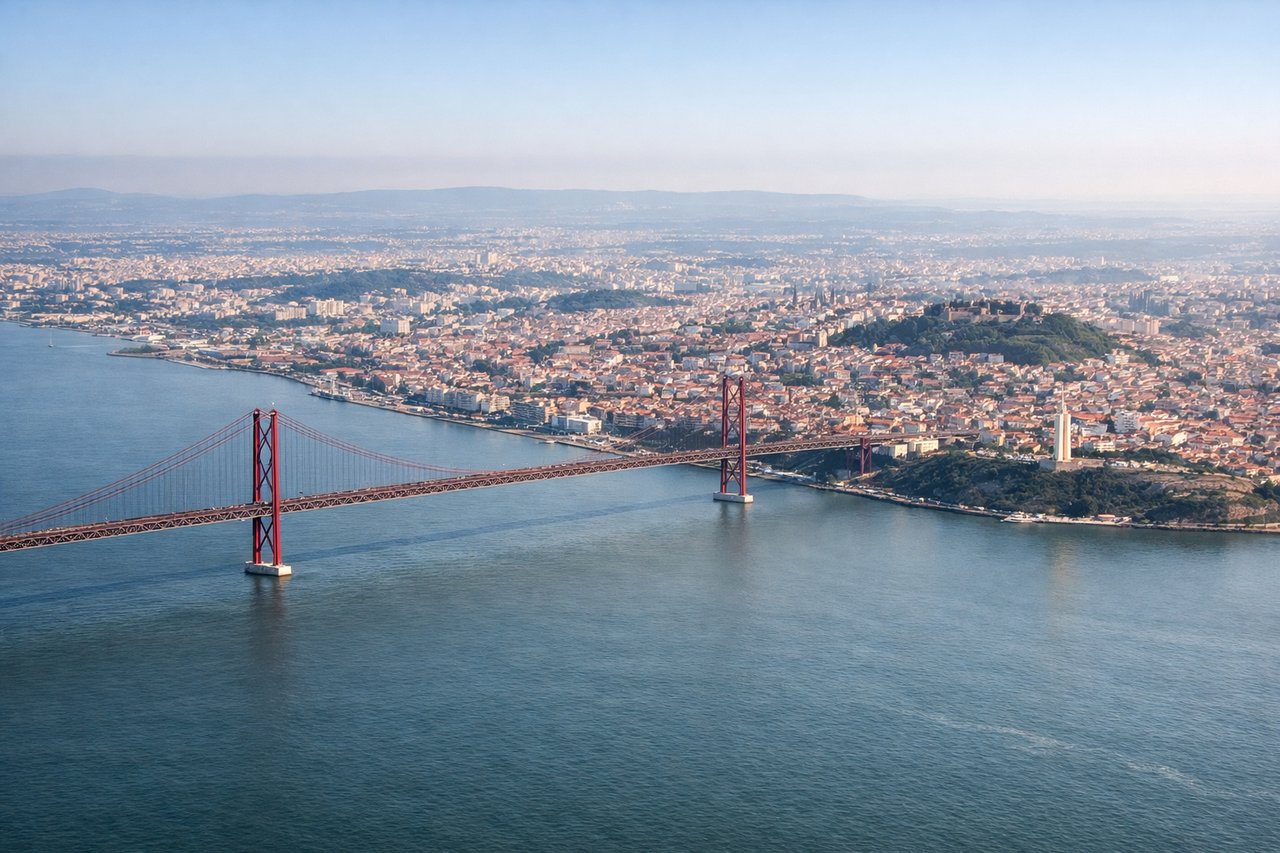
Takeoff from LIS
RIGHTLisbon departures on runway 03 (heading north) put the right side facing east over the city center, the Tagus estuary, and the Arrábida peninsula. You get a clear view of the 25 de Abril Bridge and the wide mouth of the Tejo as the aircraft climbs and banks northwest.

Landing at IAD
LEFTDulles typically uses runways 01L/01R or 19L/19R depending on wind. On approaches from the east over the Atlantic corridor, aircraft generally track in from the northeast, putting the left side facing south toward Washington D.C. proper. The left seat gets the Potomac River, the National Mall axis, and the Virginia suburbs spreading out below on final approach.
Landmarks on this routeAll landmarks →
Will your flight be in sunlight?
See exactly which side of the plane gets sun and shade at your departure time.
About This Route
Which side of the plane should I sit on flying from Lisboa (LIS) to Washington Dulles International (IAD)?
Sit on the Right side of the plane for the best views on flights from Lisbon to Washington. The right seat wins overall because the Lisbon departure is genuinely spectacular — the Tagus estuary, the bridge, and the city laid out below are hard to beat. The landing views from the left are solid but the D.C. area from altitude is less dramatic than Lisbon's coastal geography. If you had to pick one side for the whole flight, right gives you the better show at the most memorable moment.
What can I see during takeoff from Lisboa in Lisbon?
During takeoff from Lisboa (LIS), sit on the Right side for the best views. Lisbon departures on runway 03 (heading north) put the right side facing east over the city center, the Tagus estuary, and the Arrábida peninsula. You get a clear view of the 25 de Abril Bridge and the wide mouth of the Tejo as the aircraft climbs and banks northwest. Notable sights include: 25 de Abril Bridge over the Tagus, Tagus estuary and Setúbal Peninsula, Lisbon city center and Baixa district, Cristo Rei statue on the south bank.
What can I see when landing at Washington Dulles International in Washington?
When landing at Washington Dulles International (IAD), sit on the Left side for the best views. Dulles typically uses runways 01L/01R or 19L/19R depending on wind. On approaches from the east over the Atlantic corridor, aircraft generally track in from the northeast, putting the left side facing south toward Washington D.C. proper. The left seat gets the Potomac River, the National Mall axis, and the Virginia suburbs spreading out below on final approach. Notable sights include: Potomac River and its broad curves through Northern Virginia, Washington D.C. skyline and National Mall axis visible to the southeast, Blue Ridge Mountains on the western horizon during descent, Shenandoah Valley floor visible as a flat agricultural corridor.
How long is the flight from Lisbon to Washington?
The flight from Lisboa (LIS) to Washington Dulles International (IAD) takes Approximately 8 to 9 hours westbound.
What does the Lisbon to Washington flight path pass over?
The flight tracks northwest over the Atlantic, crossing the Azores archipelago roughly 2 to 3 hours after departure — Faial, Pico with its prominent volcanic cone, and São Miguel may be visible below if skies are clear. The mid-Atlantic is open ocean for the bulk of the flight. Approaching North America, the flight crosses over Newfoundland or Nova Scotia depending on routing, where the Canadian Maritime coastline, the Gulf of St. Lawrence, and the forested interior of Nova Scotia become visible. The final descent crosses the Appalachian ridges of Pennsylvania or Maryland before the Shenandoah Valley and the Blue Ridge come into view on approach to Dulles.