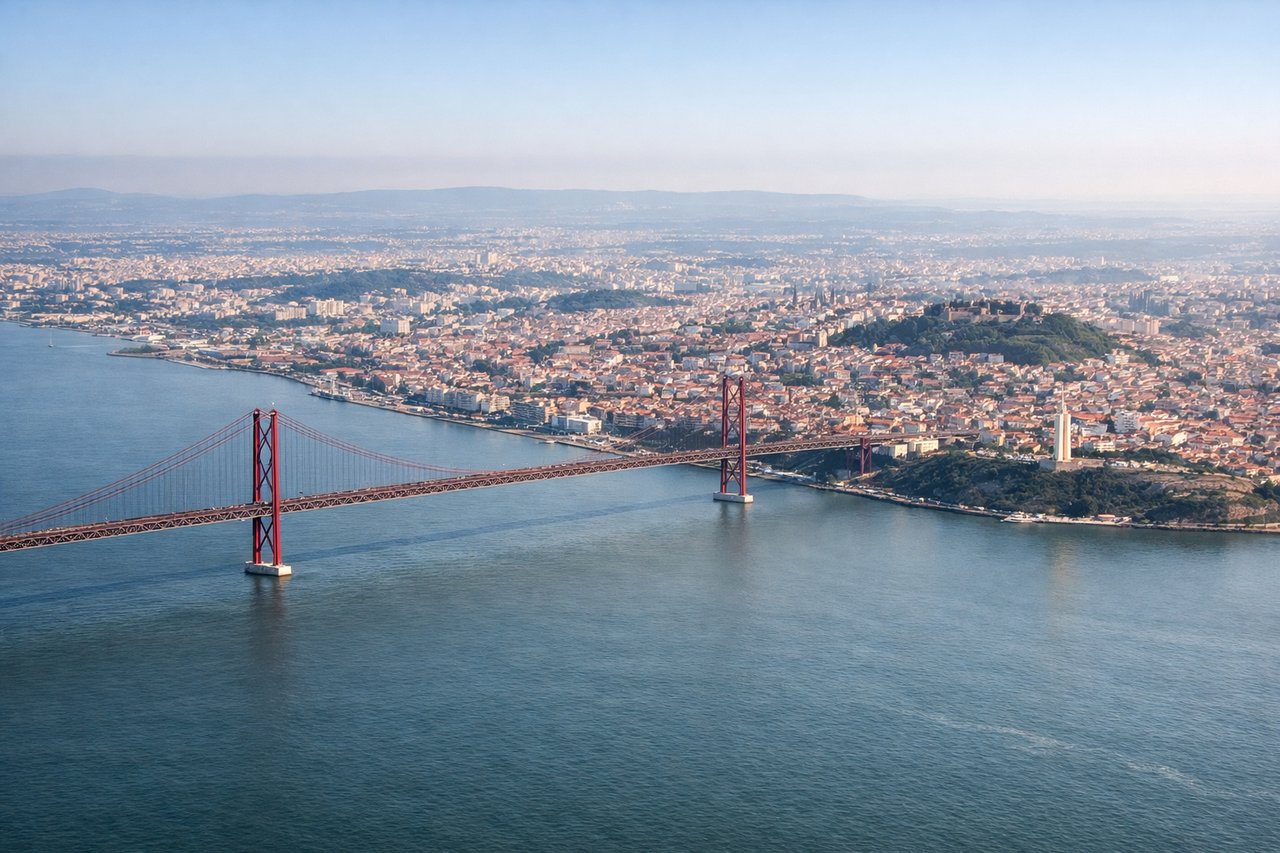
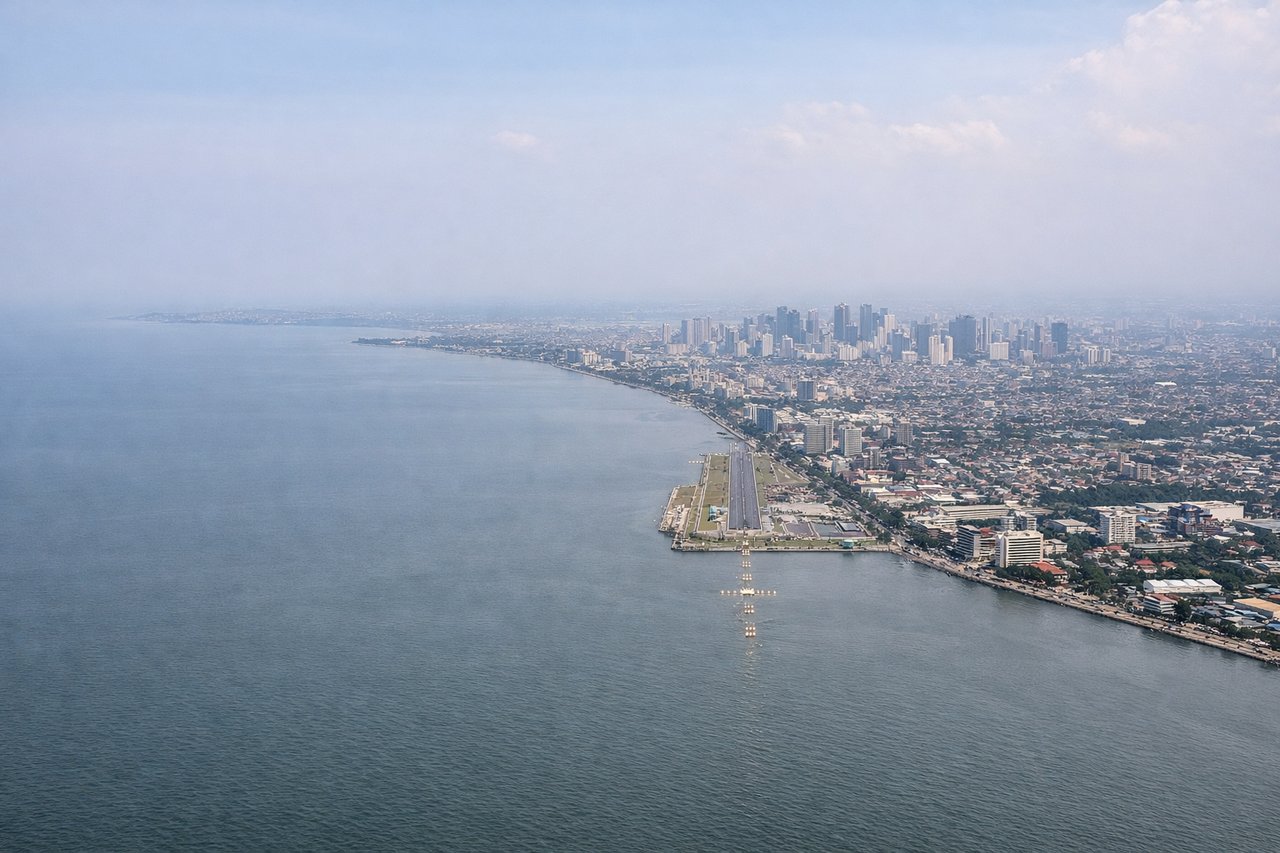
The right side wins overall for the spectacular Lisbon departure view of the Tagus, the 25 de Abril Bridge, and the city. The landing view from the left is good but Manila Bay on approach is relatively flat and hazy. The Lisbon departure is the more memorable visual moment of the two.
Flight Path
The flight path typically routes east over the Iberian Peninsula, across the Mediterranean near Sicily or Crete, over the Arabian Peninsula or Persian Gulf, across the Indian subcontinent over India and Bangladesh, then southeast over the Bay of Bengal, the Malay Peninsula or Indochina, and finally across the South China Sea into Manila. Notable features include the Alps visible in the far north, the Nile Delta if routing over Egypt, the Himalayas potentially visible to the north over India, and the Mekong Delta region of Vietnam before crossing the South China Sea.
Great circle distance and headings ›.jpg?width=600)


_Panoramica_del_centro_della_citt%C3%A0_dal_lago.jpg?width=600)


.jpg?width=600)


.jpg?width=600)

.jpg?width=600)
Phase by phase
Takeoff from LIS
RIGHTLisbon's main departure runway 21 sends aircraft southwest over the Tagus estuary. The right side gives you the city of Lisbon itself, the 25 de Abril Bridge spanning the Tagus, and the Cristo Rei statue on the south bank. The left side faces mostly industrial Almada and flat terrain.
Landing at MNL
LEFTManila's runway 06 approach comes in from the west over Manila Bay, and the left side faces north toward Manila Bay and the city skyline of Makati and BGC. The right side looks south toward Laguna de Bay and the less dramatic southern suburbs.
Landmarks on this routeAll landmarks →
Will your flight be in sunlight?
See exactly which side of the plane gets sun and shade at your departure time.
About This Route
Which side of the plane should I sit on flying from Lisboa (LIS) to Ninoy Aquino International (MNL)?
Sit on the Right side of the plane for the best views on flights from Lisbon to Manila. The right side wins overall for the spectacular Lisbon departure view of the Tagus, the 25 de Abril Bridge, and the city. The landing view from the left is good but Manila Bay on approach is relatively flat and hazy. The Lisbon departure is the more memorable visual moment of the two.
What can I see during takeoff from Lisboa in Lisbon?
During takeoff from Lisboa (LIS), sit on the Right side for the best views. Lisbon's main departure runway 21 sends aircraft southwest over the Tagus estuary. The right side gives you the city of Lisbon itself, the 25 de Abril Bridge spanning the Tagus, and the Cristo Rei statue on the south bank. The left side faces mostly industrial Almada and flat terrain. Notable sights include: 25 de Abril Bridge over the Tagus, Cristo Rei statue on south bank, Lisbon city center and Alfama district hillside, Tagus estuary widening toward the Atlantic.
What can I see when landing at Ninoy Aquino International in Manila?
When landing at Ninoy Aquino International (MNL), sit on the Left side for the best views. Manila's runway 06 approach comes in from the west over Manila Bay, and the left side faces north toward Manila Bay and the city skyline of Makati and BGC. The right side looks south toward Laguna de Bay and the less dramatic southern suburbs. Notable sights include: Manila Bay and its western shoreline, Makati and BGC skyscraper clusters, Laguna de Bay visible to the southeast, Manila Hotel and Roxas Boulevard waterfront.
How long is the flight from Lisbon to Manila?
The flight from Lisboa (LIS) to Ninoy Aquino International (MNL) takes Approximately 13 to 14 hours depending on routing and winds, typically operated with a stopover in the Middle East such as Doha or Dubai.
What does the Lisbon to Manila flight path pass over?
The flight path typically routes east over the Iberian Peninsula, across the Mediterranean near Sicily or Crete, over the Arabian Peninsula or Persian Gulf, across the Indian subcontinent over India and Bangladesh, then southeast over the Bay of Bengal, the Malay Peninsula or Indochina, and finally across the South China Sea into Manila. Notable features include the Alps visible in the far north, the Nile Delta if routing over Egypt, the Himalayas potentially visible to the north over India, and the Mekong Delta region of Vietnam before crossing the South China Sea.