Madrid to Chengdu is 5,690 miles (9,158 km), a flight of about 13 hours 30 minutes.
While takeoff offers Madrid's urban and mountain scenery, the landing approach into Chengdu provides more sustained visual interest: the Chengdu Plain's agricultural geometry, the city's urban footprint, and the Longquan Mountains create a more varied and geographically distinctive finale. Left seats capture this sequence better.
Flight Path
Over the Mediterranean (Balearic Islands visible on westbound departure), Atlas Mountains in Morocco and Algeria, Sahara Desert (vast tan expanse with subtle dune patterns), Red Sea coastline, Arabian Peninsula (Oman and UAE mountains), Persian Gulf, Iranian plateau, Hindu Kush and Pamir ranges (distant on northern horizon), Taklamakan Desert (China's western basin), Tibetan Plateau's eastern edge, and finally descent into the Sichuan Basin toward Chengdu.
Great circle distance and headings ›


.jpg?width=600)

.jpg?width=600)


Phase by phase
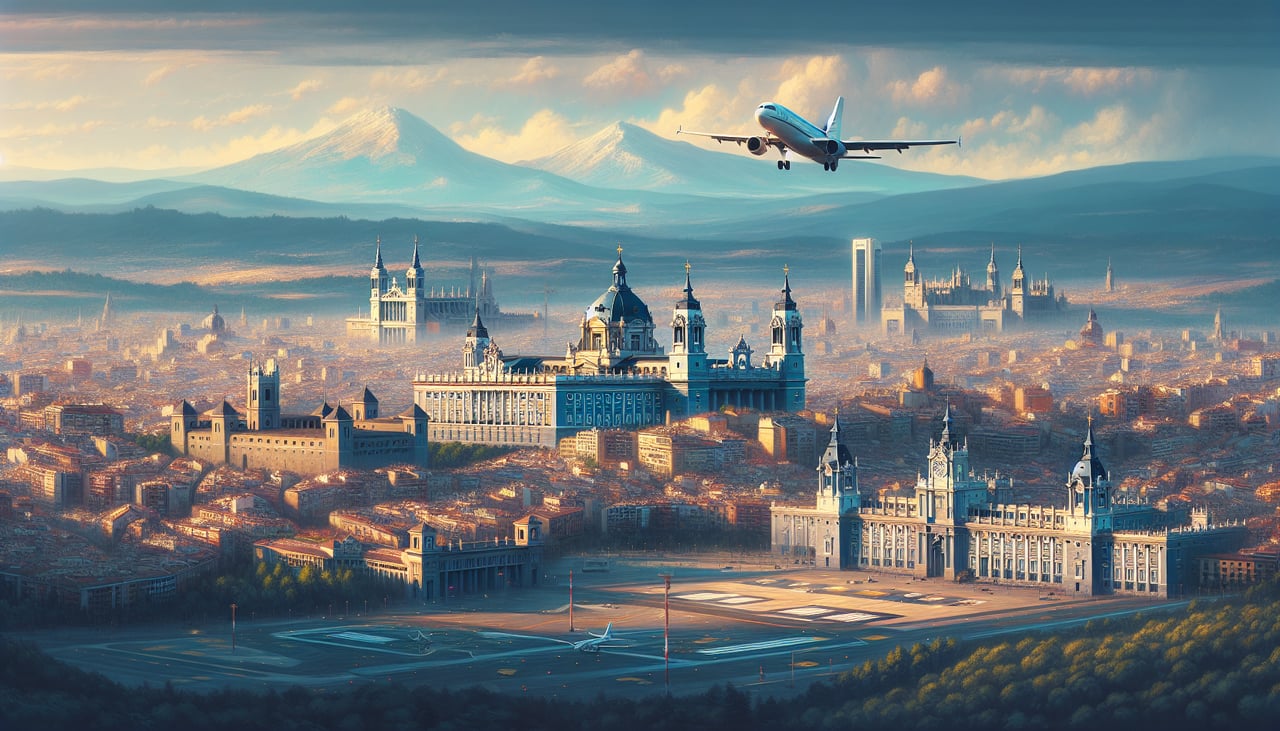
Takeoff from MAD
RIGHTMadrid-Barajas typically departs eastbound. Right-side seats offer views of the Sierra de Guadarrama mountain range and the sprawling Madrid metropolitan area receding westward, with clear definition of the city's urban grid against surrounding terrain.
Landing at CTU
LEFTChengdu-Shuangliu approaches from the east. Left-side seats provide views of the Chengdu Plain's agricultural patchwork and the Longquan Mountains rising to the west, with the city's urban core visible during final descent into the basin.
Landmarks on this routeAll landmarks →
Will your flight be in sunlight?
Pick a date and time in the Sun Map to watch the sun move across your whole flight.
About This Route
Which side of the plane should I sit on flying from Barajas (MAD) to Shuangliu (CTU)?
Sit on the Left side of the plane for the best views on flights from Madrid to Chengdu. While takeoff offers Madrid's urban and mountain scenery, the landing approach into Chengdu provides more sustained visual interest: the Chengdu Plain's agricultural geometry, the city's urban footprint, and the Longquan Mountains create a more varied and geographically distinctive finale. Left seats capture this sequence better.
What can I see during takeoff from Barajas in Madrid?
During takeoff from Barajas (MAD), sit on the Right side for the best views. Madrid-Barajas typically departs eastbound. Right-side seats offer views of the Sierra de Guadarrama mountain range and the sprawling Madrid metropolitan area receding westward, with clear definition of the city's urban grid against surrounding terrain. Notable sights include: Sierra de Guadarrama (northeast), Madrid city center and Retiro Park district (visible as green patches), Tagus River valley (threading south), Tajo River bend near Aranjuez (southeast).
What can I see when landing at Shuangliu in Chengdu?
When landing at Shuangliu (CTU), sit on the Left side for the best views. Chengdu-Shuangliu approaches from the east. Left-side seats provide views of the Chengdu Plain's agricultural patchwork and the Longquan Mountains rising to the west, with the city's urban core visible during final descent into the basin. Notable sights include: Longquan Mountains (western rim of Chengdu Basin), Chengdu urban area (grid pattern in the plain), Min River and its tributaries (silver threads through farmland), Chengdu Shuangliu International Airport runways (visible at 3,000-5,000 feet).
How long is the flight from Madrid to Chengdu?
The flight from Barajas (MAD) to Shuangliu (CTU) takes about 13 hours 30 minutes. The shortest flight path between them is 5,690 miles (9,158 km); winds and air traffic control usually add a few percent.
What does the Madrid to Chengdu flight path pass over?
Over the Mediterranean (Balearic Islands visible on westbound departure), Atlas Mountains in Morocco and Algeria, Sahara Desert (vast tan expanse with subtle dune patterns), Red Sea coastline, Arabian Peninsula (Oman and UAE mountains), Persian Gulf, Iranian plateau, Hindu Kush and Pamir ranges (distant on northern horizon), Taklamakan Desert (China's western basin), Tibetan Plateau's eastern edge, and finally descent into the Sichuan Basin toward Chengdu.