Right-side seats capture the most dramatic scenery: the Caribbean departure with Montego Bay's turquoise waters and Jamaica's coastline. While the London approach favors the left, the takeoff experience from Jamaica is more visually distinctive and memorable.
Flight Path
The flight path crosses the Atlantic Ocean for approximately 7-8 hours with no significant landmarks visible—only open ocean and sky. The aircraft will pass south of Bermuda (not visible from typical cruise altitude and flight path) and north of the Azores. Approaching the UK, the flight enters European airspace over the Atlantic approaches, then passes over the southwest coast of England (Cornwall visible during descent), before following the Thames estuary into London City Airport.
Great circle distance and headings ›.jpeg?width=600)

Phase by phase

Takeoff from MBJ
RIGHTRight-side seats offer immediate views of Montego Bay's coastline and the Caribbean Sea as the aircraft climbs northwestward. The contrast between the turquoise shallow waters and deeper blue ocean is striking during the initial climb.
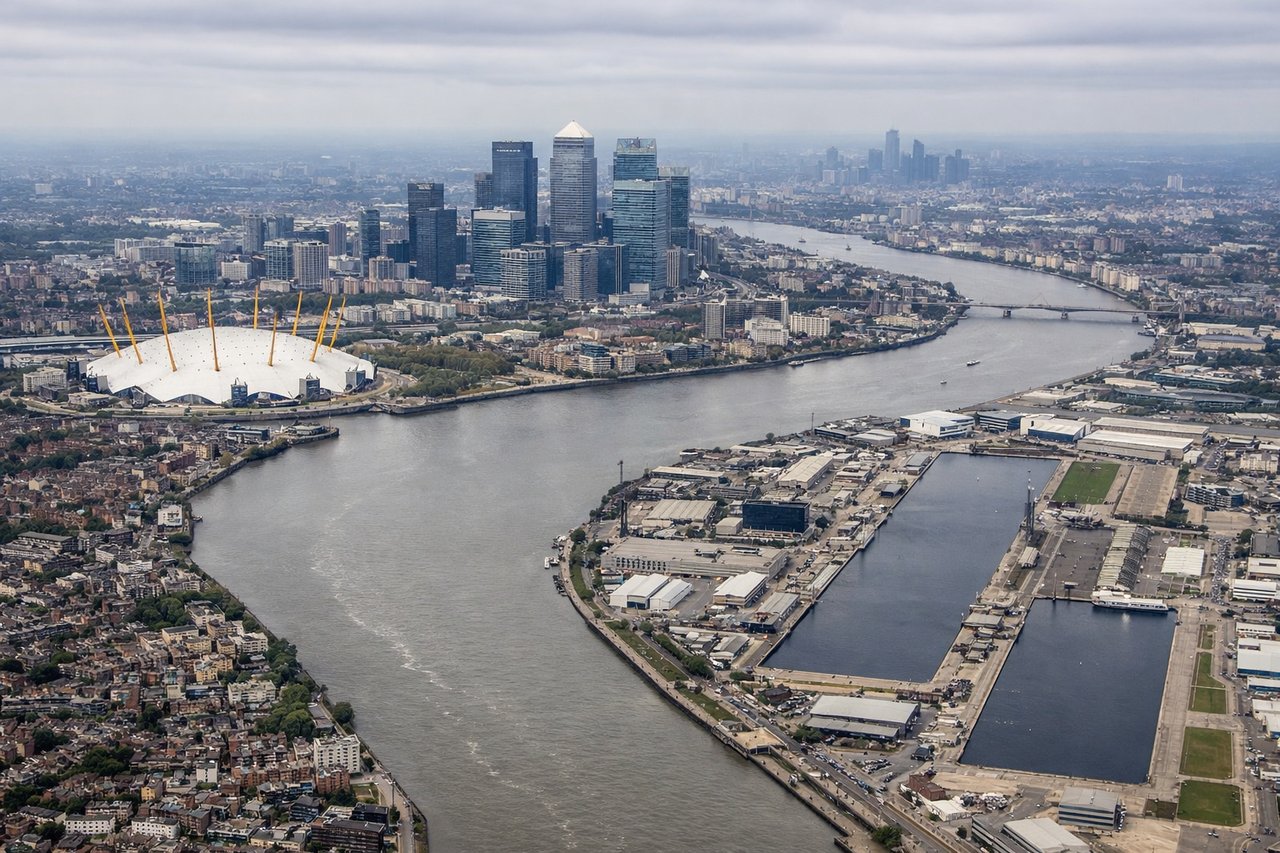
Landing at LCY
LEFTLeft-side seats provide excellent views during the approach to London City Airport. The aircraft descends over the Thames estuary and the river itself becomes the primary visual feature, with views of the Docklands, Isle of Dogs, and central London landmarks visible on the left bank.
Landmarks on this routeAll landmarks →
Will your flight be in sunlight?
See exactly which side of the plane gets sun and shade at your departure time.
About This Route
Which side of the plane should I sit on flying from Sangster International (MBJ) to City (LCY)?
Sit on the Right side of the plane for the best views on flights from Montego Bay to London. Right-side seats capture the most dramatic scenery: the Caribbean departure with Montego Bay's turquoise waters and Jamaica's coastline. While the London approach favors the left, the takeoff experience from Jamaica is more visually distinctive and memorable.
What can I see during takeoff from Sangster International in Montego Bay?
During takeoff from Sangster International (MBJ), sit on the Right side for the best views. Right-side seats offer immediate views of Montego Bay's coastline and the Caribbean Sea as the aircraft climbs northwestward. The contrast between the turquoise shallow waters and deeper blue ocean is striking during the initial climb. Notable sights include: Montego Bay coastline, Caribbean Sea, Doctor's Cave Beach, Gloucester Avenue waterfront.
What can I see when landing at City in London?
When landing at City (LCY), sit on the Left side for the best views. Left-side seats provide excellent views during the approach to London City Airport. The aircraft descends over the Thames estuary and the river itself becomes the primary visual feature, with views of the Docklands, Isle of Dogs, and central London landmarks visible on the left bank. Notable sights include: River Thames, Isle of Dogs, Canary Wharf, London Docklands.
How long is the flight from Montego Bay to London?
The flight from Sangster International (MBJ) to City (LCY) takes Approximately 9 hours 15 minutes.
What does the Montego Bay to London flight path pass over?
The flight path crosses the Atlantic Ocean for approximately 7-8 hours with no significant landmarks visible—only open ocean and sky. The aircraft will pass south of Bermuda (not visible from typical cruise altitude and flight path) and north of the Azores. Approaching the UK, the flight enters European airspace over the Atlantic approaches, then passes over the southwest coast of England (Cornwall visible during descent), before following the Thames estuary into London City Airport.