Left side wins at both ends of the flight. At departure you get the Montego Bay coastline and Caribbean waters; at arrival you get Jamaica Bay, the Rockaways, and the distant Manhattan skyline. The right side offers inland Jamaican hills on departure and the less scenic south shore industrial areas on arrival.
Flown MBJ to JFK? Did we get it right?
Flight Path
Montego Bay to New York is 1,549 miles (2,493 km), a flight of about 3 hours 40 minutes.
The flight tracks north-northeast over the western tip of Hispaniola and the Windward Passage, then over eastern Cuba's Sierra Maestra foothills visible as a distant ridgeline, across the Bahamas archipelago with its distinctive shallow turquoise banks and dark-blue deep channels clearly visible from altitude, then over the open Atlantic before making landfall near the Outer Banks of North Carolina or the New Jersey shore depending on routing, followed by the New Jersey coastal plain and approach into the New York metro area
Great circle distance and headings ›

Phase by phase
Takeoff from MBJ
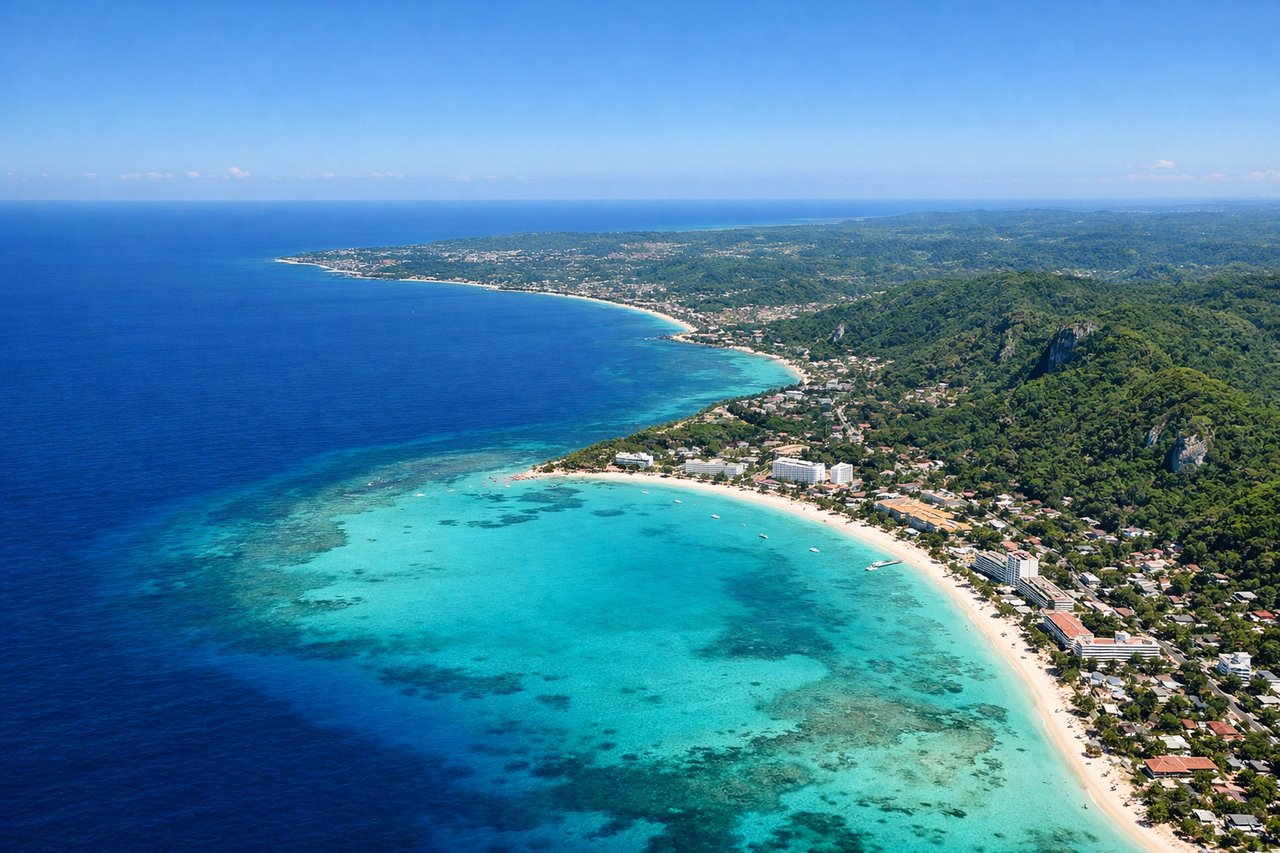
LEFTMBJ typically departs on runway 07, heading east. The left (north) side gives you a clear view over Montego Bay's harbor and the turquoise waters of the Caribbean coastline stretching west toward Negril. As the aircraft climbs and turns north, the left side continues to face the coast and open water.
Landing at JFK
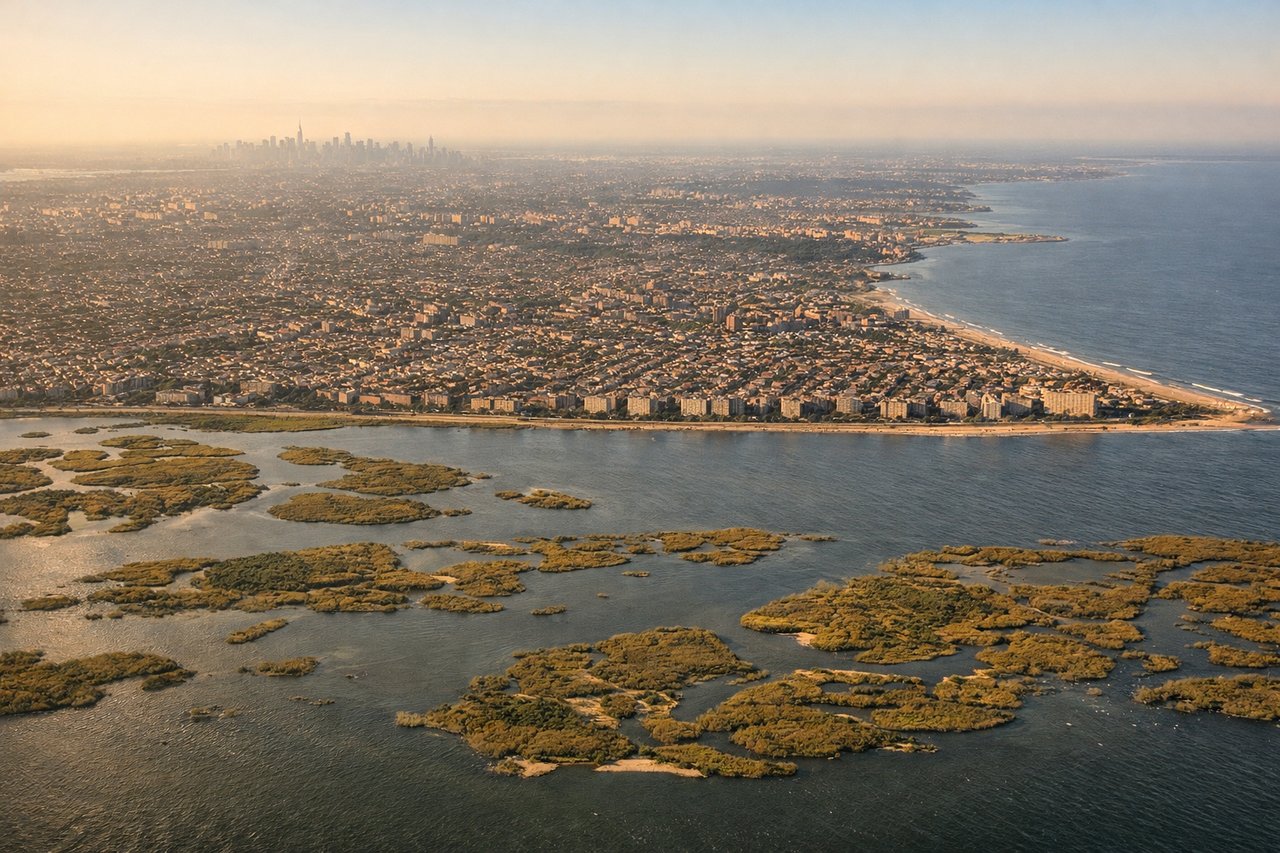
LEFTJFK primarily uses runways 13L/13R for arrivals from the south, or 22L/22R, both of which bring aircraft over the south shore of Long Island. The left side gives you the best view of Lower Manhattan's skyline, the Verrazano-Narrows Bridge, and Jamaica Bay as the aircraft descends over the Atlantic and turns onto final approach.
Will your flight be in sunlight?
Pick a date and time in the Sun Map to watch the sun move across your whole flight.
About This Route
Which side of the plane should I sit on flying from Sangster International (MBJ) to John F Kennedy International (JFK)?
Sit on the Left side of the plane for the best views on flights from Montego Bay to New York. Left side wins at both ends of the flight. At departure you get the Montego Bay coastline and Caribbean waters; at arrival you get Jamaica Bay, the Rockaways, and the distant Manhattan skyline. The right side offers inland Jamaican hills on departure and the less scenic south shore industrial areas on arrival.
What can I see during takeoff from Sangster International in Montego Bay?
During takeoff from Sangster International (MBJ), sit on the Left side for the best views. MBJ typically departs on runway 07, heading east. The left (north) side gives you a clear view over Montego Bay's harbor and the turquoise waters of the Caribbean coastline stretching west toward Negril. As the aircraft climbs and turns north, the left side continues to face the coast and open water. Notable sights include: Montego Bay harbor and Doctor's Cave Beach area, the Caribbean coastline stretching toward Negril, the Blue Mountains visible in the far southeast as a distant ridge, the shallow reef-green shallows of the bay contrasting with deep blue offshore water.
What can I see when landing at John F Kennedy International in New York?
When landing at John F Kennedy International (JFK), sit on the Left side for the best views. JFK primarily uses runways 13L/13R for arrivals from the south, or 22L/22R, both of which bring aircraft over the south shore of Long Island. The left side gives you the best view of Lower Manhattan's skyline, the Verrazano-Narrows Bridge, and Jamaica Bay as the aircraft descends over the Atlantic and turns onto final approach. Notable sights include: Lower Manhattan skyline visible to the northwest, Jamaica Bay and its wildlife refuge directly below on approach, the Verrazano-Narrows Bridge connecting Brooklyn and Staten Island, the Rockaways barrier beach peninsula.
How long is the flight from Montego Bay to New York?
The flight from Sangster International (MBJ) to John F Kennedy International (JFK) takes about 3 hours 40 minutes. The shortest flight path between them is 1,549 miles (2,493 km); winds and air traffic control usually add a few percent.
What does the Montego Bay to New York flight path pass over?
The flight tracks north-northeast over the western tip of Hispaniola and the Windward Passage, then over eastern Cuba's Sierra Maestra foothills visible as a distant ridgeline, across the Bahamas archipelago with its distinctive shallow turquoise banks and dark-blue deep channels clearly visible from altitude, then over the open Atlantic before making landfall near the Outer Banks of North Carolina or the New Jersey shore depending on routing, followed by the New Jersey coastal plain and approach into the New York metro area