The right side offers a longer stretch of genuinely scenic content—Atlantic coastline, barrier islands, and Chesapeake Bay during cruise—while the left side's advantage is limited to a brief Manhattan glimpse on final approach.
Flight Path
The route's midpoint falls near the North Carolina coast around Wilmington and Cape Fear, where barrier islands and inlets are visible along the Atlantic shoreline before the path continues north toward the Chesapeake Bay and Delmarva Peninsula.
Great circle distance and headings ›
.jpg?width=600)
Phase by phase

Takeoff from MCO
RIGHTDeparting MCO to the north, the right side gives passengers a view toward the Space Coast and Atlantic shoreline in the distance beyond Orlando's lake-dotted terrain, while the left side only shows flat inland Florida scrubland and lakes.
Landing at JFK
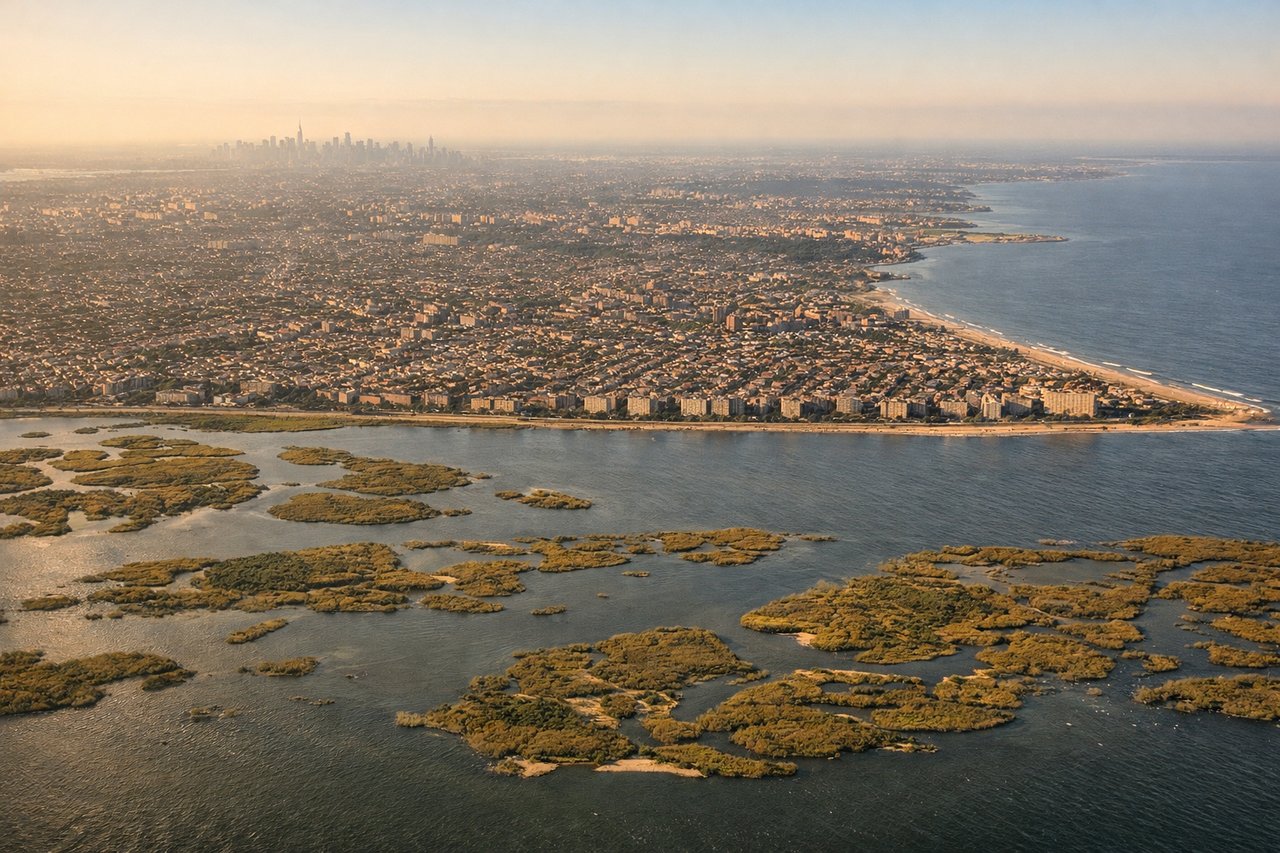
LEFTOn the typical southern arrival into JFK, aircraft swing over Raritan Bay and Staten Island before turning onto final for runway 22L/22R, giving left-side passengers a clear view of the Manhattan skyline and the Verrazzano-Narrows Bridge before the plane lines up over Jamaica Bay.
Landmarks on this routeAll landmarks →
Will your flight be in sunlight?
See exactly which side of the plane gets sun and shade at your departure time.
About This Route
Which side of the plane should I sit on flying from Orlando International (MCO) to John F Kennedy International (JFK)?
Sit on the Right side of the plane for the best views on flights from Orlando to New York. The right side offers a longer stretch of genuinely scenic content—Atlantic coastline, barrier islands, and Chesapeake Bay during cruise—while the left side's advantage is limited to a brief Manhattan glimpse on final approach.
What can I see during takeoff from Orlando International in Orlando?
During takeoff from Orlando International (MCO), sit on the Right side for the best views. Departing MCO to the north, the right side gives passengers a view toward the Space Coast and Atlantic shoreline in the distance beyond Orlando's lake-dotted terrain, while the left side only shows flat inland Florida scrubland and lakes. Notable sights include: Orlando's lake district, distant Cape Canaveral/Kennedy Space Center coastline, Atlantic shoreline haze on the horizon.
What can I see when landing at John F Kennedy International in New York?
When landing at John F Kennedy International (JFK), sit on the Left side for the best views. On the typical southern arrival into JFK, aircraft swing over Raritan Bay and Staten Island before turning onto final for runway 22L/22R, giving left-side passengers a clear view of the Manhattan skyline and the Verrazzano-Narrows Bridge before the plane lines up over Jamaica Bay. Notable sights include: Manhattan skyline, Verrazzano-Narrows Bridge, Staten Island, Jamaica Bay wetlands.
How long is the flight from Orlando to New York?
The flight from Orlando International (MCO) to John F Kennedy International (JFK) takes 2h 55m.
What does the Orlando to New York flight path pass over?
The route's midpoint falls near the North Carolina coast around Wilmington and Cape Fear, where barrier islands and inlets are visible along the Atlantic shoreline before the path continues north toward the Chesapeake Bay and Delmarva Peninsula.